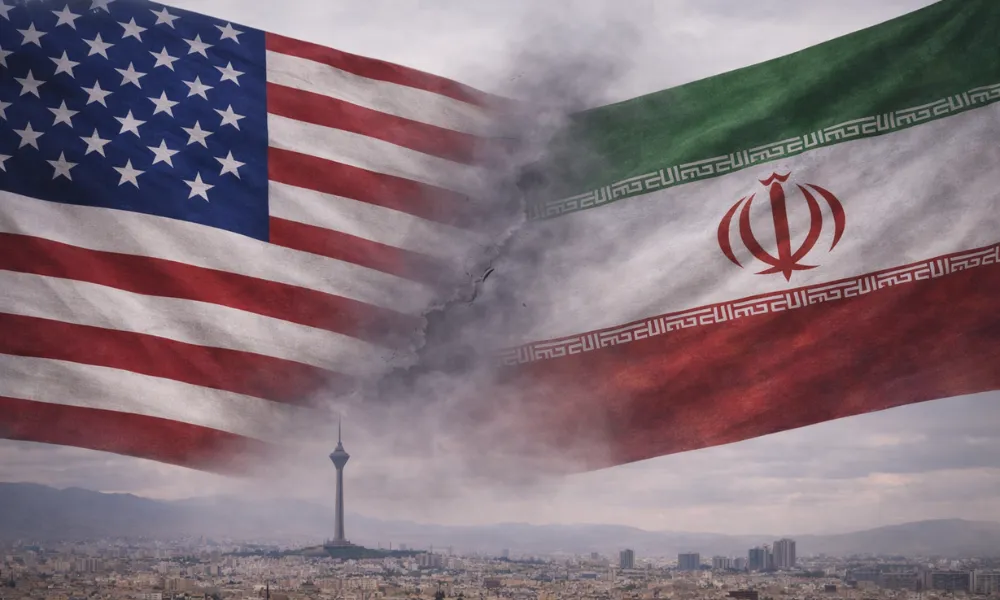
Iran has sent its response to a United States proposal aimed at ending the war that has now lasted more than two months, Iranian state news agency IRNA reported on Sunday, signalling a possible diplomatic opening amid continued regional tensions.
According to IRNA, Tehran delivered its response through Pakistan, which is acting as a mediator between the two sides. The proposal, at this stage, focuses on ending the war, the report said, without providing details on the substance of either the US plan or Iran’s reply.
While the exchange of messages suggests movement, neither the United States nor Pakistan has publicly commented on the content of Iran’s response. Reuters has reported that Washington has maintained indirect communications through intermediaries while publicly stressing the need for de‑escalation.
Energy infrastructure under scrutiny
Separately, Iranian authorities on Sunday rejected reports of an oil spill near Kharg Island, Iran’s main crude export hub in the Persian Gulf, following the release of satellite images earlier this week that appeared to show a large slick west of the island.
Iran’s Oil Terminals Company (OTC) said inspections had found no evidence of oil leakage from storage tanks, pipelines, loading infrastructure or tankers operating near Kharg Island, according to Iranian state media.
An official from the company said the Mutual Emergency Maritime Assistance Centre (MEMAC), a regional body monitoring marine pollution, had also reported no indications of a spill in the area.
The official added that Iranian teams conducted further inspections and laboratory tests after the satellite images were published and found “not even the slightest trace” of an oil leak.
Markets and stability concerns
Kharg Island handles the bulk of Iran’s crude exports, making it a critical node in the country’s energy infrastructure. Any confirmed incident in the area would likely heighten international concern, particularly amid heightened geopolitical tensions.
Reuters has previously reported that satellite imagery showing apparent oil slicks in strategic waterways often triggers scrutiny during periods of military or political strain, although such images do not always indicate active leaks.
Iran’s swift denial appeared aimed at reassuring both domestic and international audiences that oil exports and maritime safety in the Gulf remain unaffected.
Signals without substance, for now
With the conflict now entering its third month, attention is likely to focus on whether indirect diplomatic exchanges can translate into concrete steps towards a permanent ceasefire, or whether talks stall amid ongoing military and political pressures.
Source: IRNA, Reuters, CNA, AMNA