A new dangerous escalation is being recorded in the Persian Gulf, with the United States announcing that it disabled a tanker heading towards Iran, shot down Iranian missiles and drones and carried out self‑defence strikes on a military installation on Qeshm Island in the Strait of Hormuz.
At the same time, reports of explosions on Iranian soil and the mobilisation of Kuwait’s air defence are heightening fears of further destabilisation in the wider region.
A Hellfire missile on a tanker bound for Iran
The US Central Command for the Middle East (CENTCOM) announced that it had disabled the tanker M/T Lexie, which was sailing under the flag of Botswana and heading towards the Iranian island of Kharg. According to the US side, the vessel was empty and ignored repeated instructions from American forces for a period of around 24 hours, violating the naval blockade imposed by Washington on Iranian ports since 13 April.
According to CENTCOM, a US aircraft fired a Hellfire missile into the engine room of the vessel, causing it to stop. At the same time, footage was released showing the moment of the strike.
According to the data released by the US command, since the start of the blockade six commercial vessels have been disabled, while another 122 have been forced to change course.
Missile interceptions towards Kuwait and Bahrain
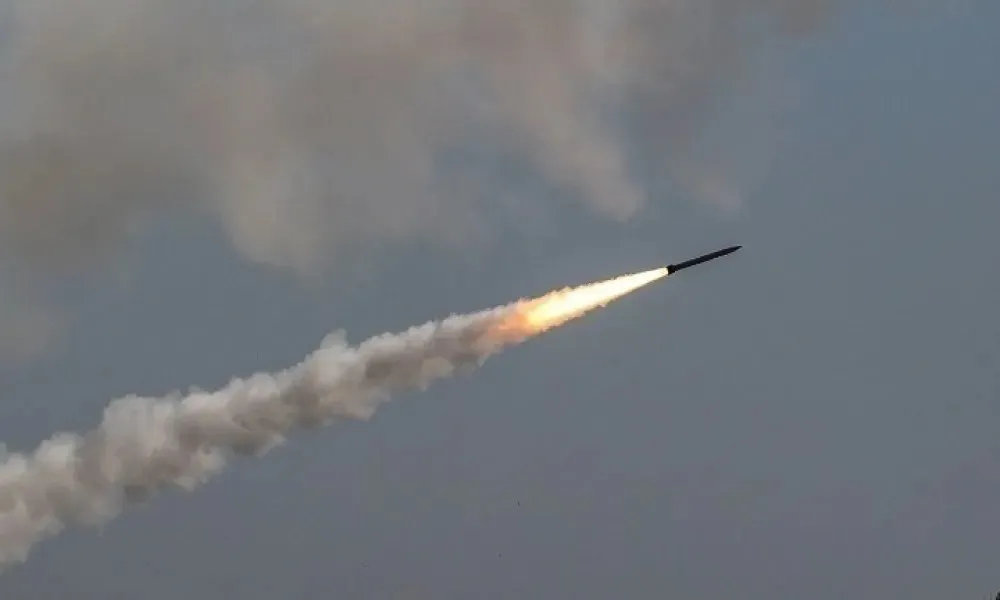
The tension was not confined to the sea. CENTCOM claimed that Iran launched a series of ballistic missiles towards neighbouring Gulf countries, without however hitting any target. According to the statement, two missiles fired towards Kuwait either fell short of their target or broke apart during flight. At the same time, three additional ballistic missiles heading towards Bahrain were intercepted by US and Bahraini air defence systems.
Earlier, the armed forces of Kuwait had announced that air defence units were actively engaged in operations to counter hostile missiles and unmanned aerial vehicles. In fact, authorities had called on citizens to follow official instructions, clarifying that any explosions or loud bangs heard would be the result of interception operations.
Drones shot down – strike on military target on Qeshm
The US command also announced that it shot down three attack drones launched from Iran. According to CENTCOM, the drones were heading towards commercial vessels lawfully navigating regional waters. Shortly afterwards, US forces carried out a self‑defence strike against an Iranian military ground control station on Qeshm Island, which is located in a strategic position in the Strait of Hormuz.
This announcement appears to be linked to information reported by the Iranian news agency MEHR, according to which residents and local sources said explosions were heard in the island area in the early hours of the morning.
So far, Iranian authorities have not issued an official comment on the incidents.
— U.S. Central Command (@CENTCOM) June 2, 2026
The Strait of Hormuz is considered one of the most important geostrategic passages in the world, as a large share of global oil and natural gas exports passes through it.
For this reason, any military tension in the area immediately raises concerns in international markets and in countries that depend on the energy transit of hydrocarbons through the Persian Gulf.
US: “We remain ready to defend ourselves”
CENTCOM stressed that there were no casualties or injuries among US personnel.
At the same time, it assured that US forces remain in full operational readiness.
“CENTCOM forces remain vigilant and ready to defend against unwarranted Iranian aggressive actions during the current ceasefire,” the statement said.
The developments of recent hours, with strikes on vessels, missile interceptions, drone shoot‑downs and military operations in the Strait of Hormuz, form a new landscape of high tension in the Middle East, with the international community closely watching the next moves of Washington and Tehran.
Source: protothema.gr