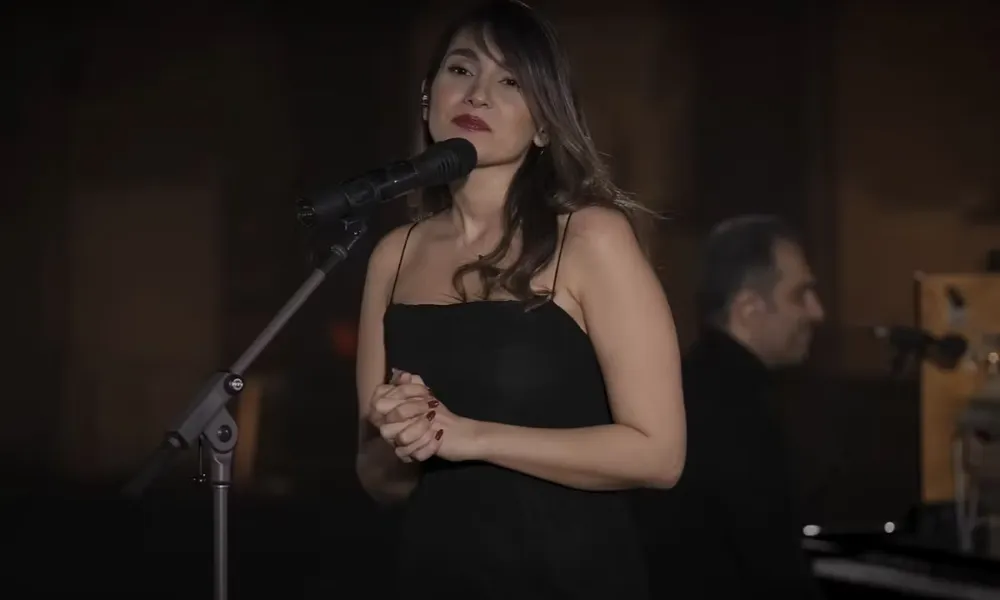

Iranian singer Parastoo Ahmadi and eight members of her production team have reportedly been sentenced to 74 lashes over a 2024 online concert in which she performed without wearing a hijab.
According to court documents cited by The Guardian, a criminal court in Iran’s Qom province also imposed a two-year travel ban and a two-year ban on artistic activity on Ahmadi, musicians and other members of the production team. They were accused of insulting public decency by producing and publishing what authorities described as “vulgar and immoral” content online.
The case has drawn sharp criticism from human rights lawyers, campaigners and artists, who say the ruling reflects Iran’s continued use of the justice system to punish women and cultural figures who challenge state restrictions.
A concert that went viral
The case stems from a livestreamed performance in December 2024, when the 29-year-old singer performed Az Khoone Javanane Vatan, a patriotic song whose title translates as “From the Blood of the Youth of the Nation”.
The video, posted on Ahmadi’s YouTube channel, quickly went viral and was viewed millions of times. Shortly after the performance, Ahmadi and several musicians were briefly detained before being released.
Authorities later pursued formal charges over the publication of the concert footage.
Rights groups condemn ruling
Bahar Ghandehari, advocacy director at the US-based Center for Human Rights in Iran, said the sentence showed that little had changed in the country despite official efforts to project a different image abroad.
She said the punishment imposed on Ahmadi “only for singing and appearing without hijab” was another reminder that Iran’s human rights situation remained unchanged.
Human rights lawyer Moein Khazaeli, from the Dadban legal centre, which advises Iranian activists, argued that the sentence had no proper legal foundation.
He said Iranian criminal law does not criminalise singing, musical performance or the production and distribution of music by women. On that basis, he argued, such activity could not reasonably be treated as the production or publication of obscene material.
The judiciary’s official news agency has not yet published the ruling, but rights organisations and lawyers who reviewed the court documents say the case fits a wider pattern of arrests and prosecutions targeting artists who openly defy state controls.
International criticism
Human rights groups have also raised concerns over the use of flogging as a punishment, arguing that it violates Iran’s international obligations on the prohibition of torture and the protection of human dignity.
Iranian-British actress Nazanin Boniadi said the sentence was a stark reminder that the Islamic Republic’s repressive machinery remained in place, despite discussion abroad about possible political change in Iran.
Iranian actress Setareh Maleki, who left the country after appearing in Mohammad Rasoulof’s Oscar-nominated film The Seed of the Sacred Fig, told The Guardian that Ahmadi’s concert had a deep emotional impact on her.
She said the performance revived a sense of resistance and pride, adding that Ahmadi had refused to give up her right as a woman to live, sing and be heard despite knowing the consequences she could face.
“For an Iranian artist who refuses to comply with censorship inside the country, everyday life becomes an act of resistance,” Maleki said.
The case has become another symbol of the pressure faced by Iranian women and artists since the Woman, Life, Freedom protest movement, with campaigners saying that cultural defiance continues despite the risk of arrest, prosecution and punishment.
With information from Guardian