
The US military said early on Friday that it had successfully carried out new strikes against Iran for a 13th consecutive night, as the conflict widened and concerns mounted over global energy supplies.
The latest escalation comes after Yemen's Iran-backed Houthi movement opened a new front in the conflict by attacking Saudi oil tankers in the Red Sea, helping drive oil prices above $100 a barrel on Thursday.
Hostilities between Washington and Tehran, which resumed on 7 July, have fuelled fears of prolonged disruption to hydrocarbon exports from the Middle East. The situation has been compounded by Iran's restrictions in the Strait of Hormuz and Houthi threats against shipping linked to Saudi Arabia, the world's largest crude oil exporter.
After breaching the $100 mark on Thursday for the first time since May, oil prices remained close to that level during Asian trading on Friday.
New US strikes
The US military said it targeted Iranian military command centres, drone storage facilities, coastal surveillance positions and naval capabilities.
According to the US statement, the objective was to reduce threats to commercial shipping and civilian maritime workers transiting the Strait of Hormuz, which Washington said remains open.
Iranian media reported explosions in several locations across southern Iran, including on Qeshm Island, near the Strait of Hormuz.
Trump issues warning
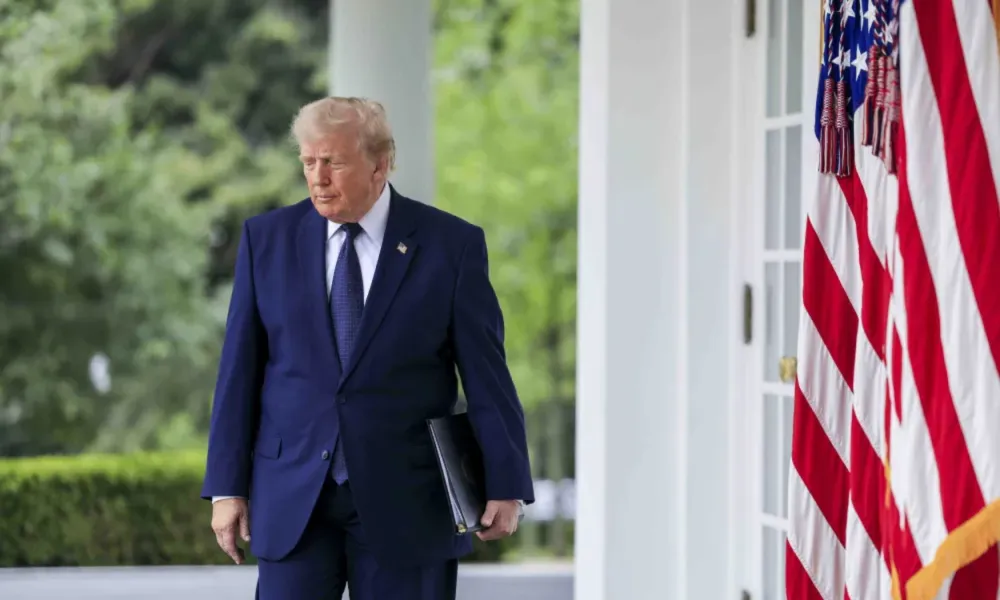
US President Donald Trump said Iranian assets frozen or controlled by the United States would be used to compensate ships damaged in attacks in the Gulf.
"From this point forth, any and all damages done to Ships, Cargo, or anything related thereto, will be paid for by Iranian Money that the United States has in its possession, and controls," Trump wrote on Truth Social, without providing details on how such a mechanism would operate.
UN concern
UN Secretary-General António Guterres warned that the situation in the Middle East risks spinning "out of control" and reaching levels that are "unthinkable."
Iran's military vowed to continue retaliatory operations for as long as US attacks persist.
Kuwait reported Iranian missile and drone attacks, while Jordan said it had intercepted nine of ten missiles and drones launched against the kingdom within a 24-hour period.
Houthi attacks and Hormuz tensions
At the centre of the conflict is the dispute over control of the Strait of Hormuz, through which around one-fifth of the world's hydrocarbon supplies passed before the war.
Iran has sought to impose transit fees and restrictions on shipping through the waterway. The Revolutionary Guards said they intercepted three oil tankers attempting to pass through the strait.
In response, the United States has imposed a naval blockade on Iran. US Central Command said it had forced 12 commercial vessels to change course and stopped another vessel from entering or leaving Iranian ports in the Gulf over a nine-day period.
Meanwhile, the Houthis said they attacked two Saudi oil tankers in the Red Sea. A Saudi source confirmed that a tanker belonging to a Saudi company had been targeted and caught fire.
Iran rejects Trump's proposal
Iranian Foreign Minister Abbas Araghchi criticised Trump's proposal to use frozen Iranian assets to compensate shipping losses, describing it as a dangerous precedent.
"Seizing another nation's assets to pay for unrelated future claims is an incendiary precedent," Araghchi wrote on X.
He also condemned what he described as the United States' "irrational" behaviour as the conflict continued to escalate.
Seizing another nation's assets to pay for unrelated future claims is an incendiary precedent.
— Seyed Abbas Araghchi (@araghchi) July 24, 2026
Those who celebrate or profit from such funds should remember: once governments normalize confiscation, no one's assets are safe. Ensuing chaos will not be pretty or peaceful.