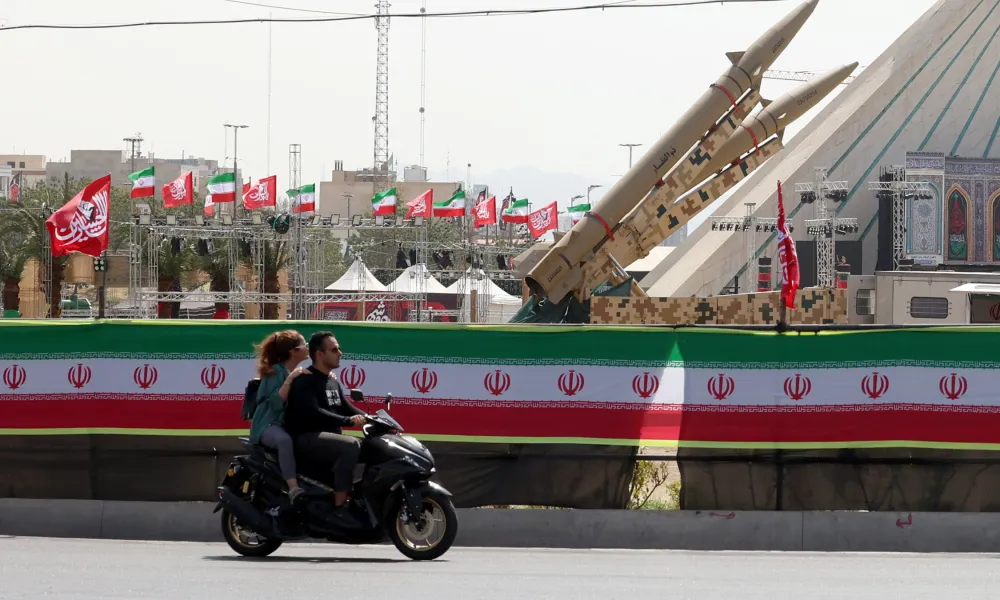



Six months into the war that began with US and Israeli strikes on Iran, the conflict is entering a quieter but no less tense phase. Iran and Oman have held fresh talks on managing traffic through the Strait of Hormuz, the waterway that carried a fifth of the world's oil and liquefied natural gas shipments before it was blockaded in February, and Oman's foreign minister says a temporary corridor through the strait could be announced soon.
Omani Foreign Minister Badr Albusaidi said following talks with his Iranian counterpart that Muscat and Tehran had discussed "a joint temporary navigational corridor" and agreed to clear the strait of mines. US President Donald Trump, who has previously threatened to bomb Oman, repeated his claim that all mines in the strait have already been removed, and warned Iran against laying any more. Most shipping through Hormuz has been at a standstill for months, with Iran and the United States each attempting to assert control over the channel through separate blockades.
Pressure shifts to sanctions
Even as the corridor talks move forward, the diplomatic track toward a wider peace deal remains stalled, and passage through the strait is still considered dangerous because of continuing attacks on ships. On Sunday, Iran blacklisted 45 ships in what appeared to be an effort to stop the ship-to-ship transfers Gulf energy producers have used to get around the Iranian blockade, and some shipping firms are reportedly planning to avoid the listed vessels altogether.
Washington, for its part, has leaned harder into economic pressure rather than military action. Earlier this week the US Treasury unveiled what it billed as an "Economic D-Day," threatening sanctions on any country or entity trading with Iran across gold, digital assets, aviation, shipping and technology, though it stopped short of imposing immediate penalties and notably left Chinese financial institutions suspected of facilitating Iranian oil exports off the list. Iran's parliament speaker, Mohammad Bagher Ghalibaf, dismissed the threats as bluster, while Tehran separately branded the broader sanctions push an act of "gross lawlessness." Iranian Foreign Minister Abbas Araqchi has since pressed for closer cooperation with China, according to Iranian state media.
Secretary of State Marco Rubio has told allied foreign ministers that the US does not expect to launch new strikes on Iran for now, focusing instead on sanctions and the naval blockade, Axios reported. US officials see the Navy's mine-clearing operation in the strait as a turning point that has blunted one of Iran's main sources of leverage, and one official said the current approach is likely to hold at least until after November's midterm elections, when a renewed military campaign could again be on the table. In a further sign that Washington sees the risk of imminent escalation as lower, the US has begun sending diplomats back to some Middle East missions that were evacuated or scaled down earlier in the war, though staffing at several embassies will initially remain below full strength.
Oil prices have fallen for three straight days, dropping more than $2 a barrel to a two-week low, as markets read the corridor talks and the pause in strikes as signs that a mediated end to the war may be closer. Politically, the war has grown increasingly costly for the White House: public approval of the conflict has slipped to its lowest point since the fighting began, and Trump's own approval rating is at a record low ahead of the midterms, according to Reuters/Ipsos polling.
The human cost remains steep. Thousands have died in the conflict, most of them in Iran and Lebanon, and while the US and Israel have degraded much of Iran's conventional military, the true state of its nuclear programme, which both countries are seeking to dismantle, is still unknown. Iranian army spokesman Brigadier General Mohammad Akrami-Nia said this week that combat units had received new equipment and that fighting two technologically advanced militaries had given Iranian forces significant battlefield experience, Iran's Mehr News agency reported.
Sources: Reuters, Axios, The New York Times