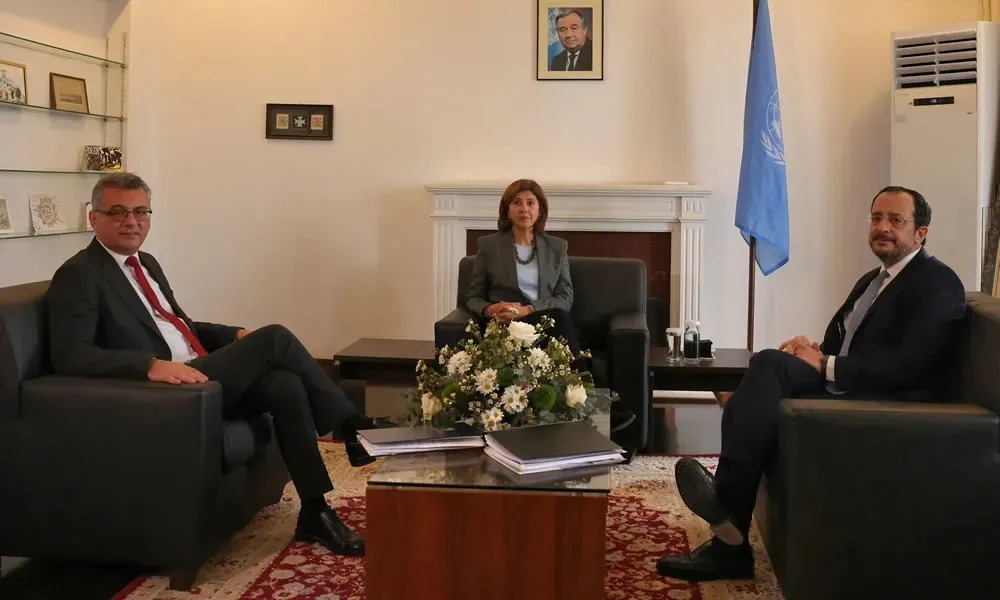
The return of the UN Secretary‑General’s Personal Envoy, María Ángela Holguín, to Cyprus after a four‑month absence does not appear to be a routine diplomatic visit. The United Nations seems ready to test whether conditions exist for meaningful movement on the Cyprus issue. As a result, her separate meetings with the two leaders on 8 June carry particular significance.
Following the elections of 24 May and the completion of the process to elect a new Speaker of the House, Cyprus’s political system – government and parties alike – is being called upon to make use of the UN’s willingness to restart momentum on the Cyprus issue. Domestic political matters, often cited as excuses for inaction, have to a large extent been settled.
According to information, Holguín is returning with the intention of assessing whether there are real prospects for a strategic agreement between the two sides or, at the very least, for a strongly worded joint statement. Such a document could represent the first serious step towards substantive negotiations with a clear direction.
The momentum, theoretically, exists. It exists regardless of political developments in Greece and Turkey. Early elections in both countries before the end of the year cannot be ruled out, and such developments have traditionally slowed progress on the Cyprus issue. However, this cannot serve as a constant excuse for prolonging stagnation.
On the contrary, the Greek Cypriot side now holds a renewed public mandate to move forward. The elections of 24 May also delivered another important message. The two largest parties, AKEL and DISY, which share broadly converging positions on the Cyprus issue, together secured 51% of the vote. This points to a sufficient political and social basis for broader acceptance of a potential settlement plan. Although the Cyprus issue was not discussed during the campaign, the positions of the parties are well known.
During the election period, citizens were asked to demonstrate seriousness, responsibility and mature judgment. They responded accordingly. The responsibility now shifts to the political system. It is now its turn to show the same level of maturity and to take advantage of any opportunity to advance towards a solution of the Cyprus issue.