
By Demetris Georgiades
There is something deliciously contradictory about tech entrepreneurs who warn that artificial intelligence will take our jobs. They present our professional extinction as more or less inevitable, and then invite us to buy the subscription.The prophecy of doom comes, thankfully, with an annual billing option.
Fear as a marketing tool
It is excellent marketing. Fear secures attention. Attention creates demand. And demand vindicates those who took care to panic us in the first place.
This does not, of course, mean that the change is harmless. It means that we need to separate economic analysis from the sales pitch. Not every chief executive is a prophet. Sometimes they are simply a marketing director.
The lesson of the railway
The history of transport after the invention of the steam engine offers a useful analogy. The railway did not leave the economy of the horse-drawn carriage intact. It turned the coachman into a train driver and created other related occupations, multiplying rather than reducing jobs. Work was transformed, but it did not disappear because a more efficient machine came along.
There is, however, a detail often left out of optimistic narratives: the coachman did not automatically become an engine driver. It took training, opportunities and time. And until he acquired them, he still had to make a living somehow. Long-term prosperity does not pay this month’s bill.
Who pays for the change
The same question arises today. Not whether jobs will change, but who will pay for the change. The worker? The business that profits from it? The state? Or will we all agree that “adaptability” is required and consider the matter closed?
The word is convenient. It shifts responsibility onto the person who bears the consequences. If they are struggling, it is not training, management or policy that has failed. They simply were not flexible enough. They should, obviously, have foreseen the next software update.
On the other hand, protecting every existing job, regardless of cost and usefulness, is not social policy. It is a futile attempt to keep the carriage running on a public subsidy, while everyone else has already bought a ticket for the train.
Where the serious answer lies
The serious answer lies elsewhere: in education, meaningful training, mobility and support for those who lose their income during the transition. Not in seminars that mainly certify that they took place. Nor in strategies that are considered complete as soon as they are presented in government halls.
Businesses must invest in their people. States must adapt their institutions and education systems. Workers must acquire new skills. No side is entitled to hand the entire effort over to the others.
Measuring results, not funding
Above all, we need to measure results: how many people were genuinely trained, how many found work, how many increased their productivity. Not how much funding was absorbed and how many photographs were taken. Absorbing money is not, in itself, progress. This is the malaise and the biggest challenge for the EU. A challenge that those on the inside evidently do not grasp.
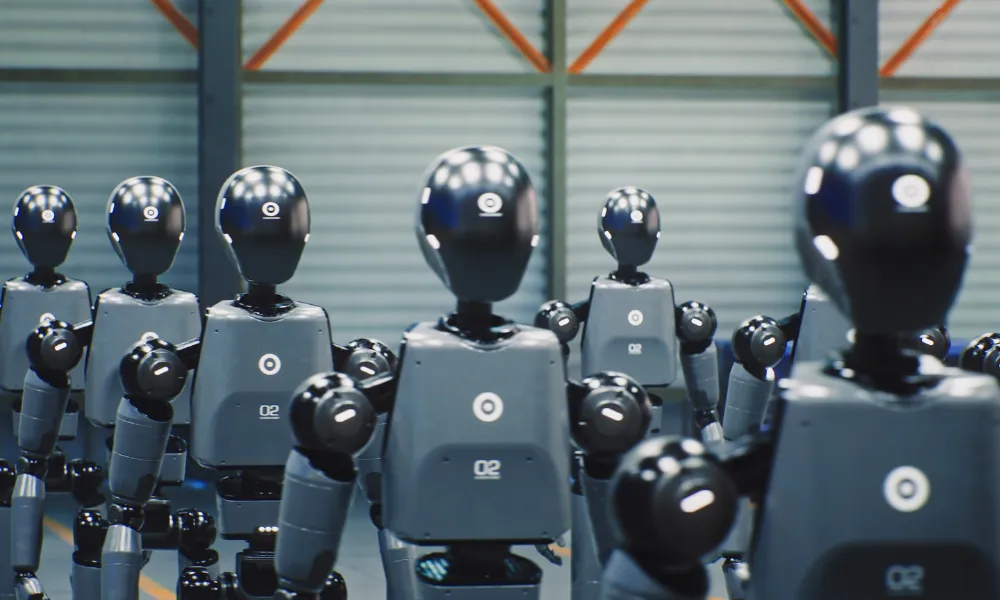
The problem, then, is not that the robots are coming. It is that they may arrive or, worse, go to China, before we have finished the consultation on setting up the committee that will study the preparation of a preliminary recommendation.