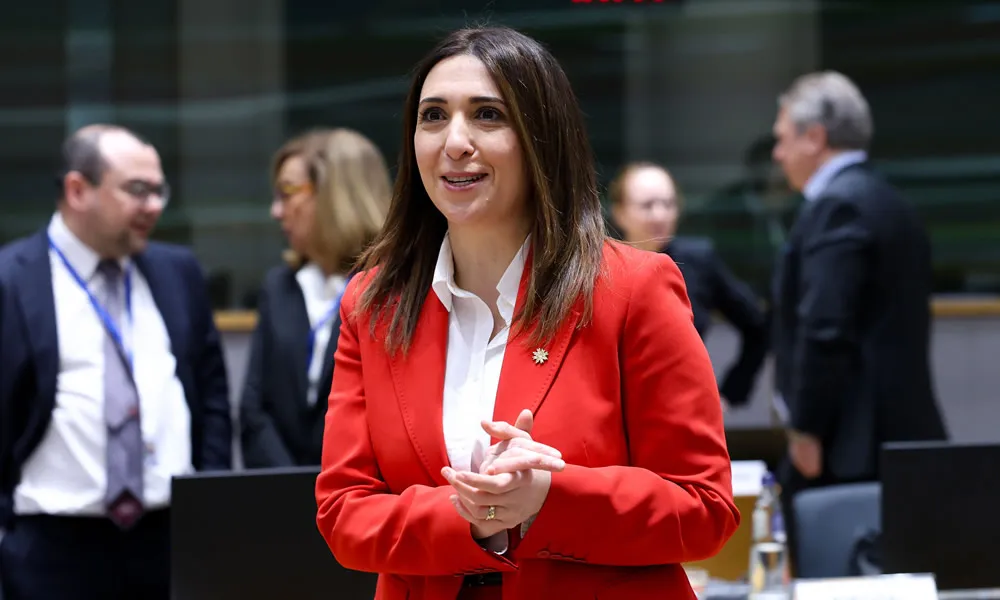
Marilena Raouna, speaking on behalf of the Council at the European Parliament plenary, addressed two key debates on Ukraine and the Middle East, outlining the bloc’s priorities on justice, stability and the broader geopolitical impact.
Accountability and support for Ukraine
Addressing the debate on Russia’s war against Ukraine, Raouna said the conflict has caused “immense suffering” for civilians, citing reports from international bodies and human rights organisations of systematic violations of international humanitarian law, including attacks on civilian infrastructure and energy facilities.
She noted that during the previous winter, cold weather had effectively been weaponised against Ukraine’s population.
She reiterated the EU’s “firm and unwavering support” for Ukraine’s independence, sovereignty and territorial integrity, adding that supporting Ukraine on all fronts has been a key priority of the Cyprus Presidency.
Raouna said Cyprus has a first-hand understanding of the consequences of invasion and occupation on civilians.
She stressed that the EU seeks a just and lasting peace based on international law, the UN Charter and the principle that borders cannot be changed by force. Any agreement, she added, must include robust security guarantees and ensure full accountability for international crimes linked to Russia’s war.
She welcomed progress in recent months on the International Claims Commission and the Special Tribunal for the Crime of Aggression against Ukraine, expressing confidence that both initiatives will be ready ahead of the Council of Europe ministerial meeting in Chisinau on 14 and 15 May.
She also noted that EU co-legislators have agreed to provide Ukraine with a €90 billion support loan for this year and next, with the Cyprus Presidency working to translate the political decision into a concrete outcome ahead of the Informal European Council held last week in Cyprus.
The loan, she said, will help Ukraine meet urgent budgetary and defence needs and maintain resilience amid continued Russian attacks, stressing the importance of its swift implementation.
Raouna further highlighted the adoption of the 20th sanctions package, aimed at reducing Russia’s energy revenues, constraining its banking system, targeting shadow fleet activities and addressing circumvention.
She also drew attention to the estimated 20,000 Ukrainian children unlawfully deported or forcibly transferred to Russia and occupied territories, noting that many have had their identities altered and have been placed for adoption.
Around 2,100 children have so far been returned, she said, stressing that efforts must continue, including through the upcoming high-level meeting of the International Coalition for the Return of Ukrainian Children, which the EU will co-host with Canada and Ukraine in May.
Middle East crisis and energy implications
Turning to the Middle East, Raouna said the ongoing crisis carries “profound global repercussions” for the EU’s security environment and economic interests, particularly in relation to energy prices and supply chains.
She referred to the Informal European Council held in Cyprus last week, which focused on de-escalation, freedom of navigation and the impact of the crisis on energy.
The Deputy Minister stressed that the conflict is “neither abstract nor distant”, noting that it directly affects the EU’s neighbourhood and requires a coordinated and unified response.
She outlined key EU objectives, including restoring freedom of navigation in the Strait of Hormuz in line with international law and the UN Convention on the Law of the Sea, contributing to de-escalation efforts that could lead to a lasting ceasefire, and ensuring that Iran does not acquire nuclear weapons capabilities.
Raouna emphasised that cooperation with Middle Eastern and Gulf partners is essential, noting that the EU has maintained close contacts with countries in the region and expressed solidarity with those affected by the conflict.
She welcomed the ceasefire agreed between the United States and Iran on 9 April and encouraged continued engagement in good faith, underlining that diplomacy remains the only viable path to restoring stability.
She also referred to a meeting held in Nicosia on the margins of the informal summit between EU leaders and counterparts from Lebanon, Egypt, Syria, Jordan and Gulf countries, where these positions were reiterated.
Energy, trade and strategic autonomy
Raouna warned that disruptions to energy and trade flows are already creating ripple effects on fertiliser supply, food prices, economic growth and investment patterns.
She stressed that safeguarding freedom of navigation in the Strait of Hormuz is a primary concern due to its impact on EU competitiveness, energy markets and the cost of living.
In this context, she highlighted the role of the EU maritime operation Aspides in helping to keep key shipping routes open and secure.
She said the Council is working on proposals to mitigate the impact of the crisis on energy prices, in line with European Council conclusions and the “One Europe, One Market” roadmap agreed in Cyprus by the three EU institutions.
Raouna underlined that continued dependence on imported fossil fuels leaves the EU exposed to price shocks, stressing that energy security is closely linked to strategic autonomy.
She said the EU strategy combines short-term measures to stabilise prices with long-term efforts to build a stronger Energy Union, including through initiatives such as the Grids Package.
On fertilisers, she said the EU is awaiting the European Commission’s action plan, which is expected to include both immediate measures and steps to strengthen the resilience of the agricultural sector by reducing reliance on imports.
Broader regional tensions
Raouna also referred to other flashpoints in the region, including Lebanon, where she said the country is paying a heavy price for a war it did not choose and condemned attacks on UN peacekeepers.
She welcomed the ceasefire and ongoing talks under US auspices, calling on all sides to respect Lebanon’s sovereignty and territorial integrity.
She also pointed to the situation in Gaza and the West Bank, stressing the need for progress on the Gaza peace plan to avoid undermining fragile political momentum.
The EU, she said, remains committed to contributing through all available tools, including recent international meetings in Brussels involving the Global Alliance and the Ad-hoc Liaison Committee.
Raouna concluded that a just and sustainable peace can only be achieved through a two-state solution in line with relevant UN Security Council resolutions.