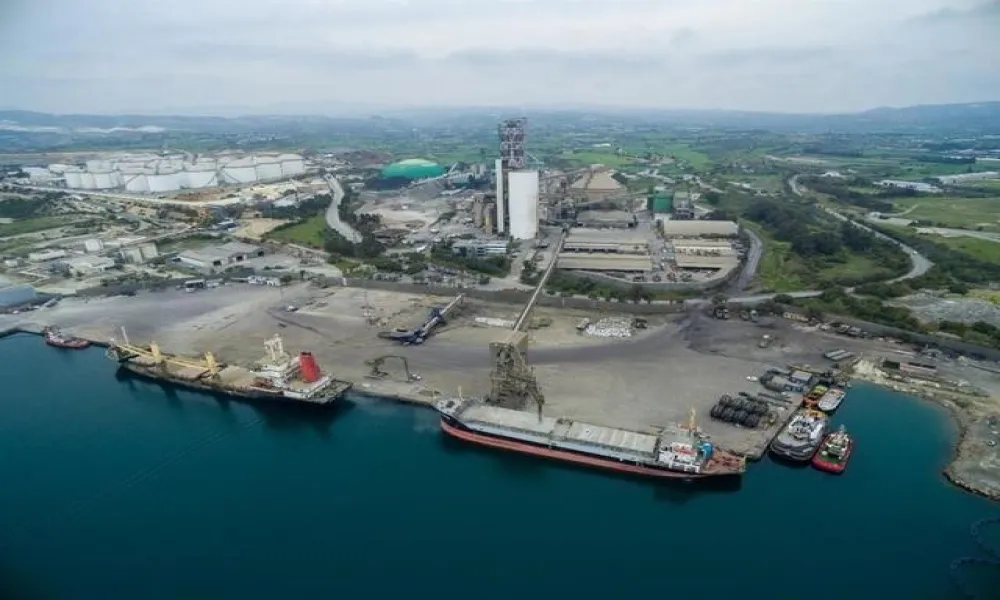

Energy Minister George Papanastasiou told the House Energy Committee on Tuesday that the government will receive the project manager’s report on the Vasiliko liquefied natural gas (LNG) terminal in the coming days.
He stressed that the terminal is crucial for Cyprus’ energy security, acknowledging that “mistakes were made in the past.” He added that the aim is for Cyprus to secure the energy infrastructure it needs with full transparency.
Committee chairman and DISY MP Kyriakos Hadjiyiannis said that part of the meeting would be held behind closed doors at the minister’s request. He also asked Papanastasiou to clarify his earlier reference to a “change of course” for the Vasiliko project.
Responding, the minister reiterated that the terminal is a cornerstone for Cyprus’ energy security and “we must speak responsibly.” Reviewing the project’s troubled history, he recalled that the contract with the Chinese consortium had been cancelled after repeated delays and demands.
He noted that ETYFA has tasked French firm Technip, the project manager, with reviewing and preparing a study on the best way to complete the jetty and onshore works. The government expects to receive the company’s report within days, he said.
Papanastasiou reminded that the project has already been investigated by the European Court of Auditors, the European Climate, Infrastructure and Environment Executive Agency (CINEA), and the European Public Prosecutor’s Office (EPPO). “Accountability will be pursued wherever it is due,” he said, stressing the need for swift implementation but also safety, public interest protection, and cost management.
“We are criticised for delays in the past. The public’s frustration is justified,” he admitted, repeating that mistakes had been made.
The minister assured MPs that the government is working to complete the terminal as soon as possible, making clear “this is not an open-ended project.”
MPs demand clarity and accountability
During the session, Hadjiyiannis criticised the absence of the Attorney General, who had been invited. Independent MP Alexandra Attalidou asked when EPPO’s investigation would conclude and whether the Audit Office was informed. Green Party leader Stavros Papadouris questioned whether the project would ultimately be completed.
DIKO MP Panikos Leonidou pressed for answers on why the agreement with the Chinese consortium was terminated without legal advice, while DIKO leader Nicolas Papadopoulos reminded that “18 years and hundreds of millions of euros later, we still don’t have natural gas.” He called for collective self-criticism, asking whether the original planning was sound or catastrophic.
AKEL Secretary-General Stefanos Stefanou highlighted the urgency of finishing the infrastructure, warning that between 2018 and mid-2025 Cyprus will have paid €1.3 billion in emissions penalties, risking power and water shortages. “Do you consider you were wrong and will you say mea culpa? Are you certain that by 2028 Cyprus will have gas?” he asked.
Other MPs raised issues ranging from the project’s total cost so far, potential criminal liability, the floating Prometheus unit, and why the ministry changed its legal advisors. DISY MP Averof Neophytou said poor planning was self-evident and questioned why the onshore works had not been completed, while also demanding that Lloyd’s study be tabled in parliament, accusing the House of being misled.
Papadopoulos acknowledged that “everyone recognises the project began with a completely flawed design” and suggested that sensitive questions be addressed in the closed session.
Hadjiyiannis concluded the open debate by asking the minister what promises had been made to the Chinese consortium before the contract was terminated, and why direct negotiations for reassignment failed.
The committee then moved into a closed session with the minister, the Auditor General, institutional representatives, and the project’s contractors and subcontractors.
CNA