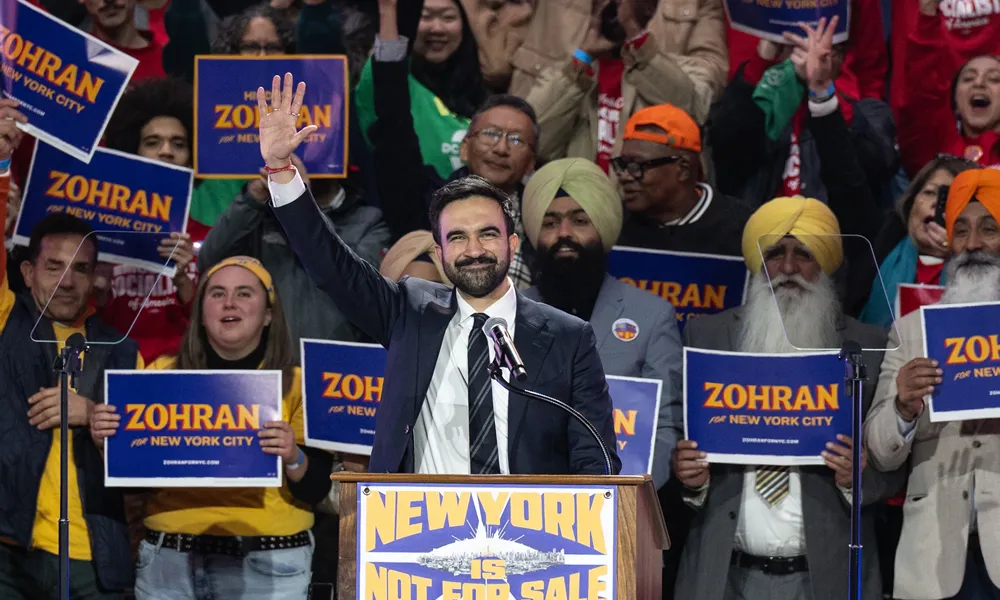

Zohran Mamdani won New York City’s mayoral race on 4 November with 50.4% of the vote, defeating Andrew Cuomo on 41.6% and Curtis Sliwa on 7.1%, becoming the city’s first Muslim and South Asian mayor, and its youngest in more than a century. In his victory speech, he told supporters that New Yorkers had “chosen hope over tyranny,” vowed “to wake each morning with a singular purpose, to make this city better for you than it was the day before,” and jabbed at Donald Trump with the line, “turn the volume up.”
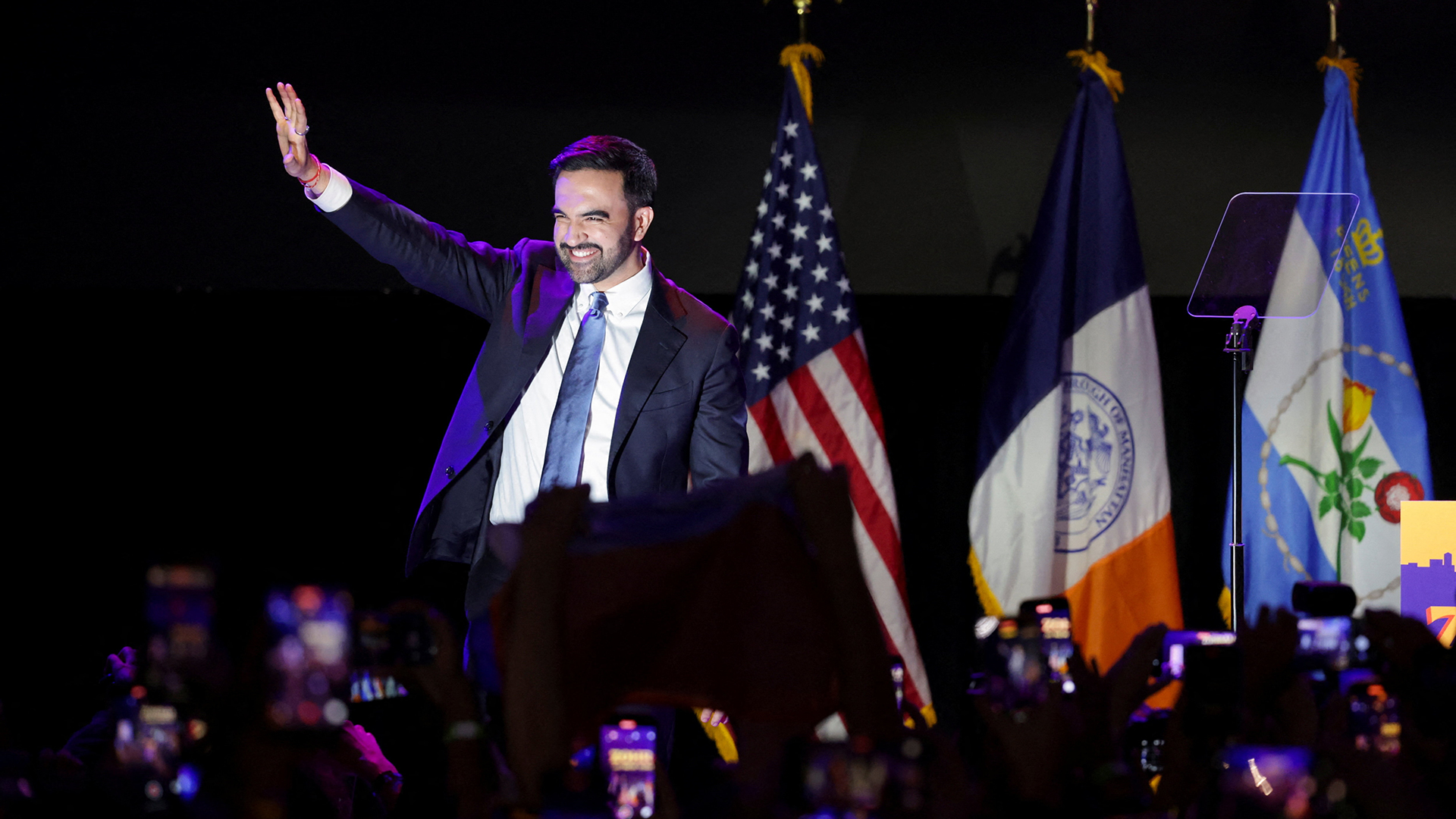
A city turned on its head
When Zohran Mamdani woke to a barrage of calls the morning after June’s Democratic primary, even he seemed startled. The first-term assemblyman, the Ugandan-Indian son of immigrants and a self-described democratic socialist, had just unseated former governor Andrew Cuomo. Power brokers who once set New York’s terms suddenly found themselves on the defensive. By November, the underdog bid born in Astoria cafes and on TikTok had carried him to City Hall.
A year earlier, Mamdani hovered at one per cent in polls and few New Yorkers knew his name. His team shunned the traditional playbook and built a campaign to match the city’s pulse. Volunteer-heavy, street-level, relentlessly online. Limited-edition “earned” merch replaced glossy fundraising; citywide scavenger hunts and a Coney Island football tournament drew thousands. While Cuomo leaned on a super PAC and old alliances, Mamdani talked rent, transport and generational change. On 24 June, he won the primary so decisively his team had not prepared a victory speech.
The tightrope after the primary
Victory triggered fierce pushback. Allies of Cuomo leaned on unions and donors; billionaires warned of “saving the city” from a socialist. Then a Midtown mass shooting threatened to upend the race as Cuomo blamed Mamdani’s past policing rhetoric. Zohran Mamdani was abroad (in Uganda for a family celebration) when the Midtown shooting occurred. The candidate flew back, met the slain officer’s Bangladeshi Muslim family, and addressed the city at length, condemning the violence and acknowledging his views had evolved. For many voters, it was the first moment he looked like a mayor.
Courting power without losing purpose
To win November, Mamdani moved to calm the establishment without abandoning his platform. He rang business leaders one by one, listened more than he lectured, and floated practical routes to fund universal childcare and fare-free buses without automatic tax hikes. He sought peace with Governor Kathy Hochul, apologised for past barbs and agreed to consult on key appointments like the police commissioner. He met Michael Bloomberg, who later funded late attack ads; by then, the coalition was set.
A coalition like no other
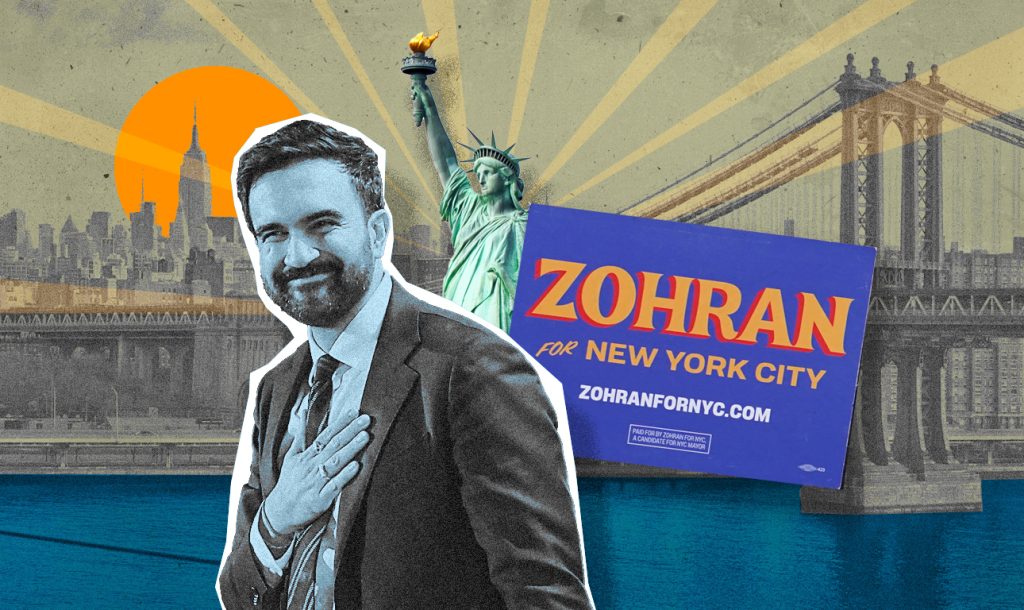
The late-October rally at Forest Hills Stadium showed its breadth: Bernie Sanders and Alexandria Ocasio-Cortez alongside Hochul and Albany leaders. Younger renters, immigrant workers, students and parts of organised labour fused into what analysts called an affordability alliance. On 4 November, Mamdani defeated Cuomo, running as an independent, and Republican Curtis Sliwa to become New York’s 111th mayor, its first Muslim and South Asian leader, and its youngest in over a century.
In his victory speech, Mamdani said hope had defeated tyranny, pledged New York would remain a city of immigrants, and promised to work hand in hand with officers who reduce crime while tackling mental-health crises and homelessness. He framed his mandate around rent control, fare-free buses and universal childcare, and addressed fears stoked by national politics, vowing to fight antisemitism and to govern for all New Yorkers.
The meaning of the Mamdani moment
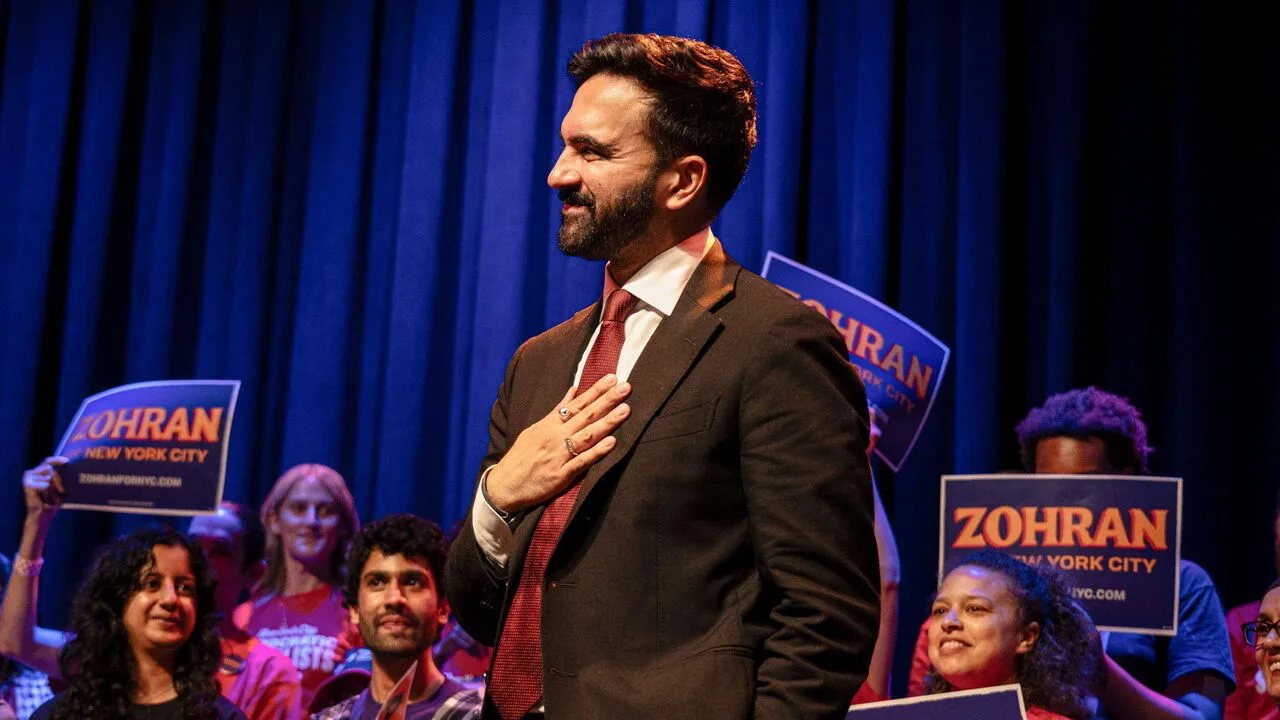
Mamdani’s rise signals a generational and ideological turn in urban Democratic politics: a progressive, movement-first strategy can win a world city when it is anchored in affordability and representation. It also sets a demanding test. Delivering on bold promises will require fiscal discipline, steady relations with wary business interests and unions, and deft navigation of policing and foreign-policy sensitivities. The symbolism is unmistakable. In the city that produced Donald Trump, voters chose his ideological opposite. The task now is to turn a campaign built on hope into a governing programme that lasts.
Sources: The New York Times, MSNBC, CNN