Early references to the creation of a coast guard in Cyprus date back many years. The discussion resurfaced after this year’s announcement by Justice Minister Costas Fytiris and the recent approval of the proposal by the Council of Ministers. The central questions, however, are whether the project will finally move from promises to implementation – and how soon the Coast Guard will actually become operational. The doubt is understandable, given the history.
Back in 2015, President Nicos Anastasiades’ government and then‑Justice Minister Ionas Nicolaou stated that the refugee crisis had prompted instructions to speed up procedures for establishing a Coast Guard. They noted they were awaiting the completion of a study by state officials.
Ionas’ plans
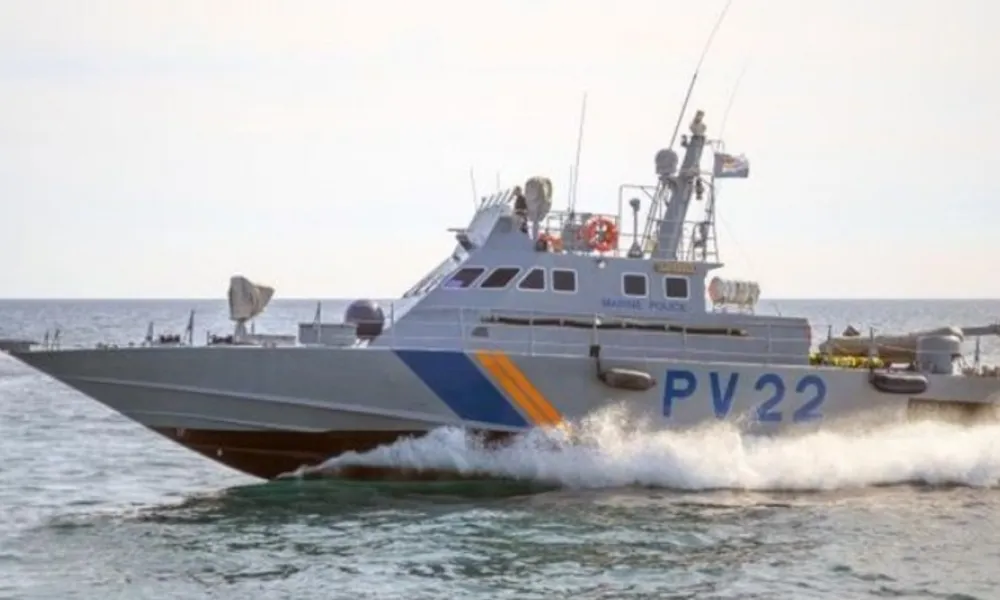
In October 2015, commenting on the refugee crisis, Ionas Nicolaou said that it required the authorities – both the Police and the National Guard’s aviation assets – to remain on constant alert to monitor Cyprus’s coasts and surrounding sea. According to Nicolaou, the envisioned unit would include both the Police Air Operations Unit and the Marine Police, while also coordinating the deployment of aircraft for firefighting.
He said the unit would aim to make better use of the Republic’s aerial assets and coordinate all activities relating to the Police’s maritime and aviation branches, along with other state services, to ensure more effective control of the coasts and surrounding waters for security purposes, and in cooperation with the Search and Rescue Coordination Centre for all related obligations.
All these statements were made in 2015. Meetings were even held with the Greek government and the Ministry of Shipping to gather information on how Greece’s Coast Guard operates.
Announcements on new equipment
Two years later, in May 2017, the same minister suggested that establishment of a Cyprus Coast Guard was only months away. At that time, he said a draft law had already been prepared based on the completed study, that it was being refined, and that they were awaiting Police feedback before sending it to the Legal Service. The law would be accompanied by procurement of vessels and aircraft. He also noted that EU funding plans required the purchase of five vessels, 90% financed by the EU.
Despite these statements, the Coast Guard remained... on paper.
Fytiris pushes forward
Fast forward to 2026. Justice Minister Costas Fytiris, who served as a naval officer in the National Guard, knows firsthand the need for a functional Coast Guard. He has placed the project high on his priority list. Last week, the Council of Ministers approved its establishment. The next step is to form a legislative drafting committee to prepare full recommendations and the required laws. Within the ministry, it is said that Fytiris has set strict deadlines to ensure the plan is implemented as soon as possible.
The Coast Guard’s main responsibilities will include surveillance and control of all maritime zones; managing policing and navigation‑safety incidents; combating illegal activities such as smuggling and human trafficking; protecting offshore installations and the marine environment; and participating in search‑and‑rescue operations. It will operate across all maritime zones under the Republic of Cyprus, with the authority appropriate to each zone (territorial waters, contiguous zone and EEZ).
At present, maritime surveillance and control are spread across multiple ministries – often without coordination, real‑time information sharing or integration. This fragmentation can lead to overlapping responsibilities, poor resource use and limited operational effectiveness. In some cases, services with legal authority lack the necessary equipment and staff to fulfill their duties.
The Coast Guard headquarters will be located within the Evangelos Florakis Naval Base in Mari. According to information obtained by Politis, as part of ongoing plans to upgrade the base, provisions have already been made for administrative facilities for Coast Guard personnel and leadership.
Services to be transferred
Several state services with individual responsibilities at sea will be moved under the Coast Guard’s command. These include:
- Marine and Port Police
- Police Air Operations Unit
- Fisheries Control Division of the Department of Fisheries and Marine Research (for monitoring fishing activities in maritime zones and ports)
- Marine pollution prevention and response unit of the Fisheries Department
- Vessel Traffic Monitoring and Information System (VTMIS), along with its equipment and personnel
- Hydrography section of the Department of Lands and Surveys
All these will be integrated into a single structure, designed to ensure coordinated, efficient and effective management of Cyprus’s maritime environment.