(ANKARA) Prof. Dr. Güven Sak, one of Türkiye’s leading economists and a prominent public policy expert, has outlined a shifting regional landscape in his latest ANKA Review analysis, suggesting that the Iran war may redefine not only security dynamics but also the geography of global finance.
According to Sak, the coordinated strikes launched by the United States and Israel on February 28 triggered a chain reaction whose effects are now being felt far beyond the battlefield. Iran’s response, largely concentrated in the Gulf, has exposed structural vulnerabilities in the region’s long-standing economic hubs.
As of March 30, a significant share of Iran’s missile and drone attacks targeted the United Arab Emirates, directly challenging the perception of security that underpinned Dubai’s rise as a global financial and logistics center.
Dubai’s “safe haven” image under strain
In his ANKA Review analysis Sak argues that Dubai’s carefully cultivated image as a city insulated from regional turbulence has been fundamentally shaken. The escalation in the Gulf, particularly disruptions linked to the Strait of Hormuz, has made the city’s geographic vulnerabilities increasingly visible.
In this new environment, investments in Dubai are no longer assessed purely in economic terms but also through the lens of geopolitical risk. Assets once seen as symbols of stability are now viewed as exposed to potential collateral damage in an increasingly volatile region.
Such shifts, Sak notes, are unlikely to be temporary. Rather than a quick return to normalcy, the region may be entering a prolonged period of low-intensity tension, making it difficult for Dubai to regain its former appeal in the near term.
Cyprus gains strategic relevance
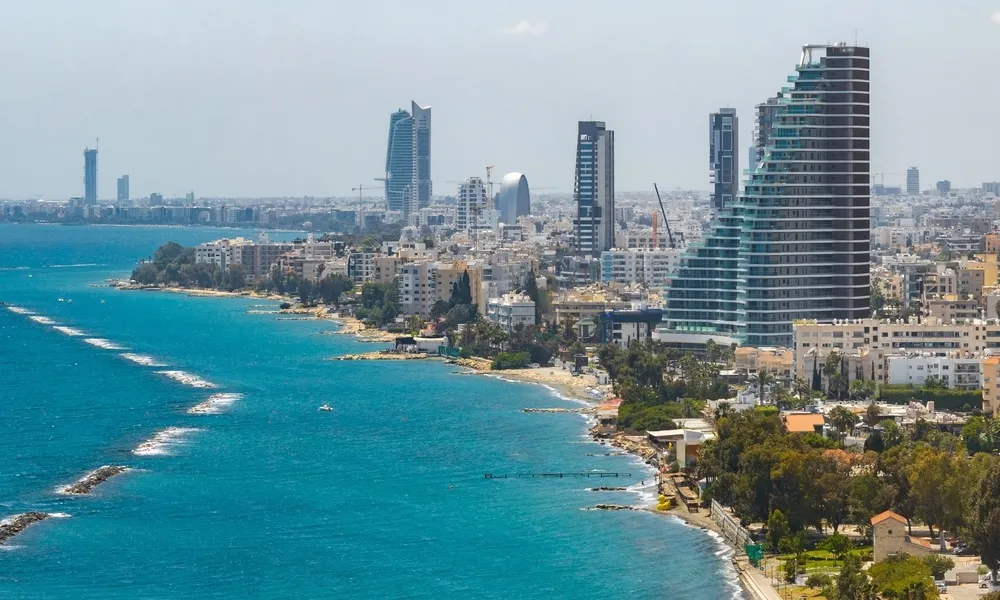
Against this backdrop, Sak identifies Cyprus as a key beneficiary of the evolving regional order. Long described in Turkish strategic thinking as an “anchored aircraft carrier” in the Eastern Mediterranean, the island is now assuming a more tangible role in regional security dynamics.
The changing nature of warfare, increasingly shaped by missiles and unmanned aerial systems, has elevated the importance of geography. Cyprus provides critical depth for monitoring and intercepting aerial threats, effectively extending the defensive perimeter toward the Levant.
This role is not limited to military considerations. Sak emphasizes that security infrastructure has become a core component of economic stability, with defense capabilities directly influencing investor confidence.
The role of NATO-linked air defense systems in both Türkiye and the Eastern Mediterranean further underscores the growing link between security guarantees and economic resilience.
From security to financial opportunity
Sak frames the central economic question as whether Cyprus can evolve into a financial center in its own right. He cautions, however, against viewing this as a simple replacement of Dubai.
Dubai’s economy is highly diversified, spanning logistics, trade, tourism and finance. Not all of these sectors will relocate in response to rising geopolitical risks. However, the financial sector, by its nature, is more sensitive to institutional quality and perceived stability.
In this context, Sak points to the Dubai International Financial Centre as a benchmark. Its success is rooted not only in infrastructure but also in institutional design, including a common law framework, independent courts and a predictable regulatory environment.
Cyprus’s institutional advantage
Cyprus, Sak argues, already possesses many of these elements. The island’s hybrid legal systems, grounded in common law traditions, offer a level of predictability and legal certainty that is highly attractive to international investors.
This means Cyprus does not need to build a financial ecosystem from scratch. Instead, it can build on its existing institutional foundations to position itself as a credible alternative in a changing global landscape.
A geopolitical shift creating economic space
The analysis concludes that the intersection between security and economics is becoming increasingly decisive. In a region marked by instability, relative stability itself becomes a strategic asset.
Sak also suggests that such an economic trajectory could have political implications for Cyprus. The prospect of shared prosperity may strengthen incentives for cooperation between the island’s two communities and potentially contribute to renewed momentum in long-stalled settlement efforts.
Ultimately, Sak argues that the key question is not whether Cyprus will replace Dubai, but whether shifting geopolitical dynamics are creating space for the island to assume a new role. While the outcome remains uncertain, the direction of change is becoming increasingly clear.