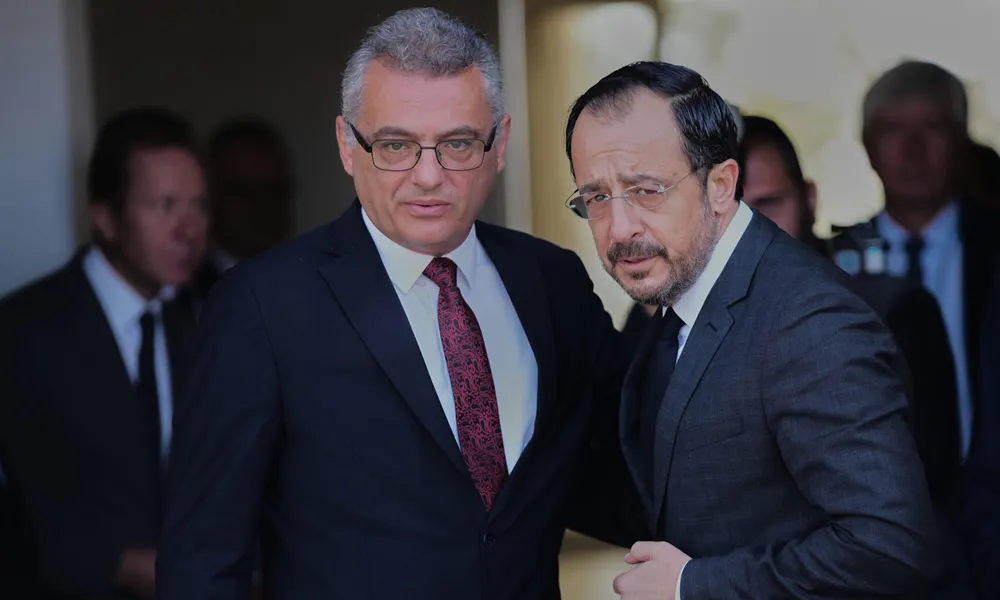

President Nikos Christodoulides insisted on Thursday that crossing points must benefit both communities. The objective is not to open a crossing that only serves Turkish Cypriots, he argued.
His comments raise questions on how he and Turkish Cypriot leader Tufan Erhürman will close the gap between them given the zero-sum game approach taken to CBMs, where initiatives are often viewed as beneficial for one side or the other – not for both – and are usually negotiated as a package.
UN Personal Envoy María Ángela Holguín Cuéllar has publicly asked the leaders to focus in the coming months on finding mutually beneficial solutions to problems facing the two communities, noting that her return to the island depends on their ability to take a “specific step forward”.
Prountzos-Harmancı seek solutions
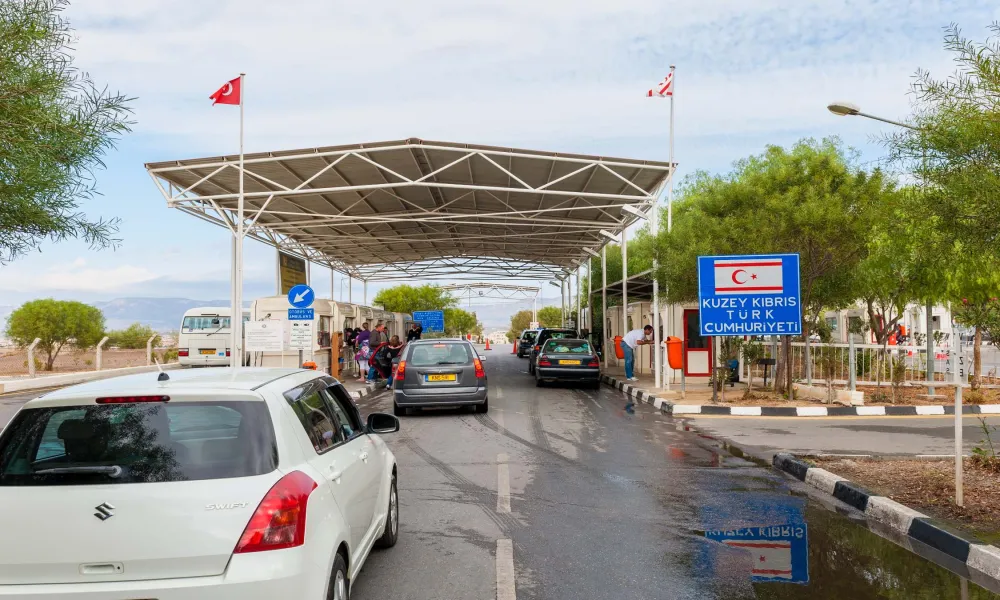
On Tuesday, the leaders failed to agree on implementing any trust-building initiatives or come closer on issues of substance. The following day, Nicosia Mayor Charalambos Prountzos announced that he’d submitted a proposal to the Greek Cypriot negotiator to open a vehicle crossing at Agiou Ilarionos in Kaimakli to ease chronic congestion at Agios Dhometios.
The booths there are not always all staffed, resulting in extensive delays for both Greek Cypriot and Turkish Cypriot motorists. The government does not keep all booths staffed but instead decides on an ad hoc basis when to staff the third booth, depending on traffic. During an on-site visit, motorists from both communities told Politis that crossing times have become extremely unpredictable, making it very stressful to plan travel time in advance or meet appointments on time.
Prountzos added that the situation was aggravated by stricter vehicle checks, implemented as part of compliance measures for full accession to the Schengen Treaty. It's worth noting that the majority of vehicle crossings between the two communities take place at Agios Dhometios.
The Nicosia mayor said he has discussed the matter over the past year with his Turkish Cypriot counterpart Mehmet Harmancı.
In a social media post, Harmancı welcomed the announcement by his “dear friend, Mayor Prountzos of the other side of Nicosia” regarding an alternative crossing point to overcome the deadlock and ease congestion in the capital.
He noted that the two have for a long time tried to develop common ideas on many issues.
According to reliable sources, Prountzos and Harmancı have also been tasked with finding a solution to the location and connection of the bicommunal project to install solar energy plants in the buffer zone – after that also hit a brick wall at the Track 1 level.
Teachers’ union warns public frustration and distrust growing
Head of the Turkish Cypriot primary school teachers’ union (KTÖS) Burak Maviş also highlighted on Thursday the need for more crossing points in Nicosia, reported Kıbrıs Postası. He further called for all booths at existing crossing points to remain open 24 hours a day.
Despite statements by both Erhürman and Christodoulides on reciprocal crossings, no concrete progress or practical steps have been taken, Maviş argued. Although a third lane has been opened at Agios Dhometios crossing, this has not delivered the expected benefit, with delays and congestion becoming a permanent fixture, he noted.
The union leader said opening more crossing points – for vehicles and pedestrians – in the shared city of Nicosia was vitally important. The Kaimakli proposal should be evaluated within this framework, he said, warning that maintaining the current situation would only fuel public frustration and distrust.
Christodoulides insists on reciprocity
Asked to comment on Prountzos’ proposal, President Christodoulides said on Thursday, “the key objective is not to open a crossing that serves only Turkish Cypriots.”
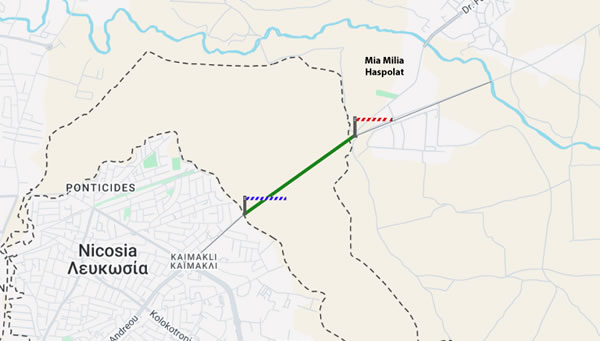
“We are ready both for Kaimakli and for Mia Milia, but at the same time the Athienou–Aglandjia crossing, or the crossing at Kokkina, must also open so that Greek Cypriots are served as well.
“This is the key objective behind opening crossing points: to open crossings that will facilitate the daily life of the entire Cypriot people, Greek Cypriots and Turkish Cypriots alike. From our side, I repeat today that I am ready for the four crossing points we agreed upon at the expanded conference with the Secretary‑General,” he said.
Christodoulides stressed the importance of “mutual satisfaction for all the Cypriot people”.
Asked whether a Kaimakli crossing could be considered on its own, he replied: “No, because that specific proposal is essentially for that crossing to open instead of Mia Milia.”
In response to Prountzos’ comments on the impact on the daily life of Agios Dhometios residents, the president argued that the third lane recently opened at that crossing point “could have been opened much earlier” if the UN had allowed the government to complete construction work in the buffer zone instead of taking over that part. He also pointed to increased staffing at Agios Dhometios.
Christodoulides said Prountzos is not alone in submitting proposals, noting that local representatives of Athienou, Kato Pyrgos and Polis Chrysochous have also done so.
“The government evaluates all proposals submitted. It is important, I repeat, that Greek Cypriots be served, just as Turkish Cypriots must also be served.”
The package deal
On March 18, 2025, following an expanded informal meeting of the two leaders – Christodoulides and Ersin Tatar – with the three guarantor powers in Geneva, UN Secretary-General Antonio Guterres announced that the leaders had agreed on a group of trust-building initiatives, including the opening of four crossing points.
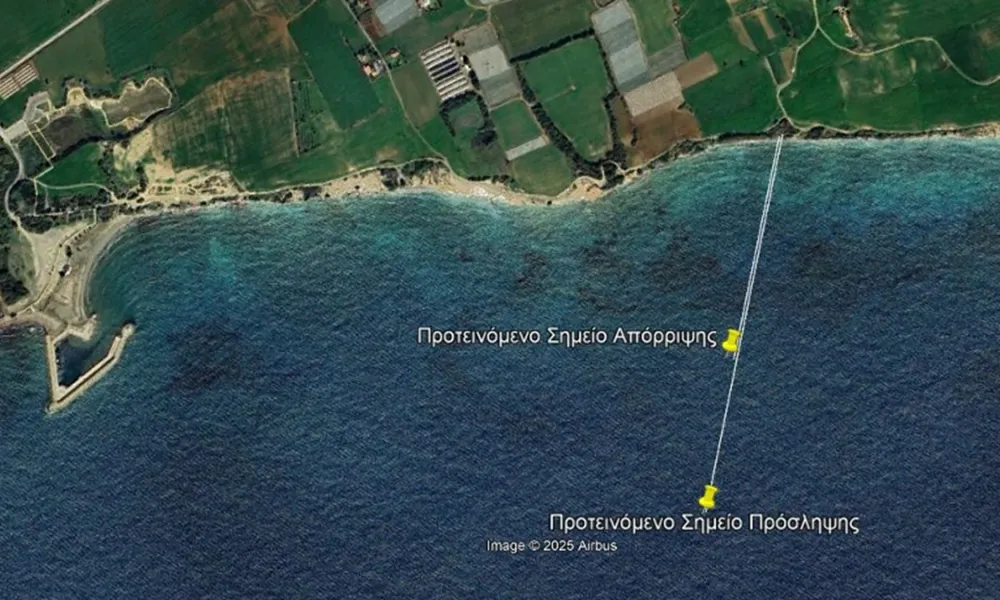
As is often the case, there are at least two versions of what was discussed during the ‘5+1’ in Geneva. One account says that although Guterres did not announce any locations, the two leaders had discussed four potential crossings: Mia Milia, Athienou-Aglandjia, Louroudjina-Lymbia, and Kokkina.
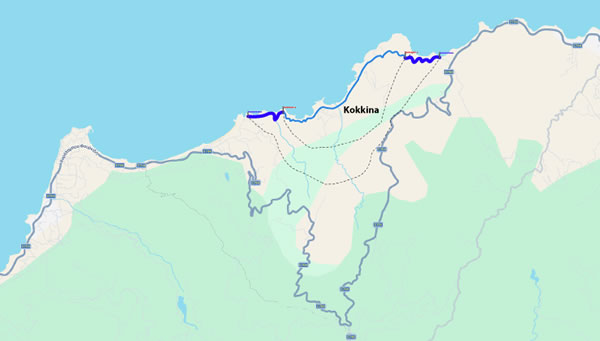
These are the four that Christodoulides is ready to open as part of a package. If they had to be separated, then in the interests of reciprocity, the Greek Cypriot side would likely accept to open Mia Milia and Athienou-Aglandjia together and/or Louroudjina-Lymbia and Kokkina.
However, Turkish Cypriot interest is reportedly focused mainly on Mia Milia, which would pave the way for increased trade across the Green Line from north to south, given its proximity to the Turkish Cypriot industrial zone. It seems the government does not view the option of sharing the burden of motorised crossings in the capital or the opportunity to increase trade from south to north as developments of benefit to the Greek Cypriot community.
The other account of Geneva says that upon the UNSG’s request, the Greek Cypriot side agreed that it would come up with two new crossing points in the discussions to follow in Nicosia, and would not continue to insist on the ones – including the Kokkina transit passage – that were not acceptable to the Turkish Cypriot side. The other crossing referred to is likely that of Athienou-Aglandjia which the Turkish Cypriot side considers objectionable as the route is deemed to violate the integrity of the buffer zone.
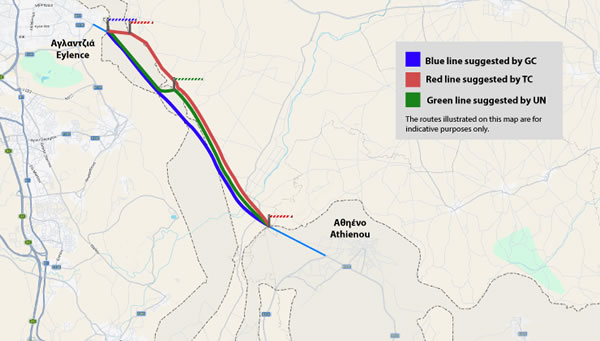
Hence, the Turkish Cypriot side has a different understanding of the four crossing points currently on the table, which they say are: Mia Milia, Athienou-Pyroi, Pyroi-Aglandja, and Louroudjina-Lymbia.