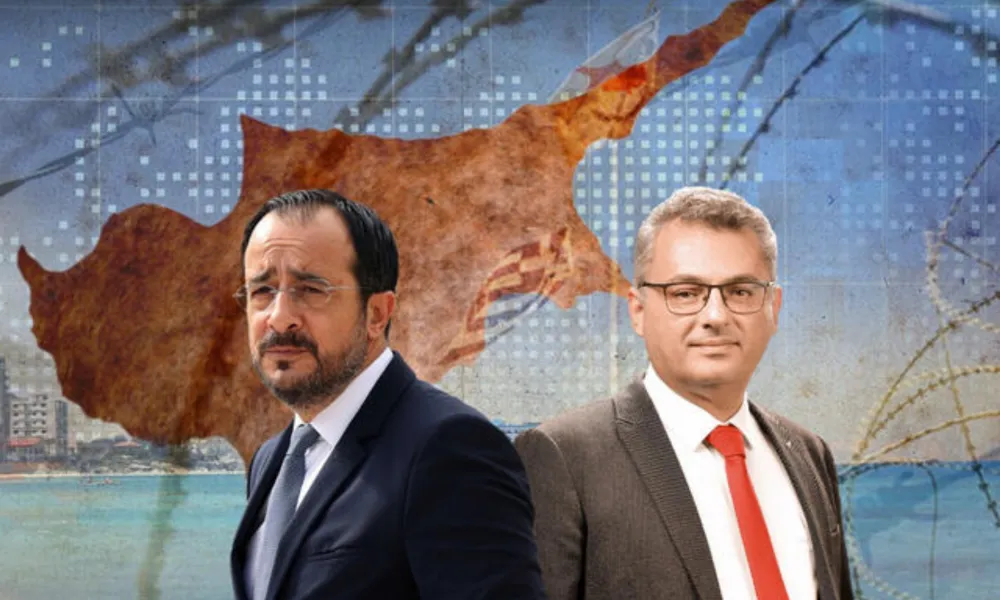



The two leaders and the three guarantor powers find themselves on the eve of a new attempt by UN Secretary-General António Guterres on the Cyprus problem. Guterres has informed all parties involved that he intends to make an effort to build a common understanding on the basis of which talks could resume before his term as Secretary-General concludes. He appears to be working towards handing his successor at least a new process that preserves the convergences reached up to Crans-Montana and carries a realistic prospect of being completed successfully.
A strategic agreement?
Some commentators have interpreted Guterres's stated intention as an attempt to reach a strategic agreement on the Cyprus problem, one that would lock in the convergences achieved up to Crans-Montana and fix the form of a solution so as to facilitate efforts to relaunch talks under the next Secretary-General. A diplomatic source, however, expressed doubts about whether what is being contemplated amounts to a strategic agreement, saying that the picture remains unclear. "We will have a better picture when discussions about the new effort begin, and that is expected to happen in the coming weeks," the source said, adding that the attempt to relaunch talks might take the form of a joint communiqué or a statement by the UN Secretary-General.
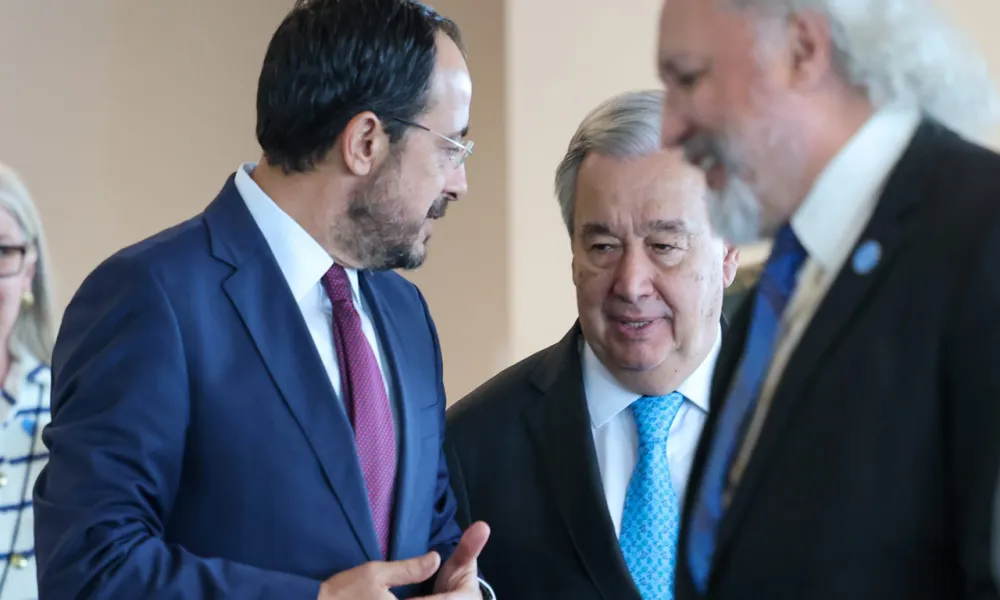
A source with knowledge of what was discussed between Guterres and President Christodoulides at their meeting in Brussels on 18 March told Politis that the Secretary-General did not explain the precise mechanism by which a resumption of negotiations would be achieved. "What he said," the source added, "is that a common understanding needs to be formed, on the basis of which all parties involved would agree to restart talks on the Cyprus problem." The source confirmed that Guterres has spoken with all sides about the new effort and that there appears to be a positive response from those involved in the process.
Erhuroglu's four points
A member of the Greek Cypriot negotiating team told Politis that the prevailing assessment is that building a common understanding would involve preserving everything agreed up to the end of the previous effort at Crans-Montana and focusing on the issues that remain open, adding that the possibility of incorporating the Guterres Framework could not be ruled out.
Asked whether the new Guterres effort would satisfy the four preconditions set by Turkish Cypriot leader Tufan Erhuruglu for the resumption of talks, the source said one of them was helpful, namely the confirmation of existing convergences and the commitment not to reopen issues already agreed. A second precondition, however, was characterised as unhelpful: the one concerning guarantees about the outcome even if negotiations were to collapse.
On the remaining two points, the prior acceptance by the Greek Cypriot side of political equality including a rotating presidency, and the establishment of a timetable for the negotiations process, the source suggested these could be addressed through a creative approach. "For example," they said, "if things go well, the timetable will not be an obstacle because there will be a kind of roadmap even if specific dates for the completion of the process are not placed on the table." The source added that if all convergences are reaffirmed, there would also be coverage on the question of Greek Cypriot acceptance of political equality.
Checkpoints
Throughout the preceding period, the two leaders have been unable to achieve meaningful progress on confidence-building measures or to make concrete announcements. This was the reason the UN Secretary-General's personal envoy on the Cyprus problem, María Ángela Holguín, became frustrated and chose to step back, leaving the island without setting a new date for a return visit.
The opening of even two checkpoints would send an encouraging signal to citizens and to the international community, and would give impetus to the process, while also facilitating Guterres's effort to relaunch talks. However, a diplomatic source on the Greek Cypriot side told Politis that on the checkpoint question, the situation remains exactly where it was. No common understanding has been reached between the two sides on opening the Pyroi-Athienou-Aglandjia and Mia Milia crossings, which are, the source said, the two checkpoints where the parties are closest to agreement. All technical issues have been resolved, the source argued, and what remains is for the Turkish Cypriot side to accept the compromise proposal put forward by the UN Secretary-General. The Turkish Cypriot side had insisted the road run through the occupied territory, while the Greek Cypriot side proposed using the old road within the buffer zone. Guterres subsequently proposed that the two sides split the difference, with half the route running through the occupied territory and the remainder within the buffer zone.
Environment
Politis understands that significant progress has been achieved on the environmental track, specifically on the restoration of the natural environment at the sites of old mines in the buffer zone near the Lefka area. This may well be the confidence-building measure the two leaders announce at their next meeting at the end of April, should a common understanding on the checkpoint question ultimately prove elusive.
Religious freedoms
Behind the cautious optimism generated by Guterres's new push, a more troubling picture has been forming over a series of obstacles to the exercise of religious freedoms. In recent days, a serious problem arose when pilgrims from the occupied territory attempted to visit the Hala Sultan Tekke mosque as part of the Eid al-Fitr celebrations. The organised visit did not take place, and some hold the Greek Cypriot side significantly responsible for the breakdown. While the Greek Cypriot side maintains that Turkish Cypriot "foreign minister" Tahsin Ertugruloglu attempted to poison the atmosphere by exploiting the pilgrims for political purposes, it appears the collapse could have been avoided had the Republic of Cyprus handled the matter with greater flexibility. The Greek Cypriot insistence on returning the process to the Religious Track framework caused considerable delay, making it impossible for the pilgrimage to take place during the festival period, while the demand for a significant reduction in the number of pilgrims on security grounds ultimately sank the effort entirely. The Greek Cypriot side failed to take into account the fact that the Easter period was approaching and that the Turkish Cypriot side would in turn reject Greek Cypriot requests for religious ceremonies at churches in the occupied territory. Several such requests have already been turned down, and this year permission was not granted for a service at the metropolitan church of Agios Mamas in Morphou.