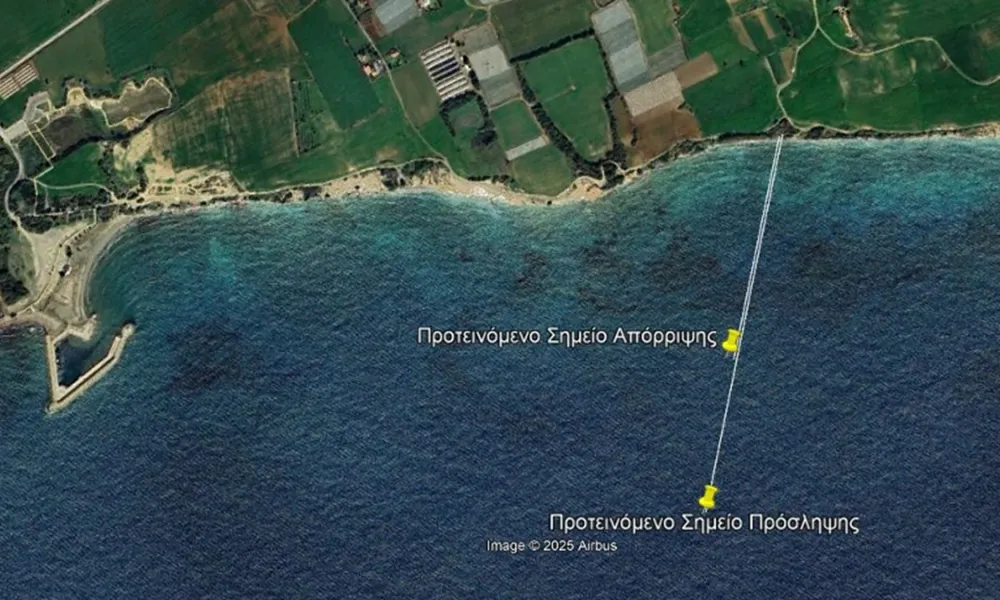

The “sudden” re‑emergence of the issue of the British Bases in public debate is neither accidental nor coincidental. In essence, it fits into the well‑known, repeatedly employed pattern of President Christodoulides’ communication strategy – now fully embedded in the administration’s broader publicity‑driven approach. It also connects to the wider political and communications environment shaped by developments in the region and by internal power dynamics, which remain central to the President’s thinking and planning as he looks toward 2028.
A timely trigger and a clear objective
Seen politically, timing is key. Heightened tensions in the Middle East, increased military activity on the Bases, and incidents such as the drone crash at Akrotiri – an episode whose significance has been amplified to such an extent that officials are now scrambling to contain the damage to the Cypriot economy – have created an atmosphere of unease. Within this context, the President’s decision to revive the issue of the British Bases functions as a political “response” to the public’s sense of insecurity, as well as a signal that the government is not a passive spectator.
A landscape of confusion
The Bases issue has a unique ability to activate multiple and often opposing political audiences simultaneously. Whether this activation clarifies or further confuses the government’s political direction appears to be of secondary concern.
On one side is the traditional left, represented primarily by AKEL, which – consistent with its long‑standing stance – reiterated in a statement last Friday its opposition to the presence of the Bases in Cyprus. AKEL has called on the President to clarify his goals and the level of dialogue he seeks with London, and stresses that it has historically “owned” this issue through its anti‑Bases position.
On the other side is a heterogenous right‑wing, far‑right or nationalist audience that also opposes the Bases, but from a different starting point – focused on national sovereignty and an increasingly strong scepticism toward the West. That such a highly charged topic resonates simultaneously with both these constituencies makes it a politically attractive tool – one the President is unlikely to ignore if it offers short‑term benefits.
A tactical manoeuvre for domestic use?
This raises the question of motive: is President Christodoulides pursuing a genuine strategic repositioning of the Republic of Cyprus, or is this a manoeuvre primarily intended for domestic political consumption?
There are indications of both, but the overarching picture suggests communications tactics rather than strategy.
First, no concrete framework has been presented for what “dialogue” actually entails. At what level would it be conducted? What objectives are being pursued – revision, partial adjustment, confidence‑building measures? Such vagueness allows political flexibility but undermines the credibility of the initiative.
A problem in deadlock
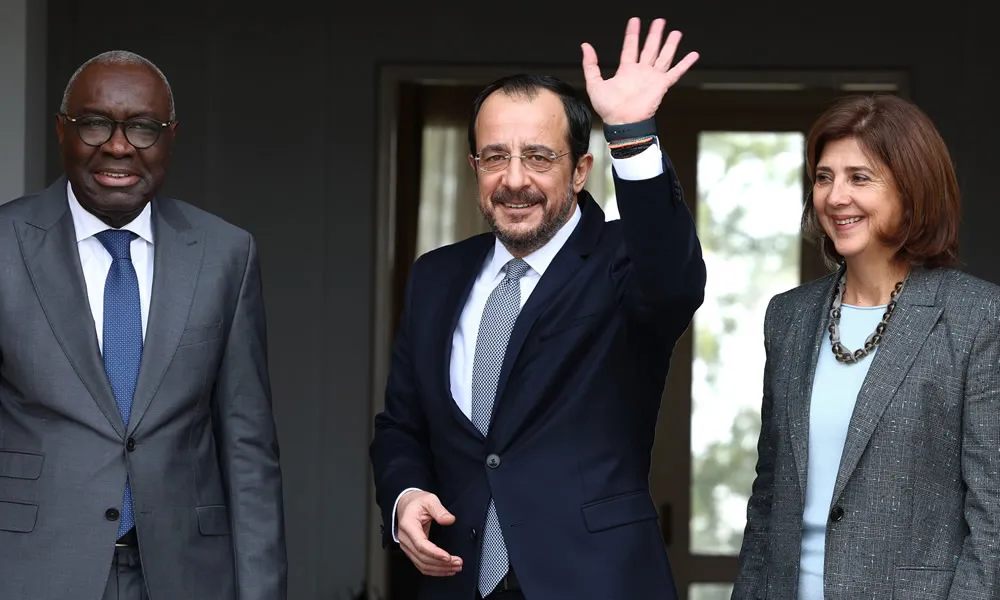
Second, the revival of the Bases issue comes at a time when the Cyprus problem is in complete paralysis. The disengagement of María Ángela Holguín, the frustration expressed by the UN Secretary‑General – who, despite his discouragement, insists he will continue efforts as long as he remains in office – and similar disappointment voiced by the European Commission’s special envoy, Johannes Hahn, who appears to be on his way out, have produced a vacuum. This absence of substantive movement on the Cyprus problem inevitably creates political space that the Presidency may fill with a symbolic parallel issue such as the Bases – whether as counterbalance or distraction. This does not necessarily imply a conscious avoidance of the Cyprus problem, but it does shift public debate from difficult decisions to a symbolically charged and emotionally resonant topic.
Third, the move fits a broader pattern of fluctuating political messaging. On the one hand, there is rhetoric about joining NATO; on the other, questioning the presence of the British Bases, which form a core element of Western security architecture in the region. This “dual language” broadens appeal across different audiences while contributing to strategic ambiguity.
In short, the question of populism is complex but unavoidable. When an issue with intricate legal and geopolitical dimensions is raised without a clear roadmap, it risks becoming a tool for generating expectations that cannot realistically be met – a hallmark of populist management.
Another interpretation
There is, however, another possible reading. The President’s characterisation of the Bases as a “colonial relic” reflects a long‑standing political and social sentiment in Cyprus. At the same time, his expressed willingness for “honest discussion” with the UK suggests a more pragmatic stance – acknowledging the issue while recognising its limits. The reference to the Bases in European Council conclusions and the support expressed by European Commission President Ursula von der Leyen give the matter political weight, though not legal force.
In practice, altering the status of the Bases is extraordinarily difficult. It would require:
• Agreement by all Treaty parties (the UK, Greece, Turkey, Greek Cypriots and Turkish Cypriots)
• Potential European‑level endorsement
• Linkage to an overall Cyprus settlement
Here lies the core contradiction: public discussion about removing the Bases often ignores the broader security context. In reality, nothing substantive can change without resolving the Cyprus problem. The Bases are intertwined with the system of guarantees, Turkey’s presence on the island, and the geopolitical realities on the ground.