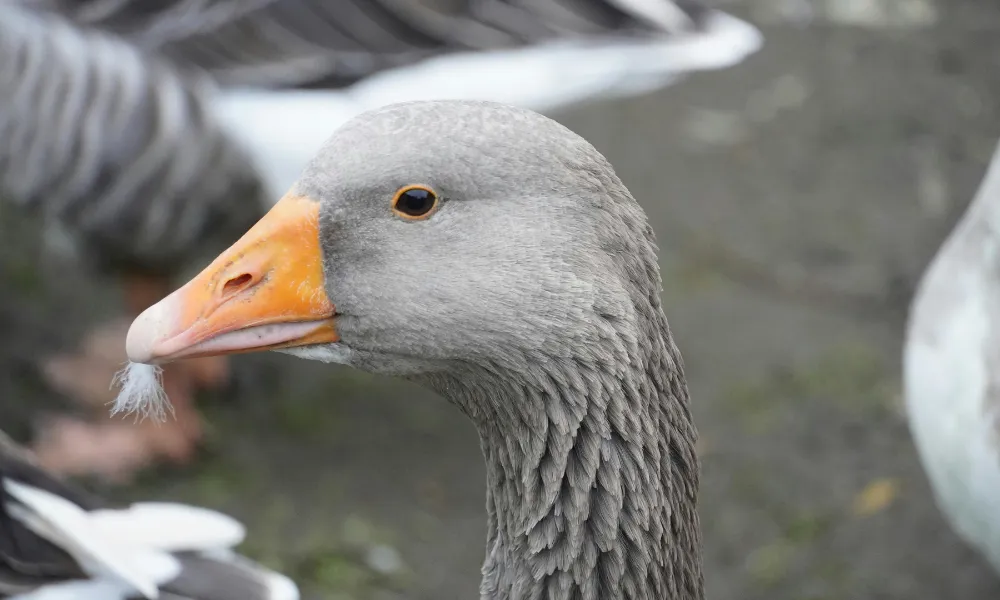
Goose poop, a familiar nuisance in parks and public spaces during spring, could become a valuable resource for producing protein and fertilizer, according to new research. Scientists have found that waste left behind by geese can be processed by insects and converted into products useful for agriculture and animal feed.
The study, led by researchers at Concordia University and published in the Journal of Environmental Management, explores how goose droppings might be integrated into a circular system that reduces pollution while generating useful byproducts.
Insects that recycle organic waste
The research focuses on the black soldier fly, an insect widely used in waste management because its larvae consume and break down organic material.
The team, led by Rassim Khelifa, tested whether the larvae could process goose poop.
“We wanted to see if the black soldier fly, a non-native species that is already industrially harvested widely, could be used to transform goose waste into valuable goods like protein and fertilizer,” Khelifa said. “The answer is yes; it can.”
As the larvae feed on organic waste, they convert it into protein-rich biomass, which can be used in animal feed, while leaving behind a nutrient-rich residue.
Experiments with goose waste
Researchers examined goose populations across 11 urban sites in southern Quebec and Ontario and confirmed a clear connection between flock size and the amount of droppings accumulating in public spaces.
In laboratory experiments, black soldier fly larvae were given three diets: a standard laboratory feed, a mix of feed and goose droppings, and goose droppings alone.
Larvae fed the mixed diet grew faster and survived in greater numbers, processing waste more efficiently. Those fed only goose poop still consumed more than half of the material but developed more slowly and reached smaller adult sizes.
The results show that goose poop alone can sustain the process, even though it is not the most efficient diet.
The role of natural microbes
Scientists also tested whether sterilising the droppings would change the results. Some samples were autoclaved, a process that removes bacteria using heat and pressure.
Larvae fed sterilised waste performed worse. They ate less, grew more slowly and had shorter lifespans as adults.
The findings suggest that natural microbes present in goose droppings may help larvae develop, highlighting how bacteria can sometimes support ecological processes.
Fertilizer from insect byproducts
After feeding, the larvae produce a byproduct known as frass, which is rich in nutrients and can be used as fertilizer.
Researchers tested the frass on duckweed, a fast-growing aquatic plant often used in animal feed and water treatment systems.
Duckweed grown with this fertilizer produced 32% higher yields than plants grown with a standard nutrient solution.
A circular solution for urban waste
The process creates a circular system in which goose droppings feed insect larvae, the larvae produce protein, and their waste supports plant growth.
Such an approach could help reduce sanitation problems in urban areas, limit environmental damage caused by nutrient runoff, and produce useful materials for agriculture.
Researchers note that more work is needed before the system can be applied on a larger scale. However, the findings suggest goose poop could eventually become a practical resource rather than simply a seasonal nuisance.