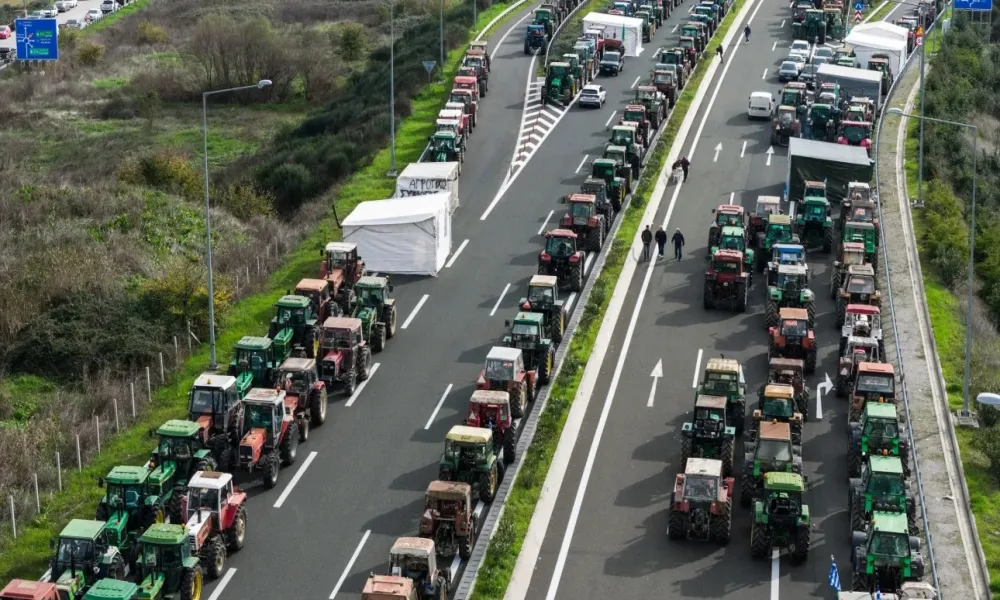
Cypriot farmers are escalating their protest actions as they prepare for dynamic mobilisations aimed at highlighting the mounting challenges facing the primary sector. The move comes ahead of a pan-European demonstration scheduled for Thursday in Brussels, where farmers from across the European Union are expected to take part.
Farmers say they intend to send a strong message both to the Cypriot authorities and to EU institutions, warning that recent policy decisions place the future of agricultural production at serious risk. In particular, they are reacting to proposed reductions to the Common Agricultural Policy (CAP).
Speaking on behalf of the sector, Pancyprian Farmers’ Association (Panagrotikos) president Kyriakos Kailas said that the planned €86.5 billion reduction in CAP funding would have devastating consequences across member states. He warned that such a decision would effectively signal the end of the primary sector in many countries, including Cyprus.
From early morning, tractors were stationed at four locations in the Larnaca district and the free Famagusta area. Farmers from Limassol and Paphos did not participate at this stage due to distance constraints.
On Thursday, Cypriot farmers plan to hold a tractor convoy that will conclude at the House of Europe in Nicosia, where they will submit a memorandum. A letter has already been sent to the competent European Commissioner, calling for a revision of the decision on CAP funding.
Alongside concerns over European agricultural policy, farmers are also protesting delays in compensation payments linked to weather-related damage. These payments, made through the Cyprus Agricultural Payments Organisation, have traditionally been disbursed before Christmas. Farmers acknowledge that efforts are being made by the Ministry of Agriculture to expedite the process, but warn that delays continue.
Kyriakos Kailas said the delay is linked to pending documentation from the Ministry of Interior, noting that administrative issues remain unresolved and require immediate attention by the competent authorities.
Farmers stress that the challenges faced by Cypriot producers are more acute than those encountered elsewhere in Europe. They warn that if delays persist and policy decisions remain unchanged, many agricultural households are facing the prospect of a financially bleak Christmas.
The mobilisations aim to apply pressure on European decision-making centres for a fairer agricultural policy that reflects the real conditions of the primary sector, while also urging national authorities to address outstanding compensation issues without further delay.