
The drone attack recorded at the Akrotiri base last Sunday midnight, followed the next day by evacuation alerts in the communities of Akrotiri and areas neighbouring Paphos airport, triggered widespread concern among citizens regarding the state of Civil Defence shelters.
Interior Minister Konstantinos Ioannou acknowledged that full coverage of the Cypriot population is currently not feasible. Across the country there are approximately 2,500 shelters, covering only 40 to 45% of the population. The admission intensified public complaints, prompting widespread criticism not only about the limited number of shelters but also about the condition of many existing facilities.
Images that sparked outrage
Public discussions, media coverage and social media quickly filled with reports and images highlighting the poor operational condition of several shelters.
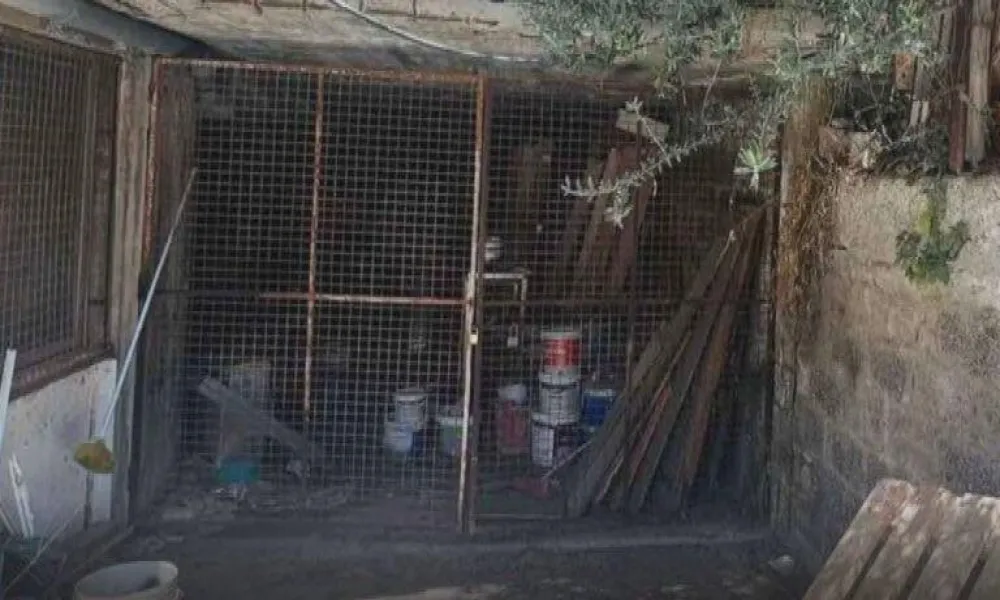
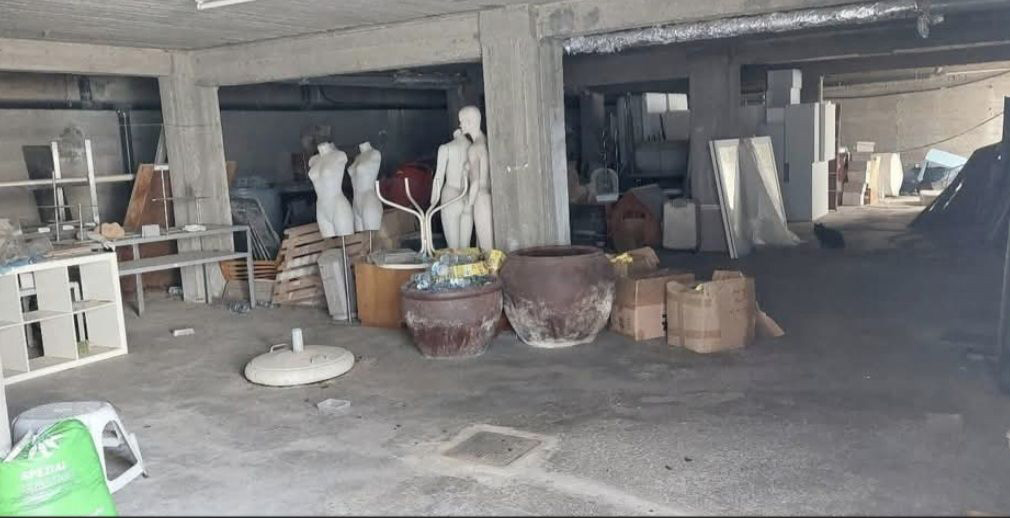
One example involved a storage facility in Limassol where, according to its owner, half a million stored products make it impossible to clear the space within 24 hours, as required under the agreement with Civil Defence. Another case involved a basement packed with immobilised motorcycles and a vehicle blocking its entrance. There was also the shelter described as a “hole in the ground”, which became the subject of heated discussion on Alpha TV between journalist Katerina Agapitou and government spokesperson Konstantinos Letymbiotis.
These were just some of the images encountered by this reporter within minutes on Tuesday morning. Since then, the flow of similar reports has continued.
As a result, Civil Defence has begun inspecting shelters across all districts in recent days in order to issue recommendations to owners. A total of 80 officers from Civil Defence, with assistance from the Game and Fauna Service, district administrations and the Land Registry, have started visiting these locations.
The Ministry of Interior has stated that once certain shelters are deemed unsuitable, the information presented on the SAFE CY application will be updated accordingly.
Concerns already raised in 2024
Public concern about the condition and number of shelters resembles the situation experienced a year and a half ago during the Iran–Israel conflict in the Middle East.
In October 2024, Iran began launching a series of missiles towards Israel, signalling a new escalation. At the time, Civil Defence received a large number of calls from citizens seeking information about the nearest shelters.
Last May the Interior Minister issued instructions for inspections and for the identification of new spaces. In practice, however, these efforts appear not to have resolved the problem.
Today, the concerns expressed in 2024 appear to have materialised. The threat is no longer simply approaching the island, with alerts in neighbouring countries, but has already reached it, as demonstrated by alerts issued in Cyprus itself.
It has also become clear that the ministry did not achieve its target of covering 50% of the population by 2025, despite assurances given by the Civil Defence commander to Politis on 21 May 2025 that this objective was achievable. The ministry’s long-term target is coverage of 70% of the population.
A transitional stage
One reason for the serious weaknesses in effective inspections is the understaffing and organisation of Civil Defence. “It is a very small service with a limited number of permanent staff. There are volunteers as well, but they can only assist up to a certain point,” a Civil Defence source told Politis.
“Today the service has 35 officers in permanent positions. The remaining staff, about 80 people, are messengers, warehouse workers, administrative staff and cleaners,” the source added. It should be noted that the civil protection system in Cyprus is currently undergoing restructuring. A draft bill prepared by the Ministry of Interior titled “The Civil Protection Law of 2026” aims to establish a National Civil Protection Mechanism through which all departments, services and involved agencies will be coordinated in order to improve effectiveness in preparedness, response and crisis management.
The draft legislation is currently with the Attorney General for legal review before being submitted to parliament. Among other provisions, it foresees the reorganisation of Civil Defence and the creation of new positions.
The question raised is whether this transitional stage has led to a dangerous sense of complacency, resulting in insufficient inspections of shelters at present, particularly as the timeline for implementing the reorganisation remains unclear.
Finding new spaces
Since the end of 2024, Civil Defence efforts to identify new shelter locations have achieved some progress, increasing population coverage from 30% to 40–45%.
Recent developments such as towers, shopping centres and apartment buildings have begun to be added to the Civil Defence list so that their underground parking areas can serve as shelters in case of hostilities.
Among them are the underground parking areas of Nicosia Mall in the Lakatamia–Anthoupolis area. According to the mall’s general manager, Giorgos Georgiou, Civil Defence officials visited the premises a few months ago and inspected the underground parking areas.
Following their request to include the facility in the list of shelters, the management of Nicosia Mall agreed. Georgiou stated that the structures are highly secure and equipped with toilets and water supply.
“The building has received final approval regarding development permits. It therefore complies with all the conditions set by the competent government services, particularly the Fire Service,” he said.
Mario Antoniou, secretary general of the Cyprus Retail Association, said that many supermarkets have underground areas designated as Civil Defence shelters under agreements between Civil Defence and property owners.
Incentives announced
Interior Minister Konstantinos Ioannou acknowledged that full population coverage is currently not achievable and said there are difficulties in securing cooperation from private property owners to make spaces available.
However, he announced that next week an order will be issued by the Ministry of Interior, in consultation with the Department of Town Planning and Housing, to provide incentives through additional building coefficients for the construction of underground shelters in new apartment buildings.
The proposal to be submitted to the Council of Ministers aims to increase the number of shelters so that they cover 45% of the population. It provides that every new apartment building constructed must allocate its underground space, if available, as a Civil Defence shelter rather than on a voluntary basis. These spaces must include toilets and drinking water.
As an incentive, developers would receive an additional 5% building coefficient, with a maximum of 50 square metres.
The cases of Germany and Finland
The issue of shelters is also being addressed in other European Union countries. In Germany, the head of the Federal Office of Civil Protection and Disaster Assistance (BBK), Ralph Tiesler, said last June that the country was planning a rapid expansion of shelters amid fears of a potential Russian attack.
He told the Süddeutsche Zeitung that Germany is not well prepared. Of the roughly 2,000 shelters and protection spaces remaining from the Cold War, only about 580 are operational and most require renovations costing many millions of euros.
These shelters could accommodate approximately 480,000 people, just half a percent of Germany’s population. Other countries are far more prepared. Tiesler pointed out that Finland has around 50,000 protection spaces covering 4.8 million people, or 85% of its population. He called for a national effort to identify and convert tunnels, metro stations, underground garages, parking areas and basement levels of public buildings into protective shelters in order to “quickly create space for one million people”. He added that his agency would prepare a comprehensive plan, something that is currently also needed in Cyprus.