
More than three decades after it was founded, the AIDS Solidarity Movement remains one of the central voices in Cyprus when it comes to HIV awareness, prevention and community support. Established in 1989, the organisation has evolved alongside medical advances and shifting public conversations around HIV, yet stigma and misinformation still shape how many people approach testing, treatment and sexual health.
Today, the Movement’s work stretches far beyond awareness campaigns. It operates community-based testing services, provides psychosocial support for people living with HIV and advocates for patient rights, equality and access to prevention tools such as PrEP. In this conversation, representatives of the organisation reflect on how attitudes toward HIV have changed in Cyprus, where barriers still exist and why trust, dignity and community leadership remain at the centre of their work.
For someone who may only vaguely know the AIDS Solidarity Movement, how would you describe its role today in Cyprus when it comes to HIV awareness, education and solidarity?
The AIDS Solidarity Movement (the Movement) was established in 1989, in Cyprus. It is a non-governmental and non-for-profit community-based and community-let organisation. Our work is multilayered. We focus on supporting People Living with HIV (PLWH) and AIDS patients, advocate for human rights and patient rights, promote sexual health and sexual rights, as well as combination prevention and public health. We work with various communities, groups and individuals, such as LGBTQI+ people, people who use or inject substances in any setting, sexworkers, women, young people, older people, migrants, refugees, asylum seekers, to name a few. We also offer free and inclusive services.
We offer psychosocial support to PLWH, anonymous, rapid and free community testing and peer-counselling, linkage to care to people whose test react to antibodies of HIV, Hepatitis B & C. We also offer counselling and easier access to PrEP (Pre Exposure Prophylaxis) and PEP (Post Exposure Prophylaxis), and disseminate free condoms and lubricants. We disseminate antiretroviral treatment around Cyprus to PLWH who have difficulties traveling to Larnaca General Hospital, where the State HIV Reference Clinic is based. Our work is shaped by the needs and voices of the communities we serve and aims to reduce stigma and promote equality, dignity and safe access to care for all.
Over the years, how has the conversation around HIV changed in Cyprus and where do you still see gaps in public understanding or persistent stigma?
The conversation around HIV in Cyprus in some ways has shifted, yet in other situations -especially around social stigma- still remains an issue. Advances in medical treatment have allowed PLWH to live longer and healthier lives. A person living with HIV today, under effective treatment, is expected to live as long as a person not living with HIV. Effective treatment, when accessible, allows PLWH to know and experience the scientific fact that they cannot transmit HIV sexually, even without the use of condoms or PrEP, as it suppresses HIV to undetectable levels. When the virus is Undetectable it also becomes Untransmittable (U=U-Undetectable=Untransmittable).
PLWH can create families and give birth to HIV-negative babies, if they chose to. There is less fear than in the past years, and knowledge, as well as HIV awareness allows people to stop being afraid. However, stigma remains strong and persistent, and in many cases fuels discrimination and unfair treatment. Many people still have outdated ideas about HIV transmission, or continue to wrongly associate HIV with shame, moral judgement, even specific lifestyles or sexual identities. Resent research has clearly shown important barriers in access to healthcare, for both PLWH (Needs of PLWH in Cyprus, 2019), LGBTQI people (Safe-R, 2025), and other groups (Cy Checkpoint & Mi Health Data, 2020-2026). At the same time, we see hopeful change in attitudes and behaviours. We have an increasing number of couples, where one partner is living with HIV and the other is not. We have more PLWH who decide to share their HIV status with their personal doctor, friends and/or family. We still have a long way to go to combat stigma, but the narrative is changing and the attitudes are improving.
What does “informing the public” practically mean for the Movement today? What kinds of actions, tools or approaches have proven most effective?
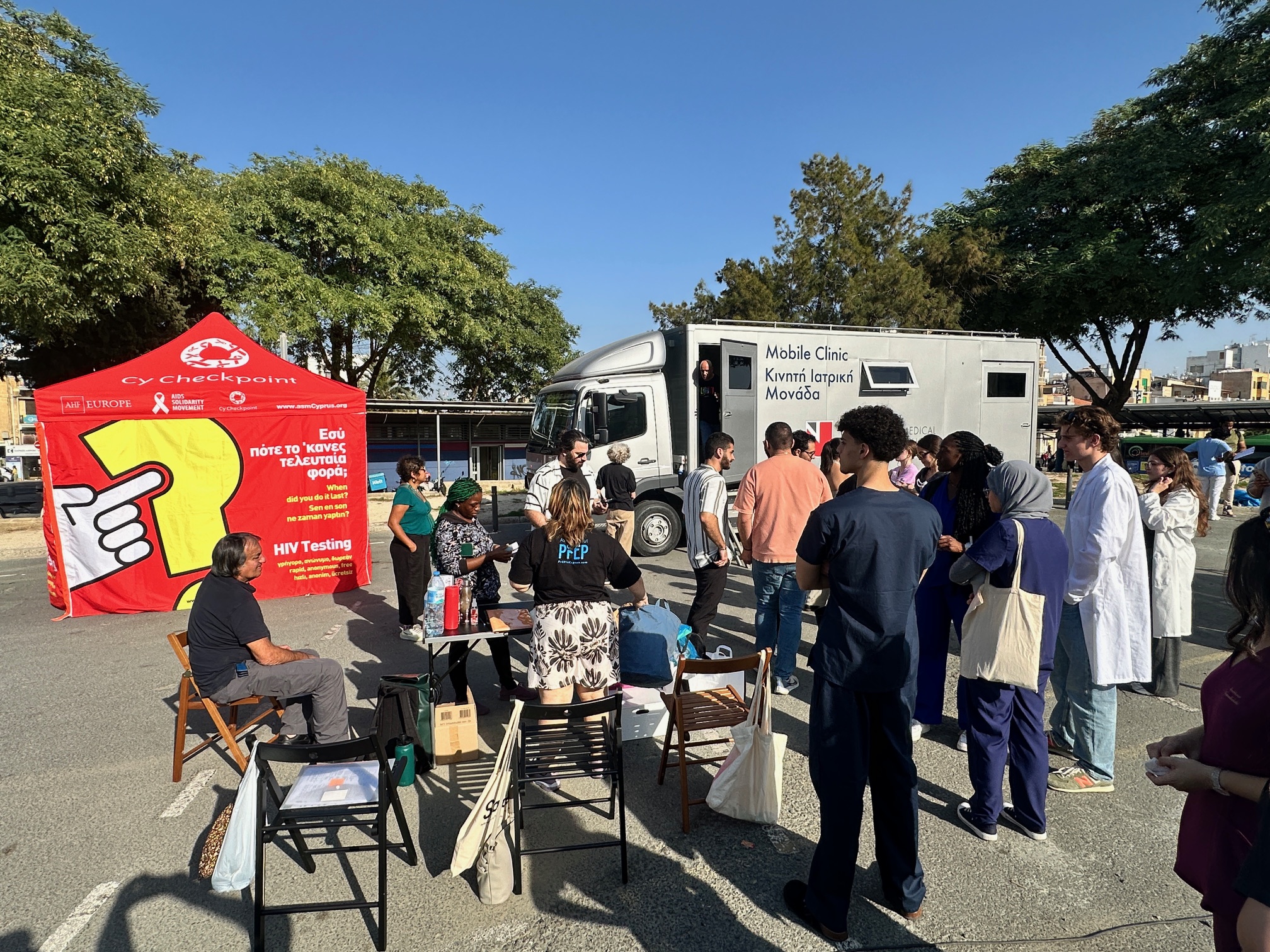
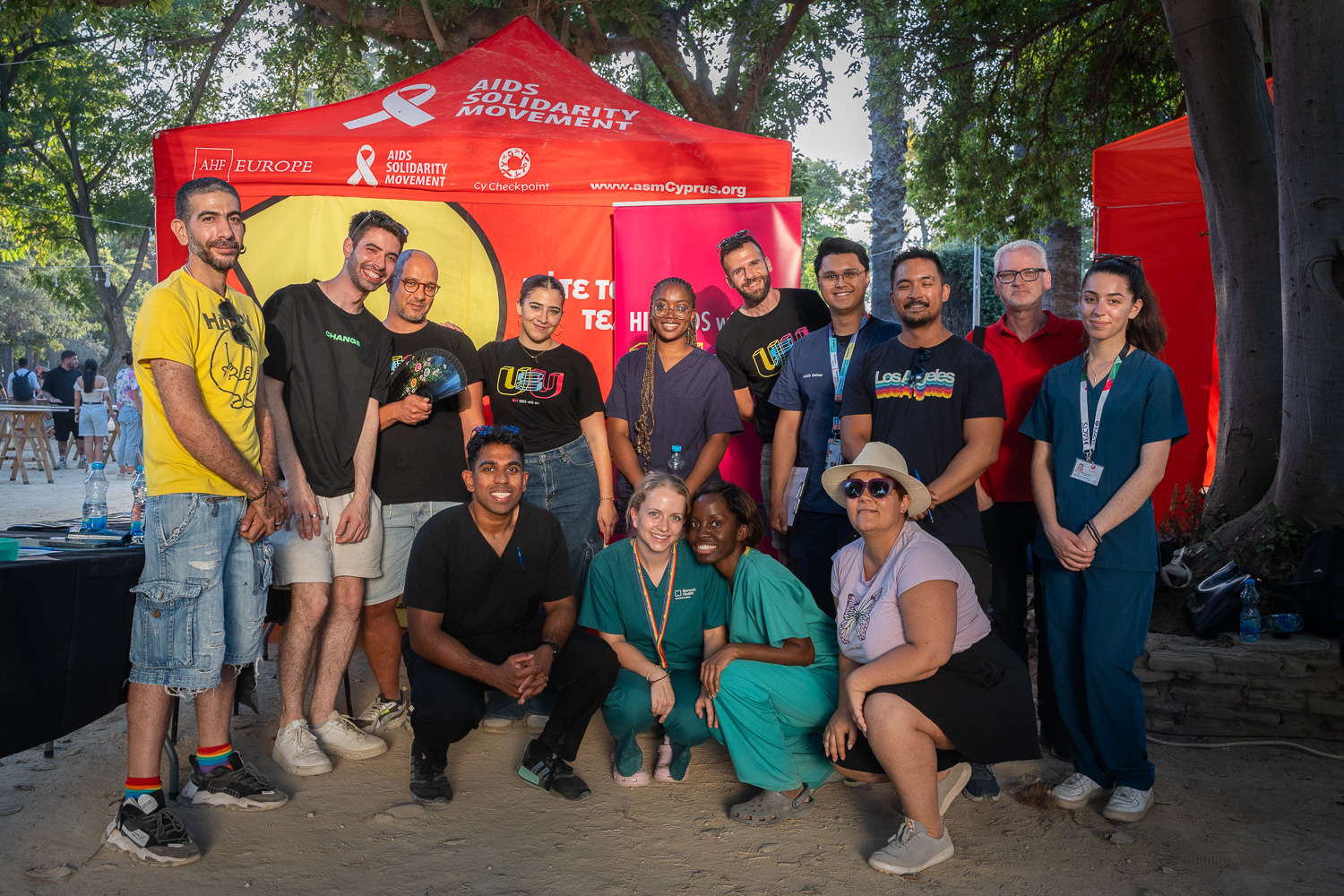
The Movement is consistently working around increasing awareness around sexual health, and pleasure as a human right. We try for our programmes to cover a wide geographical range, of all cities in the areas controlled by the Republic of Cyprus, subject to available capacity and funding. Our Cy Checkpoint, established in 2015, has been around for more than 10 years, and have normalised HIV/STI testing and peer-counselling, in safer spaces, for free and anonymously. In 2025, we launched the Cyprus PrEP Point, which offers to all people information and counselling around HIV/STI prevention, and facilitates easier access to state PrEP Clinics, as PrEP is now available in Cyprus for all, regardless of their legal status in Cyprus, their access or lack of access to the General Health System (GeSY), and is provided without any exclusion criteria. Through these services, activities, programmes, events and awareness campaigns, we strive to inspire people to take control of their health and test regularly.
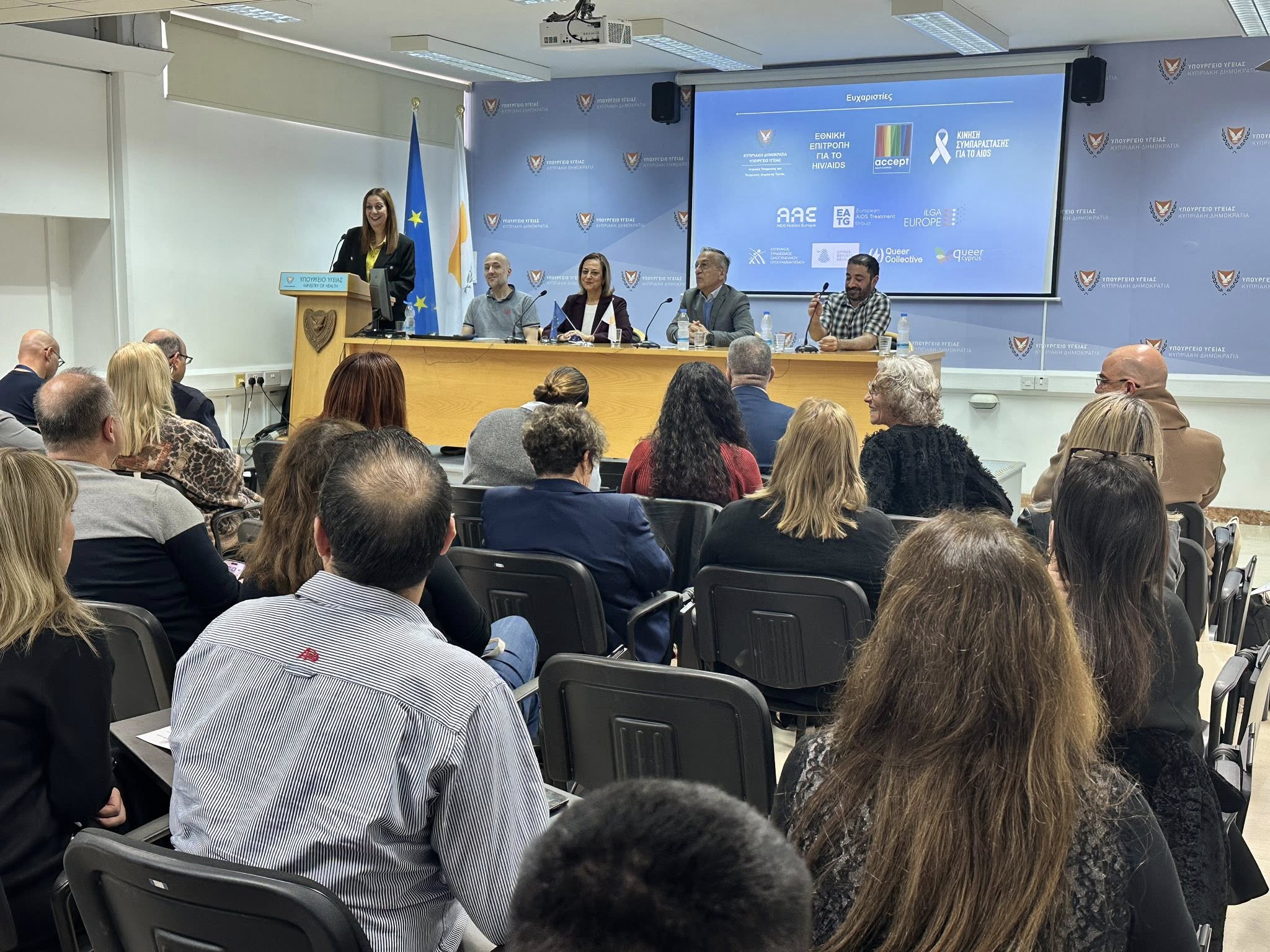
We also create safer and inclusive spaces to everyone, a model that is slowly reforming public health services as well. Our latest campaign implemented in collaboration with the Ministry of Health (European Testing Week, November 2025), is focused on the destigmatisation of HIV testing, especially to heterosexual populations aged 50+. Under this campaign, we developed and distributed clear, accessible material, providing comprehensive information of where people can get STI testing (KaneTest.org).
Anyone who wishes to get tested for STIs can find out more at CyCheckpoint.org, while people who wish to get information on PrEP can visit PrEPinCyprus.com. Another effort we are proud of is our work through the Safer.cy, an EU co-funded project that has allowed us to train in 2026 more than 100 health professionals, and more than 50 health-related students (medical, nursing, psychology, etc.), on equal and equitable access to health care.
Which communities or groups do you feel are still hardest to reach, and why?
We need to be precise in regards to ‘hard-to-reach’ populations and groups; ‘hard-to-reach’ for whom? Is it the populations or groups that are ‘hard-to-reach’, or is it our system’s failure to create safer and respectful health services where individuals feel they are respected and safe to attend? We often tend to speak about vulnerable groups such as PLWH, LGBTQI+ individuals, migrants, sexworkers, people who use substances, but it is important to point out that we impose vulnerability to these groups through exclusion policies, stigma and discrimination. The Movement is a community-let organisation, which means it is consisted of people who are members of these groups, who have one or more than one identities that are perceived as vulnerable. Thus, the organisation is formed primarily by the individuals who have lived experience of the issues and topic we work on or advocate for. The community’s moto “nothing for us without us”, the patients’ community moto “the patient is the expert”, as well as UNAIDS’ moto “let communities lead” express this exact point: where communities are present, interventions and projects are successful; where they are absent, failure is around the corner.
Testing, Prevention and Trust
From your experience, what are the main barriers that prevent people from seeking HIV testing or reliable information in Cyprus?
There are many barriers to routine testing. Some are stronger and some weaker, depending on the person, their environment, their lived experience, their legal status, and many many more reasons and parameters. People are different and their barriers to testing varies, despite that fact that states, including ours, have declared their commitment to “Health for All”. The main barriers are stigma, privacy, and confidentiality. Many people are afraid of being judged, criticised, labelled, or treated differently when seeking forinformation or testing. It is important to point out that barriers are different for a Cypriot citizen compared to a non-Cypriot citizen. Barriers are also different for non-Cypriot citizens, depending of where they are perceived to come from.
The stigma experienced by a non-Cypriot European-looking person is very different from that experienced by a a non-Cypriot Asian-looking. At the same time, barriers are different for individuals perceived as women, compared to individuals perceived as man. There are also social barriers, related to what other people might think if they know someone got tested. Our health settings should make it clear that routine testing is a best practice suggested to everyone, regardless of any characteristics, and that testing as prevention does not necessarily mean that someone engaged in a high-risk practice, or that the person belongs to a specific group of community. Cultural resilience is also important when it comes to addressing barriers to HIV and STI testing. An individual seeking to get tested should be able to do so in a setting where their culture, religion, gender (gender identity and gender expression), sexual orientation and other characteristics are respected. Only when we address these barriers will we be able to create “Health for All”, that is human-centered and promotes public health through quality care.
How important is trust in this work, and how does The Movement build and maintain it within the community?
Trust is essential. The lack of trust creates barriers as people may not attend the testing services, or in attending, they may not get the information they need tailored to their reality and sexual practices. Lack of trust can lead to undiagnosed STIs, and thus untreated STIs, which otherwise would be completely manageable, and in a lot of cases, completely curable. Lack of trust could eventually become a threat to health, or even life threatening. At the same time, trust needs time to grow. This is why the Movement has been investing in building trust from communities and individuals. Our Community Health Workers (CHW) receive ongoing training, are provided with individual psychological supervision and are offered group-support. We invest in our people, weather this refers to our CHW, our volunteers, our beneficiaries, or our service-users. Confidentiality is crucial for us. Creating non-judgemental spaces and safe spaces is on the top of our list. Prioritising people’s real needs is a conscious strategy. We provide spaces where everyone is welcoming, weather this is expressed in our client forms, in our confidential discussions, or in our physical spaces, regardless of race, ethnicity, sexual orientation, gender identity or expression or other characteristics that may increase vulnerability.
The Cyprus PrEP Point
What led to the creation of the Cyprus PrEP Point, and why was it important for the Movement to take this step now?
We started advocating for official access to PrEP in 2018. We conducted research (2019) to prove that informal PrEP was already available in Cyprus and that the state should monitor its use. We attended the House of Representatives meetings advocating for the need to official access to PrEP, participated in public interventions and talked openly on commercial media about this evidence-based prevention methodology that can stop HIV prevention. In 2024, we ended up putting it in the agenda of the National AIDS Committee, which lead to co-writing the National Proposal for Official Access to PrEP in Cyprus. The Proposal was approved by the Minister of Health, but there was no activity to realised the plan. The Cyprus PrEP Point was launched in May 2025, following the announcement for the ‘PrEP Month’ in June, in an effort to push for the implementation of the approved National PrEP Plan. TheCyprus PrEP Point is a community service, where anyone can receive information and peer-counselling on what PrEP is, how to use it, what happens while one uses this prevention method, and how to stop it. The centre also facilitates easier access to the state’s PrEP Clinics. Interested individuals can book an appointment via social media and through calling 9960 7005.
How do you approach explaining PrEP in a way that is clear, non-judgmental and empowering, especially in a society where sexual health is still often taboo?
Through the Cyprus PrEP Point, the Movement provides information on all preventive methodologies for HIV. PrEP is one of the available tools to prevent a possible HIV transmission. PrEP is for everyone who choses this method. It can be used in combination with other tools, such as the condom, lubricants, and STI testing. PrEP can protect people from HIV if used correctly, but cannot prevent other STIs. Counselling offered in a PrEP appointment at the Cyprus PrEP Point is tailored to the sexual practices of the individual. Peer-counselling is confidential, free and non-judgement, while testing as prevention is also offered to the individual.
Since the Cyprus PrEP Point launched, have you noticed changes in awareness, interest or attitudes toward PrEP?
We can see important attitude changes in the communities since we started advocating for PrEP in 2018. The Cyprus PrEP Point offers an organised frame for our services, and a clear increase in awareness is not only visible, but also registered through our community data collected through the Cy Checkpoint since 2028. Even before PrEP became officially available in October 2025, many people were already approaching us with questions, looking for reliable information and support, and sharing experiences of informal PrEP use. The launch of Cyprus PrEP Point helped bring these conversations into the open and made PrEP visible as a legitimate, evidence-based prevention option for all.
After official access began, demand was immediate, confirming that many people had been waiting for the official access. The PrEP Month in June 2025 gathered a series of video-discussions that provide important information (accessible here: https://www.asmcyprus.org/prep-month). The conversation has shifted from uncertainty and hesitation to more informed questions about access, use and follow-up. PrEP is increasingly understood as part of combination prevention and sexual health, and using PrEP is a positive action to individual health and self-care.
Looking Ahead
What challenges does the PrEP Point currently face, socially, institutionally or practically?
Access to PrEP remains the main challenge. Cyprus is currently in Phase 1 of the national PrEP rollout, with services available only in the General Hospitals of Nicosia and Larnaca, once per week. While demand was immediate, access remains geographically limited and the current delay for appointments at the state PrEP Clinics is 3 months. Some populations, especially migrants and other key populations, face additional barriers and often need support to navigate the system. A key challenge moving forward is ensuring that the next phases of the rollout take place as planned and that doctors are properly informed and trained, particularly in the private sector. Expanding PrEP access will require preparing personal and specialised doctors, and private clinics and hospitals to provide PrEP in a competent and non-discriminatory way. At the same time, stigma around HIV and sexual health continues to affect who feels able to seek PrEP and how prevention is understood more broadly.
How do you see the Movement’s role evolving in the coming years, particularly around prevention, education and community support?
Currently, the AIDS Solidarity Movement is facing issues with operational funding. Our efforts are focused on surviving as an organisation, as well as on our services’ sustainability. A high priority for us is the legal reform of the Republic of Cyprus and the decriminalisation of HIV transmission, as criminalisation fuels stigma, fear and exclusion and directly harms PLWH. In parallel, we see our role growing as a bridge between communities and healthcare services. As access to prevention tools expand, we aim to support implementation in a way that is equitable and community-informed, including through training and capacity building for healthcare professionals, personal doctors and private clinics. One thing is certain! We will continue to work directly with communities on exercising human rights in an equal and equitable way, and will continue to promote prevention, awareness, education and empathy, ensuring that lived experience remains central to how services and policies develop.
If there is one message you wish more people in Cyprus truly understood about HIV prevention today, what would it be?
HIV prevention today is effective, science-based and rooted in care rather than fear. People living with HIV lead productive lives, are entitled to respect, are worthy of building their future as they wish, and should be able to exercise their human rights, just like everyone else. At the same time, an HIV infection is manageable in Cyprus, as the state provides free treatment and monitoring to all PLWH, regardless of their status in Cyprus or their level of access in the General Health System. If you are sexually active, you should test frequently, at least once per year. You can find out how and where at KaneTest.org.