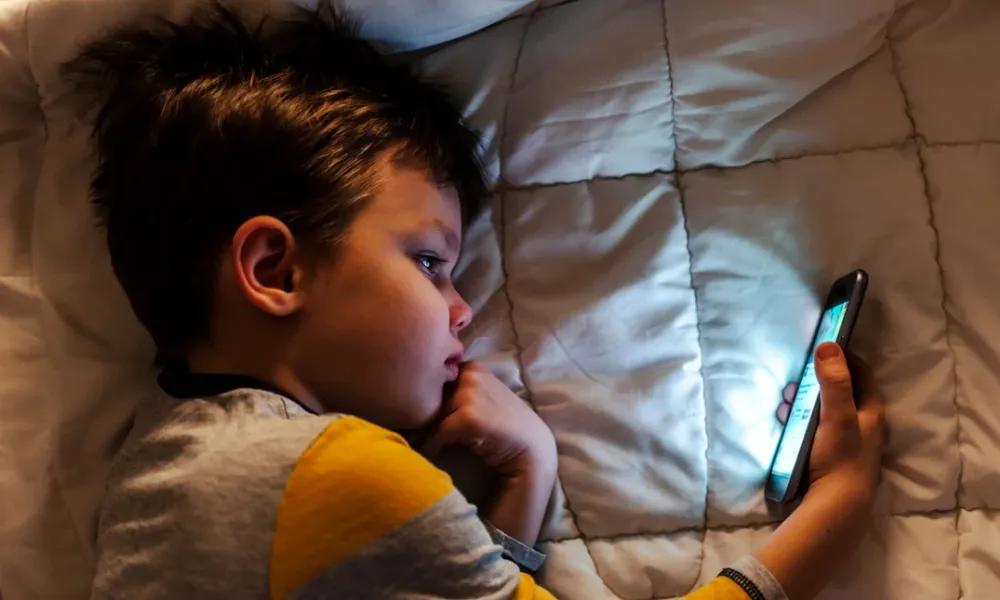

A major UK study is adding fresh weight to concerns over how very young children use screens, with researchers finding a clear link between heavier daily exposure and poorer early language development. The findings arrive as Britain prepares new guidance for parents of children under five and broadens its wider debate on children’s digital wellbeing.
The research was carried out by scientists from the Universities of Oxford and Cambridge and University College London as part of the Children of the 2020s programme. It followed nearly 5,000 children from the age of nine months to two years. According to the findings, two-year-olds with around five hours of screen time a day recognised, on average, 53% of the words in the test used by researchers, compared with 65% among children whose daily use was closer to 44 minutes. The association became especially visible from around 86 minutes a day onwards.
The same study also pointed to behavioural concerns. Nearly 39% of children spending five hours a day on screens showed signs of emotional or behavioural difficulties, compared with 17% among those with more limited exposure. It also found that by the age of two, 19% of children were already playing video games regularly.
The wider context is equally striking. British reporting on the study said 98% of two-year-olds already use screens every day, with average use standing at about 127 minutes daily. That is well above the World Health Organization’s recommendation of no more than one hour a day for children aged two to four.
The UK government has already signalled that early-years screen use is moving higher up the policy agenda. In its new national consultation on children’s digital wellbeing, it said fresh guidance for parents of under-fives will be published in April 2026, while broader screen-time guidance for parents of children aged 5 to 16 is also planned.
The debate, then, is no longer only about teenagers and social media. It is increasingly about what digital habits begin to look like in the earliest years of childhood, and what may be lost when screens start replacing conversation, play and shared attention too early.