
By Theano Kalavana
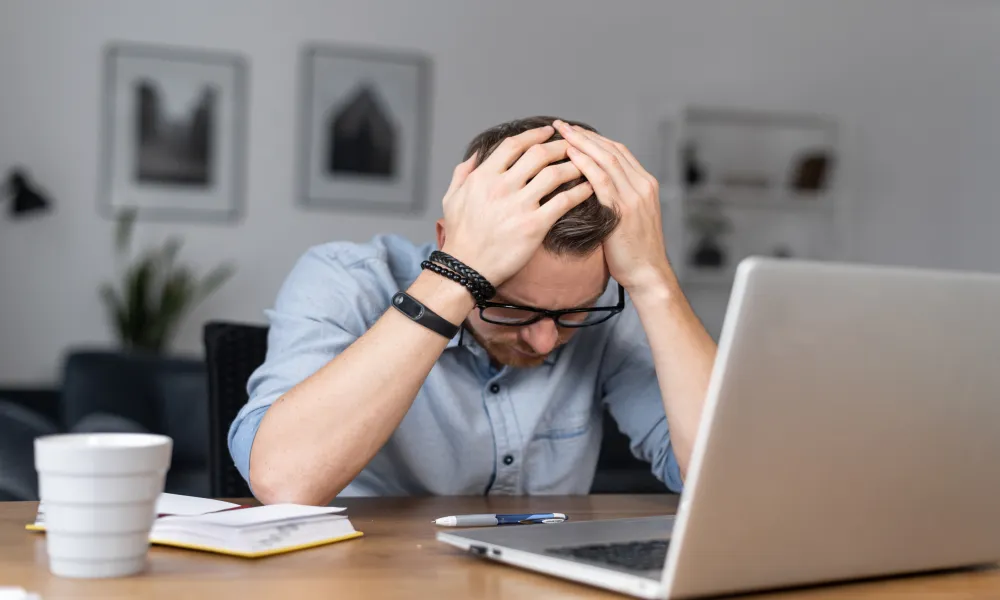
According to the European Working Conditions Survey 2024, published last Wednesday, Cyprus records the highest levels of burnout among workers in Europe. Although the survey is not a diagnostic tool, it still indicates that 44 out of 100 workers in Cyprus experience high levels of physical and emotional exhaustion. This is the highest percentage, 44%, among 35 countries. At the same time, countries such as the Netherlands record only 18%.
The correct reading is not that “we are first in burnout”, but that workers in Cyprus, due to intense exhaustion, have the highest risk of reaching that point. What will the state do about this? What will the Ministry of Labour and Social Insurance do to address a reality that is no longer a warning, but a daily experience?
As a Health Psychologist, I can state with certainty that occupational burnout is accompanied by increased sick leaveand reduced productivity. However, leave alone is not a solution. To be effective, it must form part of a comprehensive therapeutic plan that allows the employee to genuinely recover, rather than simply return to work only to become exhausted again.
These figures are serious. And if we want to define ourselves as a serious European state, immediate policies for prevention and management are required. I write this while realising that, more or less, in this country we are all burned out.
Cyprus, no matter how much Nikos Christodoulides attempts to present an image of balance abroad, is dramatically far from the reality experienced by citizens. It is like the façade of a well-painted house which, once the door opens, reveals a ruin ready to collapse. A Cyprus burned out, like the apartment building that collapsed in Limassol, reminding us that we live in a state that knew the risk. A state that issued warnings but did not insist. A state that ultimately looked the other way. And in Cyprus, indifference kills.
Burned out by a case such as the “Sandy” affair, which instead of bringing transparency pushes the country into a murky landscape of institutional distrust. A landscape where the truth suffocates between powers and mechanisms, leaving citizens questioning the way the state investigates such a serious case. Questioning also whether institutions function for society or for those who hold power.
Burned out by an economy dependent on tourism, which in a single month recorded a dramatic drop in arrivals — 30.7% fewer arrivals this March compared with March 2025. And all this not because of a drone striking the British Bases, but because of a President who believed that posing on fighter jets and warships would build his image. What he did not take into account was that, at the same time, he was damaging the country’s image and its economy.
Citizens burned out by rising prices. Burned out by a daily life where we pay more and receive less. Burned out by camouflaged political decisions that sell us seaweed as silk ribbons.
We have become a society burned from the inside out. A society that has, unfortunately, learned to live burned out. We have become a society that has stopped demanding. And when you stop demanding, you also stop changing. And that is perhaps the most tragic part of this equation.