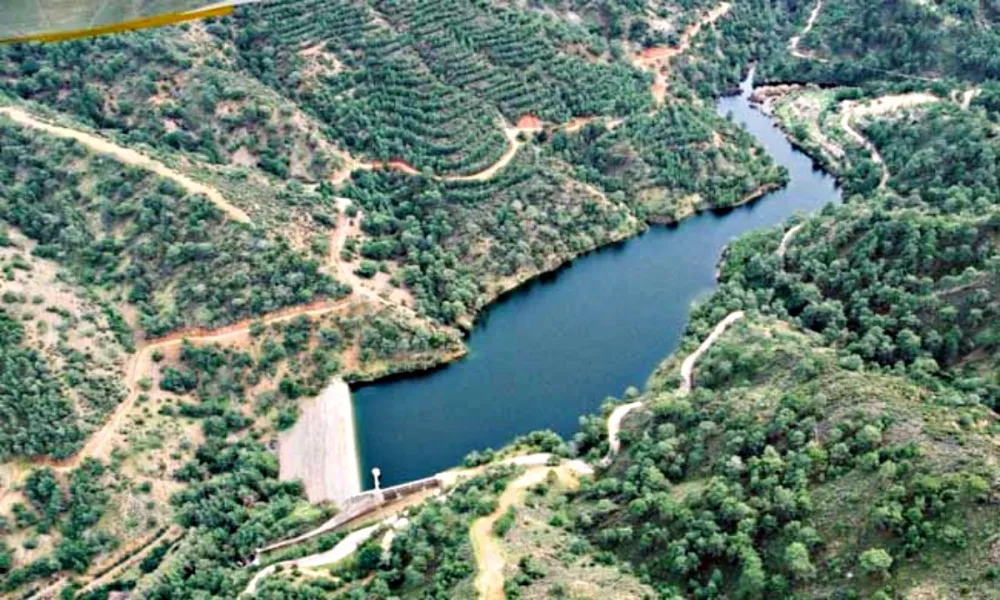

The Asprokremmos dam, the second largest in Cyprus, is currently at 32.5% capacity, corresponding to 17 million cubic metres of water, according to Paphos District Officer of the Water Development Department (WDD) Haris Kasioulis, who also expressed satisfaction over the overflow of the Agia Marina Chrysochous dam early on Saturday morning.
Kasioulis noted that despite the positive development, there should be no complacency, stressing that avoiding unnecessary and wasteful use of water remains essential.
In his statements, he explained that the Agia Marina Chrysochous dam, which overflowed, is part of the Chrysochous irrigation project. He pointed out that the Pomou dam had previously overflowed, followed by Argaka, and now the third dam of the Chrysochous project, Agia Marina Chrysochous, overflowed in the early hours of Saturday.
The Chrysochous irrigation project, he added, includes four dams. The largest is the Evretou dam, with a capacity of 24 million cubic metres of water. It is followed by the Argaka dam, with a capacity of 990,000 cubic metres, which has overflowed; the Pomou dam, with a capacity of 860,000 cubic metres, which has also overflowed; and the Agia Marina Chrysochous dam, with a capacity of 298,000 cubic metres, which likewise overflowed early on Saturday.
Asked about the Asprokremmos dam, the second largest in Cyprus, Kasioulis said that its current capacity stands at 32.5%, or 17 million cubic metres of water. The total capacity of the Asprokremmos dam is 51.2 million cubic metres, he added, noting that it is extremely important for the water supply and irrigation of the area. Regarding its characteristics, he explained that it is an earth-fill dam.
Kasioulis expressed satisfaction over the overflow of the three dams in the Paphos district, although he noted that they are relatively small dams. He added that the situation does not justify complacency, emphasising that “we are certainly pleased that inflows continue and that dams are overflowing.”
He concluded by underlining the need to avoid any unnecessary or wasteful use of water.