
On 30 July 2026, Citizens in Power (CIP) presented Walk a Mile in My Shoes, a walking tour of old Nicosia developed jointly under two Erasmus+ projects. Rainbow Rhythms, which promotes inclusive relationships and sexuality education through queer arts, and ArchTech, which explores European architectural heritage through digital tools, combined their approaches to create a single route through the capital's old town. The result was less a guided tour than an act of collective memory-making, moving through seven stops that trace queer, marginalised and largely undocumented histories layered beneath the city's more familiar landmarks.
Two projects, one shared space
Rainbow Rhythms and ArchTech approach the city from different angles: one through queer arts and inclusive education, the other through architectural heritage and digital documentation. Walk a Mile in My Shoes brought the two together, using Nicosia's built environment, its walls, streets, gardens and civic buildings, as the physical anchor for stories that rarely appear in official archives. According to the organisers, the walk created "a shared space for engagement, reflection and participation" between the two projects' themes.
Setting the scene: an island of layered rule
The walk opens not at a monument but with a question of language and power. Cyprus passed from Ottoman to British administration in 1878 under the Cyprus Convention, a transfer of administration rather than a sale, with sovereignty remaining formally Ottoman until Britain's unilateral annexation in 1914. Maria Efstathiou, the curator of the walk and researcher, traces the island's successive rulers, Lusignan, Venetian, Ottoman and British, and the "divide and rule" logic that followed: minorities minimised, majorities split first along religious lines, then national ones. The 82 years of Venetian rule left their most visible legacy in the walls that still encircle the old city, built during the reign that began with Caterina Cornaro's marriage into the Lusignan dynasty and ended with her exile to Asolo after Venice moved to secure the island for itself.
The walk also revisits the disputed years bridging colonial rule and independence: the 1955–1959 period, the 1960 declaration of independence (whose de facto date, 16 August), and the 1963 partition of Nicosia that hardened into the Green Line after the events of 1974. That line, organisers note, is generally understood to have been drawn overnight by a British officer using a green wax pencil, the colour chosen not for peace but because Cyprus's competing flags read blue and red, and green was the standing military marker for a no-go zone.
Stop one: Ammochostou Street and Famagusta Gate
The walk by Maria Efstathiou, begins at one of the old openings in the Venetian walls. Nicosia, the script notes, has no monuments dedicated to queer history. What it has instead are fragments: a bar, a rumour attached to a bronze bust, a gallery space. These histories, Maria believes, tend to live at the threshold between public and private, legal and unspoken, and the old town has functioned as an inclusive space in this sense since at least the 1980s.
Stop two: Ithaki Bar
The site was once the home of a woman named Domna, who died of breast cancer in the 1990s; the building later became a bar remembered as inclusive across every era it operated. Since the mid-to-late 1990s, the surrounding streets have filled with similar venues that resisted easy labelling, part of a wider, largely unrecorded history of women running bars and kafenia in the same quarter.
Stop three: Koraï Project Space, NiMAC and Pentadaktylou Street
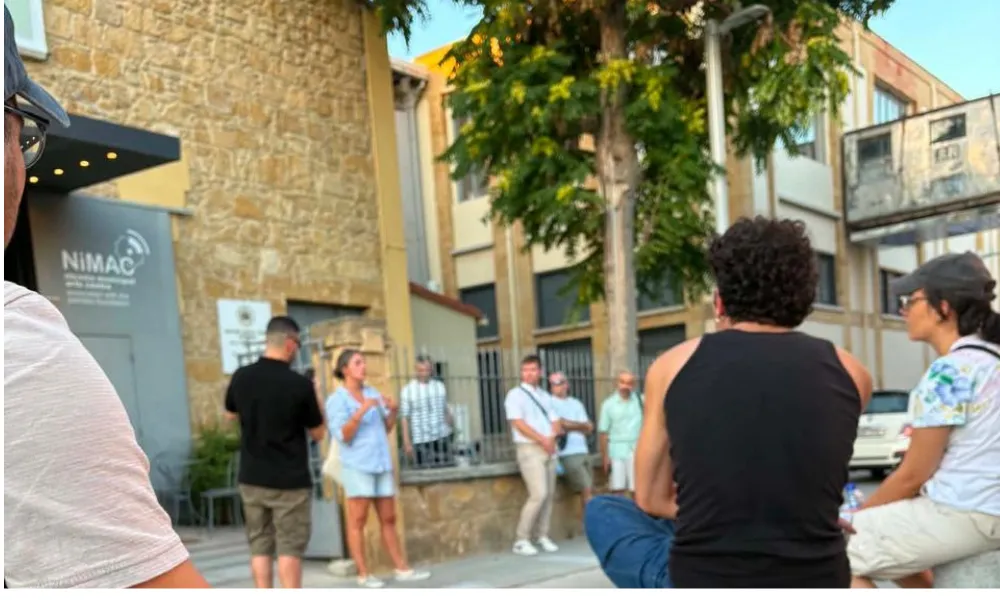
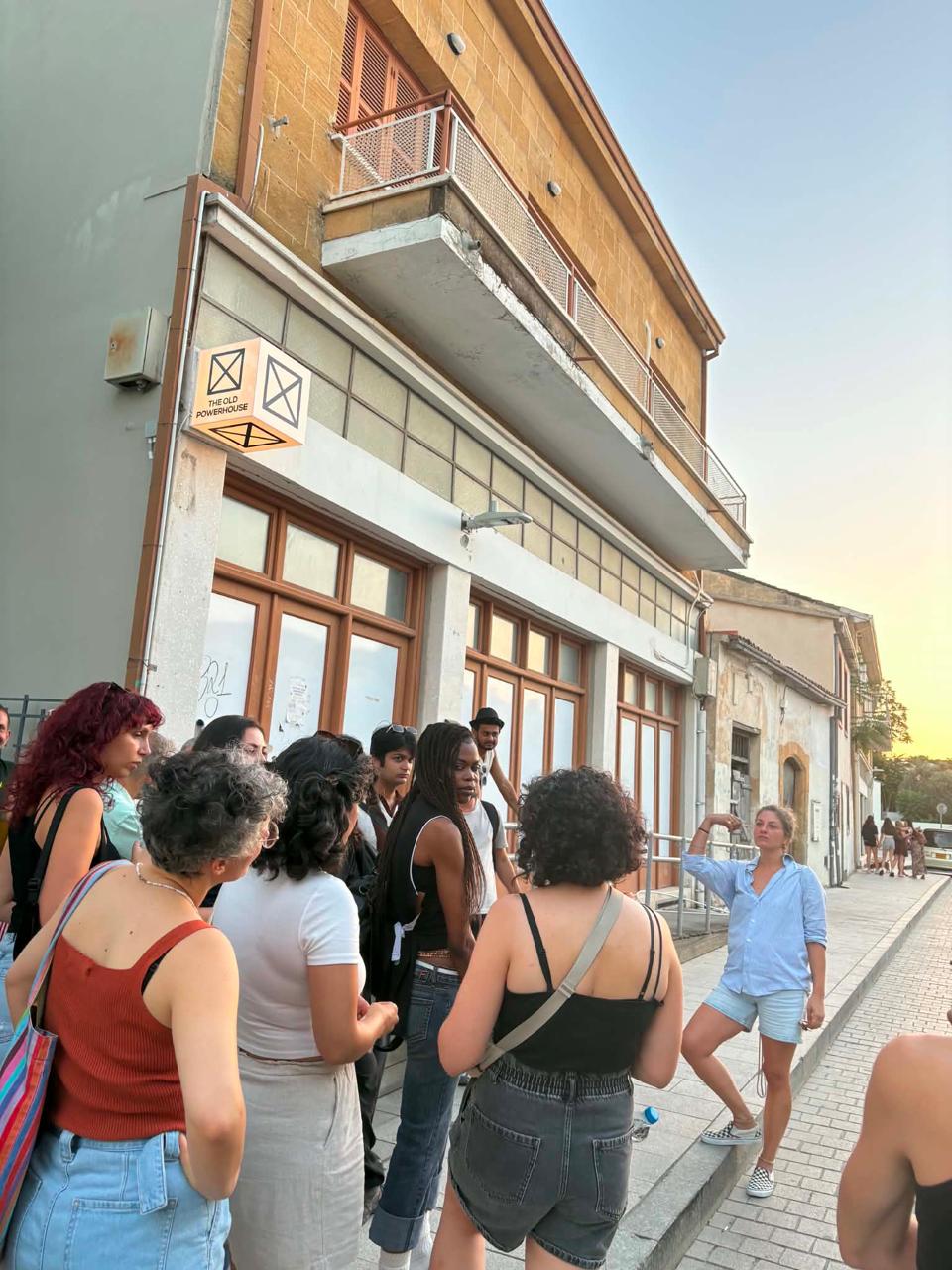
Koraï Project Space, a small artist-run, non-profit space founded in 2017 by Andreas Mallouris and Theodoulos Polyviou and directed by Mallouris since 2019, has hosted precisely the kind of undercollected material that rarely reaches formal archives: exhibitions, oral history, zines and private collections. Nearby, the Nicosia Municipal Arts Centre (NiMAC) occupies the site of the city's first electricity station, which burned down in October 1946, killing one man. Discussions on what to do with the derelict building ranged from a basketball court to a hospital for sex workers before Demetris Pierides and Lellos Demetriades opened it instead as a contemporary art institute.
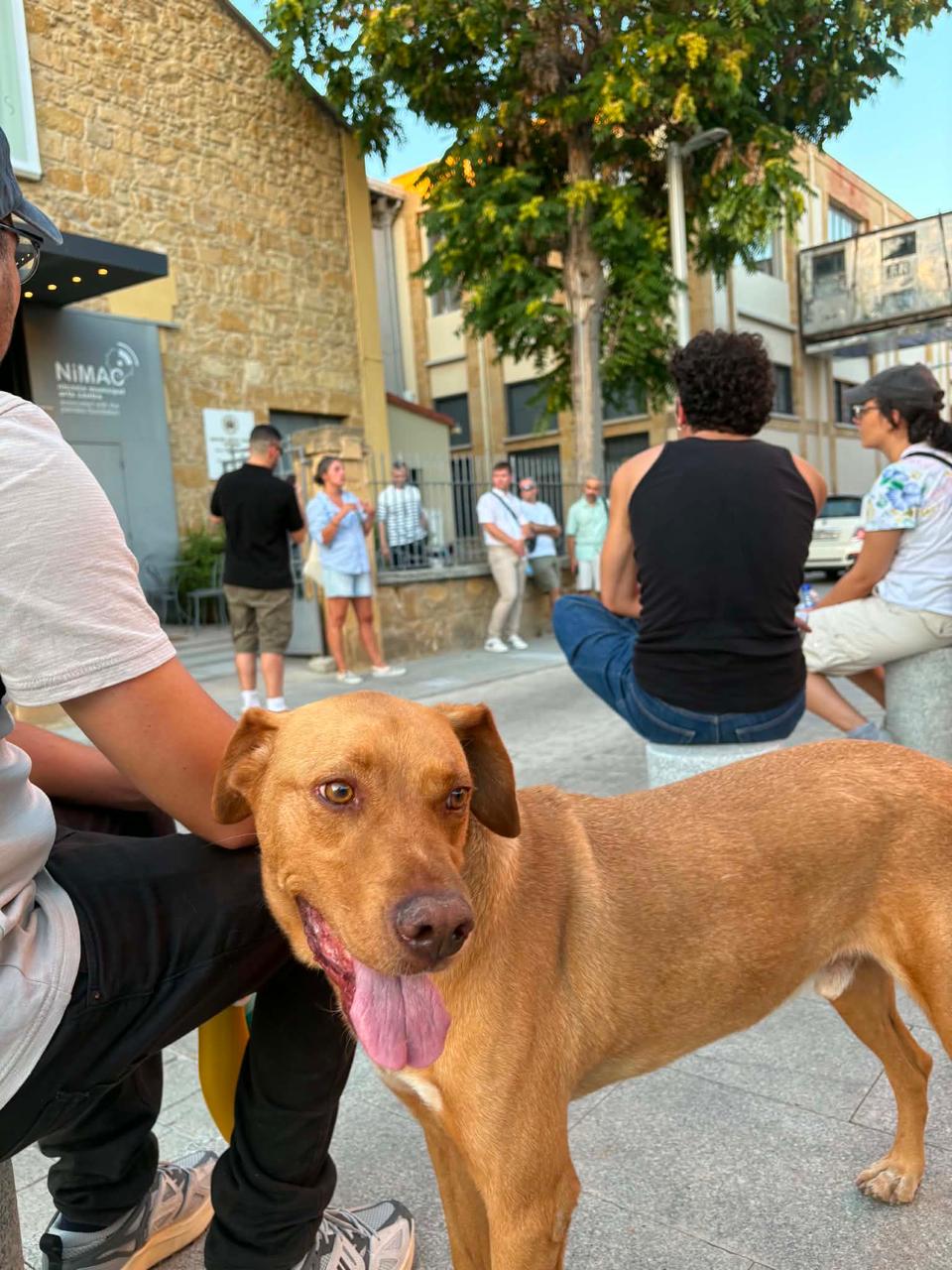
The annexed building now housing NiMAC's offices stood in an area historically tied to Nicosia's red-light district, Pentadaktylou Street among them, and was the site of a shooting in the mid-1950s in which a Turkish Cypriot sex worker was killed, an episode that fed into wider political tensions of the period.
The late Hatize Mustafa, known locally as Ayshe, lived and worked on these streets for years after having been married at the age of thirteen or fourteen. Such marriages formed part of a broader practice often described as “brides for sale”, documented in Neriman Cahit’s book Araplara Satılan Kızlarımız (“Our Girls Sold to the Arabs”), which is the source of the widely cited estimate that around 4,000 Turkish Cypriot girls were sent into such marriages, and in Yeliz Shukri’s 2018 documentary Missing Fetine. From roughly the 1920s to the 1940s, poverty and a shortage of eligible Turkish Cypriot men contributed to marriage arrangements in which girls aged approximately 11 to 18 were married to men in Palestine, Egypt, Syria and Jordan.
Stop four: Faneromeni School and the bust of Ourania Kokkinou
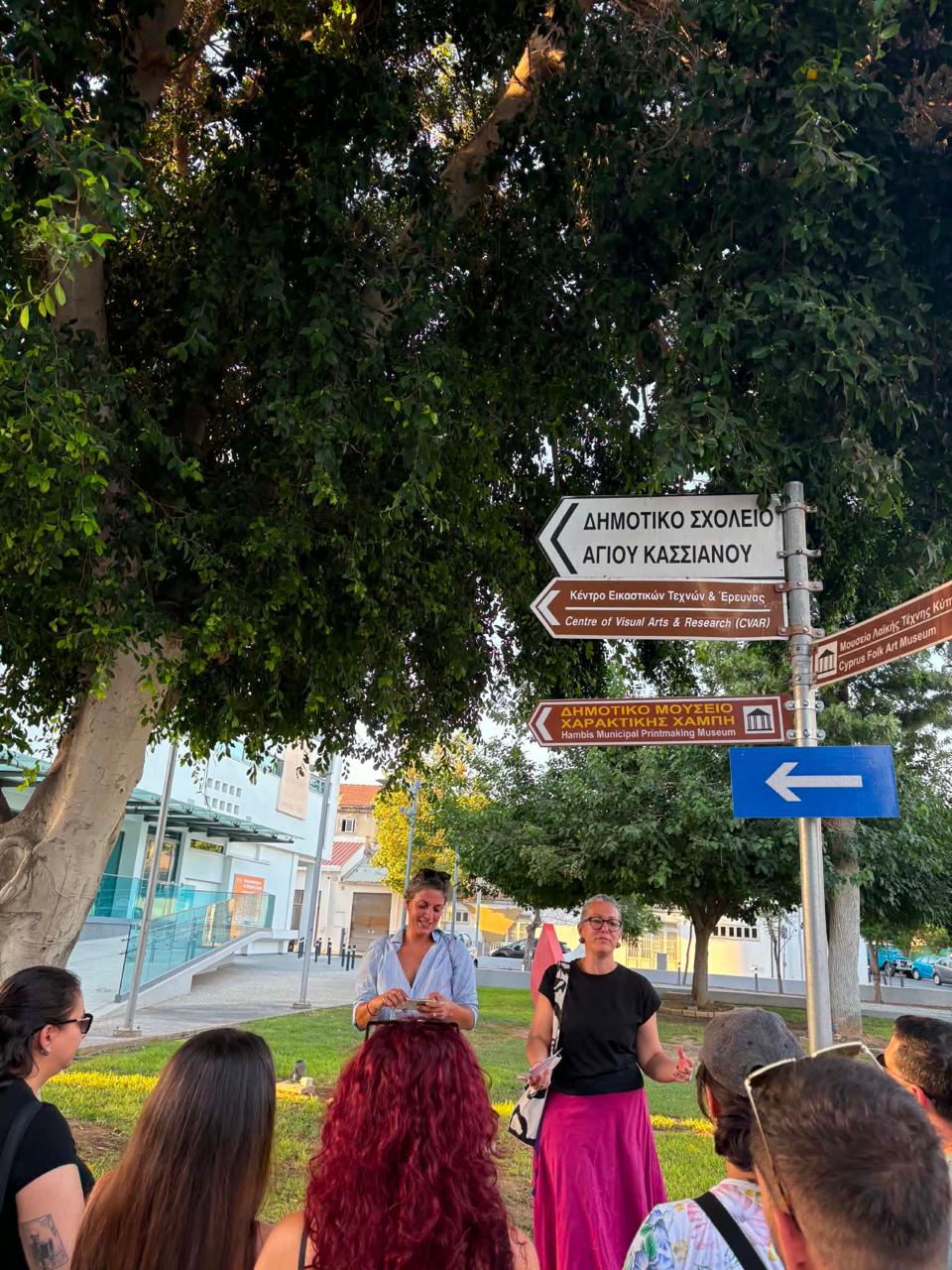
Faneromeni School, founded in 1857 by Archbishop Makarios I, is the island's oldest girls' school. Ourania Kokkinou(1930–1993), Cyprus's first female theologian, attended and later taught there; a bronze bust of her now stands outside, depicting her hands visible, a departure from convention read by researchers as an assertion of her active, working identity. Kokkinou is remembered as a nationalist, anti-colonial and religious pioneer who led the female division of the Orthodox Christian Youth Union (OXEN) and, in that role, is credited with recruiting young women into EOKA during the 1955–1959 campaign against British colonial rule. Popular local claims about her private life, variously that she was romantically linked to Archbishop Makarios III or that she was a lesbian, are not attested in archival or press sources and are presented in the walk explicitly as community speculation rather than documented fact. The walk does not claim Kokkinou as a queer figure; it uses her monument to ask what such a memorial necessarily leaves out.
Stop five: Cy Checkpoint
Homosexuality remained a criminal offence in Cyprus until 1998, under Section 171 of the Criminal Code, introduced in 1929 and modelled on English law of 1885. The case that forced change, Modinos v Cyprus, was brought to the European Court of Human Rights by Alecos Modinos, founder of the Cypriot Homosexual Liberation Movement, and found the law incompatible with the right to private life under Article 8 of the European Convention on Human Rights. Parliament repealed the law on 21 May 1998, eight days before a Council of Europe compliance deadline; the age of consent was equalised only in 2002.
The AIDS Solidarity Movement, a non-profit established in Cyprus in 1989, now works across psychosocial support, prevention, community empowerment and advocacy. In 2015 it launched Cy Checkpoint, a community-based voluntary counselling and testing centre offering free, anonymous HIV and STI testing alongside condoms, lubricants and peer counselling on access to PEP and PrEP, reaching migrants, refugees, asylum seekers, LGBTI+ people and sex workers. The Movement's Cyprus PrEP Point followed in 2025, launched during Cyprus Pride that May.
Stops six and seven: Eleftheria Square and the Municipal Gardens
The route passes through Eleftheria Square before ending at the Nicosia Municipal Gardens, completed in 1969 and, since 2014, closely associated with Cyprus Pride. Cyprus's first Pride march, organised by Accept–LGBT Cyprus under the theme "Speak Love," drew an estimated 4,500 to 5,000 participants on 31 May 2014, starting at Eleftheria Square with an after-party at the Gardens; a separate first march took place in the north on 17 May 2014, organised by Queer Cyprus. In the years since, the Gardens have become the fixed anchor of the day's programme. For CIP's walk, the Gardens close the route by turning from hidden histories towards deliberate, collective visibility, a space that becomes, in the organisers' words, "a political and emotional landscape" of celebration, protest, memory and care.