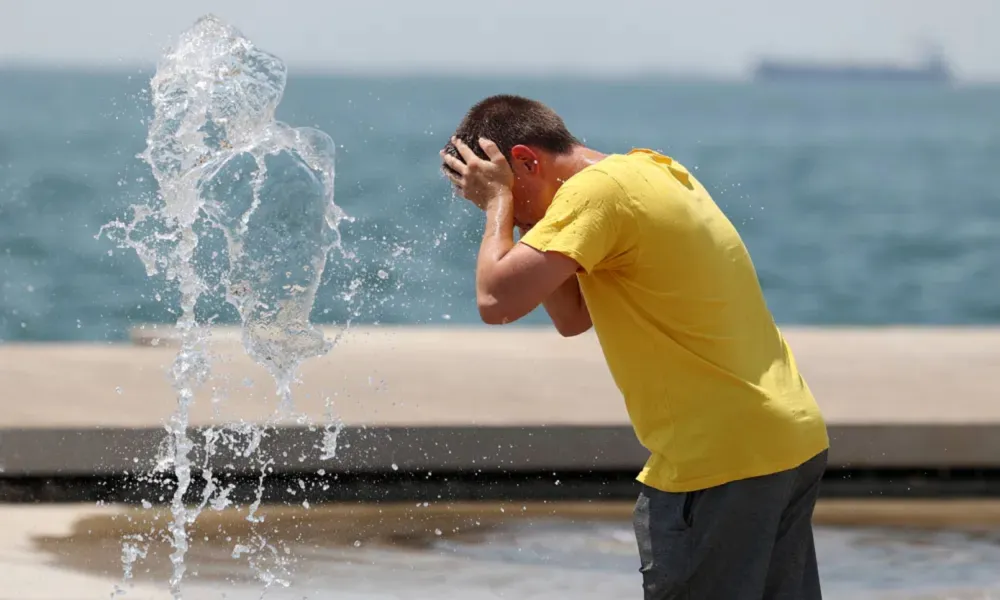

More than 50,000 people are estimated to have died from extreme heat during the summer of 2026 across 854 cities in 30 European countries, making it the deadliest summer for heat-related mortality in Europe in the past 26 years.
According to estimates cited by the EFE news agency from researchers at Imperial College London and the London School of Hygiene & Tropical Medicine, climate change was responsible for a substantial share of the death toll, with approximately 65% of the fatalities attributed to additional warming caused by human-induced climate change.
More than 50,000 deaths linked to extreme temperatures
The analysis estimates that 50,391 deaths were associated with high temperatures across the European cities included in the study.
That figure is significantly higher than previous major heat events. Researchers estimated approximately 29,000 heat-related deaths in 2022 and around 28,000 in 2003 within the same study areas.
Scientists estimate that nearly two out of every three deaths recorded during the summer were linked to the additional heat generated by climate change.
The studies have been submitted for peer review ahead of publication in the journal Nature Health.
Deadliest period lasted just 15 days
Researchers found that nearly one-third of all deaths occurred within a 15-day period between 17 June and 1 July.
During that period, average daily temperatures in the affected regions exceeded the 1991-2020 average by more than 5°C.
The findings underscore the growing public health risks associated with increasingly frequent and intense heatwaves.
Italy, France and Spain recorded the highest death tolls
The highest estimated numbers of heat-related deaths were recorded in southern and western Europe:
- Italy: 13,303 deaths
- France: 7,268 deaths
- Spain: 6,824 deaths
- Germany: 6,340 deaths
- United Kingdom: 4,354 deaths
Researchers noted that the impact was not limited to Mediterranean countries, with thousands of deaths also estimated across northern Europe.
Climate change contribution highest in Estonia
When examining the proportion of deaths specifically attributed to climate change, the highest percentages were recorded in:
- Estonia: 85%
- Bulgaria: 79%
- Spain: 77%
- Finland: 76%
The corresponding figure was estimated at 74% for both Greece and Romania.
More than 6,000 victims were under 65
Although older people remained the most vulnerable group, the study found that the effects of extreme heat extended well beyond the elderly population.
More than 6,000 people under the age of 65 were among those estimated to have died from heat-related causes during the summer.
Researchers warn that the increasing frequency and intensity of heatwaves is creating growing risks for public health and reinforcing the need for adaptation measures.
Spain among the hardest-hit countries
Spain recorded an estimated 6,824 heat-related deaths, of which 5,227 were attributed to climate change.
Within Spain:
- Barcelona recorded 1,842 estimated heat-related deaths, including 1,587 linked to climate change.
- Madrid recorded 1,067 deaths, including 967 linked to climate change.
- Valencia recorded 355 deaths.
- Zaragoza recorded 264 deaths.
- Málaga recorded 111 deaths.
- Seville recorded 109 deaths.
- Granada recorded 98 deaths.
Barcelona ranked second in Europe for climate change-attributable heat deaths, behind Milan, where researchers estimated 1,627 deaths linked to additional warming.
How the estimates were calculated
Researchers analysed temperature records and historical mortality data covering the period from 2000 to 2026.
The study included 854 cities, representing approximately 40% of the population of the 30 European countries examined.
Scientists compared actual temperatures with temperatures that would have been expected in a world without human-induced global warming. Statistical models were then used to estimate how many deaths were associated with heat exposure and how many could be attributed specifically to climate change.
The figures represent scientific estimates rather than officially recorded causes of death.