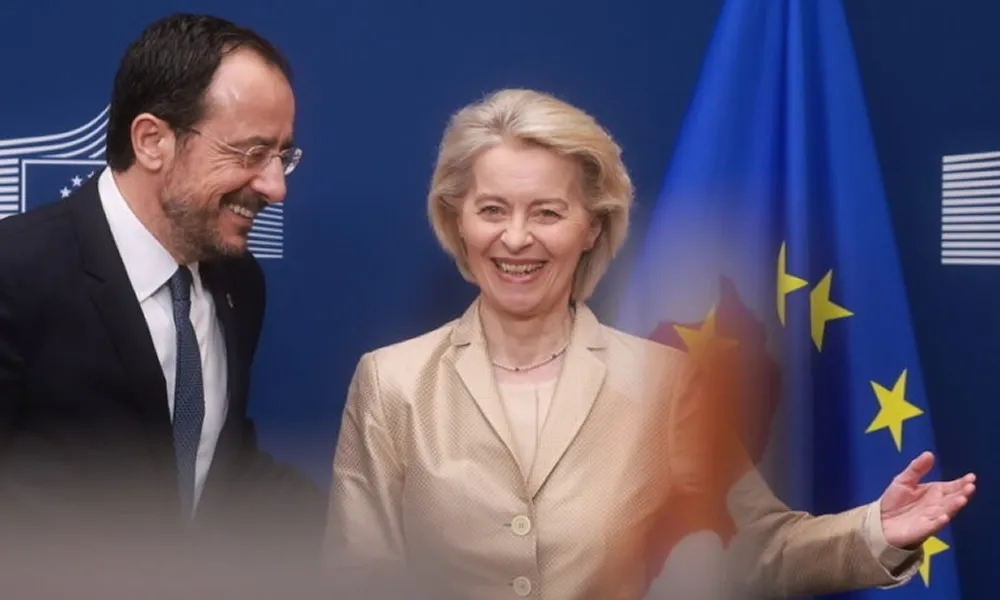

Cyprus has asked the European Union to place its mutual defence clause back on the political agenda, with President Nikos Christodoulides urging European Commission President Ursula von der Leyen to revive discussions on the provision amid increasing security challenges.
In a letter dated 20 October, seen by POLITICO, Christodoulides stressed the importance of the clause, arguing that it has become increasingly relevant in a period marked by geopolitical instability and evolving security threats.
Call for renewed discussions
According to the report, the Cypriot president asked for negotiations and consultations on the issue to resume within the EU's preparatory bodies.
"Given the gravity of the challenges we face, Cyprus would welcome the resumption of discussions," Christodoulides said, while also requesting an update on proposals currently under consideration and a timetable for future steps.
What Article 42.7 provides
The appeal centres on Article 42.7 of the Lisbon Treaty, which requires EU member states to provide assistance to a fellow member state that becomes the victim of armed aggression.
The clause obliges other EU countries to offer aid and support using all means available to them, although the practical application of the mechanism remains the subject of ongoing debate.
Security concerns push issue higher
The mutual defence clause has attracted renewed attention in recent years following a series of international security challenges, including Russia's war in Ukraine, instability in the Middle East and concerns about hybrid threats facing EU member states.
Earlier this year, the EU conducted exercises examining how the clause would operate in practice.
During Cyprus' six-month presidency of the Council of the European Union, which concluded on 30 June, Nicosia also pushed the issue higher on the European agenda after Iranian drones struck a British military base on Cypriot territory in March.
Focus has shifted elsewhere
Despite earlier discussions, the issue has received less attention in recent months as the EU has focused on negotiations over its next seven-year budget and additional financial support for Ukraine.
According to POLITICO, Article 42.7 is not expected to feature on the agenda of European leaders' summits in the near future.
Source: POLITICO