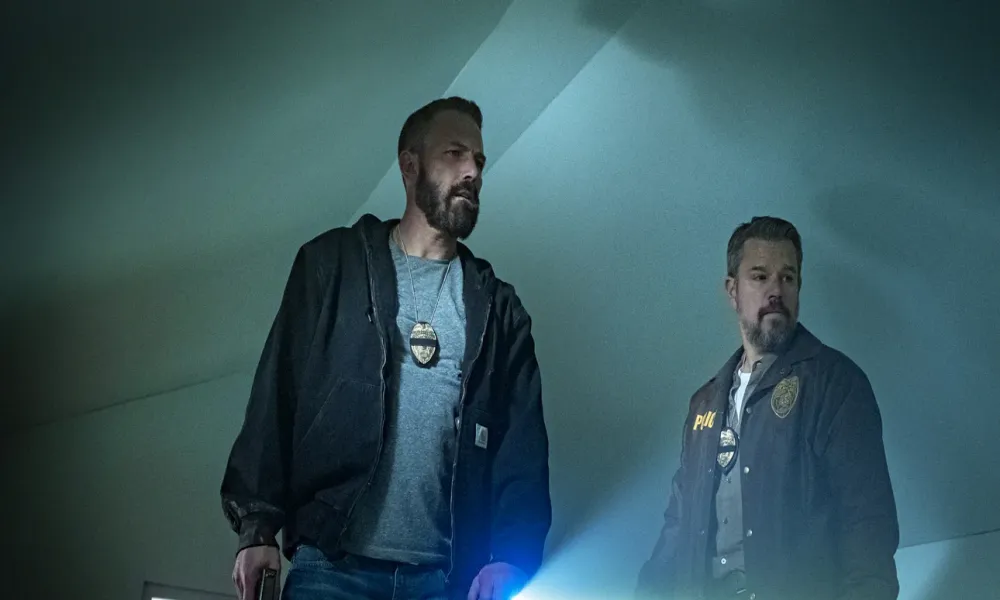

A police raid on what appeared to be an ordinary home in Miami Lakes in 2016 uncovered a hidden fortune of $24 million and went on to inspire The Rip, the new Netflix thriller starring Matt Damon and Ben Affleck.
The operation took place on 29 June 2016, when Miami-Dade police officer Chris Casiano and his team carried out a raid as part of a long-running investigation into marijuana trafficking. The house, owned by Luis Hernandez-Gonzalez, appeared unremarkable from the outside. Inside the attic, however, officers discovered a concealed room hidden behind a false wall.
There, police found 24 orange buckets filled with bundles of $100 bills, a total of $24 million, marking the largest cash seizure in the history of the Miami-Dade Police Department.
The investigation that led to the raid
Hernandez-Gonzalez, who owned a gardening supply store in North Miami, had been under surveillance for years. Authorities suspected his business was acting as a front supplying equipment to marijuana growers, but despite monitoring, wiretaps and intelligence gathering, no charges had been brought.
That changed in 2016, when intercepted communications linked him to South Florida marijuana traffickers who were arrested by federal agents in Tennessee. The new evidence prompted coordinated raids on both his business and his Miami Lakes home.
The moment of discovery
As officers entered the house, a cash-detection dog reacted strongly, signalling the presence of large amounts of money. In the attic, police identified the mechanism that opened the hidden space, a garden rake with a cable concealed inside its handle.
Behind the false wall, officers found not only the cash-filled buckets, but also various strains of marijuana, anabolic steroids and a TEC-9 firearm.
The protocol that trapped officers inside the house
Under Miami-Dade regulations, seized cash must be counted on site, by hand, twice, before it can be removed. This requirement forced Casiano and his team to remain inside the house for hours, aware that the discovery of such a vast sum could attract dangerous attention.
Security cameras inside the property continued recording throughout the process, heightening fears that someone could be monitoring the scene or planning an attempt to recover the money.
The legal consequences for Hernandez-Gonzalez
Following the seizure, Hernandez-Gonzalez was initially charged at state level with marijuana trafficking and money laundering. Federal charges were later added after investigators identified a pattern of bank deposits consistent with efforts to conceal illicit income.
In 2018, he was sentenced to 65 months in prison on federal financial crime charges.
Real life to fiction
The experience of that night stayed with Casiano and eventually reached filmmaker Joe Carnahan, who heard the story while working with Miami-Dade police during the production of Bad Boys for Life.
The account inspired Carnahan to develop The Rip, a thriller that focuses not only on the tension of a police operation but also on the psychological strain of being confronted with enormous sums of money. While he preserved many real-life details, including the false wall, the buckets of cash and the detection dog, names and circumstances were altered to create a fictional narrative.
Personal loss and a rewritten script
In 2021, Casiano’s son, Jake, died of cancer. The loss deeply affected Carnahan, who rewrote the script so that the film’s central character, Lt Dane Dumars, played by Damon, carries the burden of losing a child.
The film was dedicated to Jake, whose name appears first in the closing credits.
Damon, Affleck and the production
The project gained momentum after reaching Artists Equity, the production company founded by Damon and Affleck. The two actors portray police officers whose long-standing friendship is tested as power dynamics shift following a major seizure.
As part of their preparation, both actors spent time with Miami police officers, observing procedures and learning the practical realities of the job.
Authenticity as a guiding principle
Carnahan has said he prioritised authenticity throughout the production, frequently rewriting scenes on set to better reflect the psychology of the characters. In one instance, a scene originally a page and a half long was reduced to just two words after a 40-minute discussion with the actors.
Ultimately, the director says, the film is about people rather than money, exploring loyalty, temptation, grief and what happens when the line between duty and human weakness becomes dangerously thin.
Source: Reporting by The New York Times and US court records