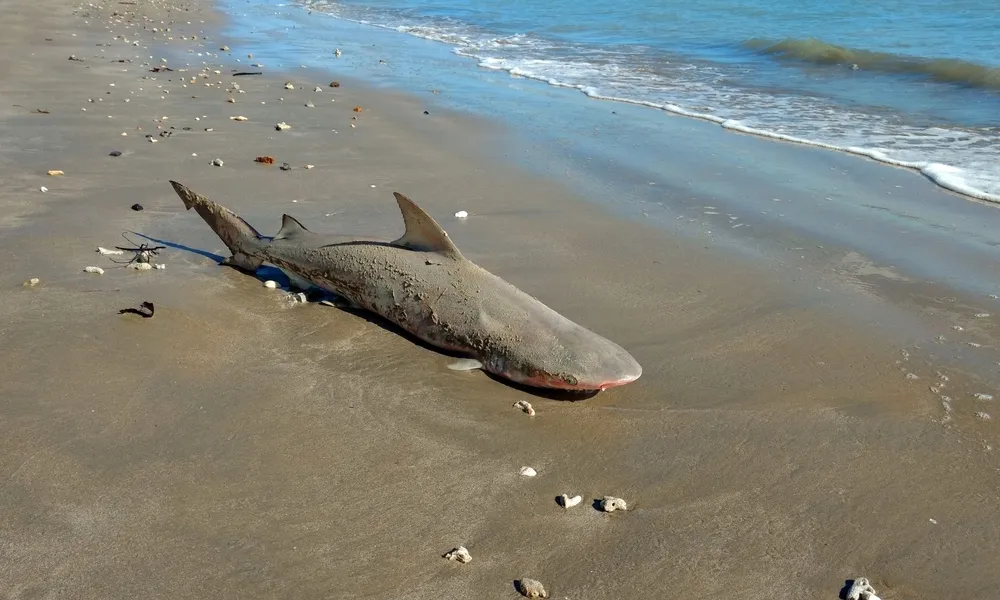
Australia’s peak summer holiday period has been overshadowed by a rare cluster of shark attacks along the east coast, prompting the closure of dozens of beaches in New South Wales and renewed warnings from authorities to stay out of the water.
Around 40 beaches across the state remain closed after four shark attacks were recorded within 48 hours, an unusually high number by Australian standards. All incidents have been linked to bull sharks, a species known for its powerful jaws and tendency to move into shallow, murky waters near river mouths following heavy rainfall.
The attacks occurred after Sydney experienced its heaviest 24-hour rainfall in more than a decade, conditions experts say significantly increase the risk of encounters between sharks and humans.
Why bull sharks are a heightened risk
Bull sharks are distinctive among shark species in that they can survive in both saltwater and freshwater. After major rain events, runoff from rivers and estuaries carries food into coastal waters, drawing the sharks closer to shore.
At the same time, sediment stirred up by flooding reduces water visibility. According to marine scientists, bull sharks rely less on sight in these conditions and may investigate unfamiliar shapes by biting, increasing the danger to swimmers and surfers.
Steve Pearce, chief executive of NSW Surf Life Saving, said the concentration of attacks was highly unusual.
While shark sightings and minor encounters are not uncommon, he noted that four confirmed attacks in such a short time frame is rare for the state.
Fatal attack in Sydney Harbour
The first incident occurred at Vaucluse in Sydney Harbour, where a 12-year-old boy was attacked while jumping into the water with friends. He was pulled out by those with him and rushed to hospital, but police later confirmed he had died from his injuries.
Authorities believe a bull shark had been sheltering in the muddy water beneath nearby rocks, conditions that experts say can persist for several days after heavy rainfall.
In the days that followed, further incidents were recorded along the coast, including serious injuries to a 25-year-old surfer at North Steyne Beach in Manly, and separate encounters involving surfers whose boards were bitten but who escaped with minor or no injuries.
Beaches closed ahead of extreme heat
The attacks have coincided with forecasts of extreme temperatures ahead of the Australia Day public holiday, raising concerns that beachgoers may ignore closure notices.
Pearce warned that experience shows many people will still enter the water, even when beaches are officially closed.
He stressed that closures are imposed based on real risk assessments and urged swimmers and surfers to stay out of the water until conditions improve.
How authorities are responding
Local councils and surf lifesaving teams have intensified monitoring efforts along the coastline. Drones, jet skis and rescue helicopters are being used to scan nearshore waters for sharks, while lifeguards continue to assess water quality and visibility.
Beaches are expected to reopen gradually once the water clears and shark activity subsides, a process that can take up to a week after major rainfall.
Not a population surge, experts say
Vincent Raoult, a senior lecturer in marine ecology at Griffith University, said there is no evidence of a sudden increase in the bull shark population near Sydney.
Instead, he attributed the spike in encounters to a combination of environmental conditions and human behaviour. More people are using coastal and estuarine waters, while urban development continues to encroach on shark habitats.
In murky, brackish water, Raoult explained, sharks often rely on touch and bite to identify objects. In the case of large animals, even a single investigative bite can be fatal.
Calls for better warnings
The incidents have prompted calls for clearer public messaging during periods of heavy rain. Chris Minns, the state’s premier, acknowledged that existing warning systems may need strengthening.
Speaking to local radio, Minns said long-standing advice about avoiding unclear water after storms remains valid, particularly when bull sharks are known to move into lower estuaries.
Despite the warnings, some surfers and swimmers have continued entering the water at beaches that remain open, underscoring the challenge authorities face in balancing public safety with Australia’s deeply ingrained beach culture.