Children and young people across Cyprus are playing an active role in the country’s EU Council Presidency, with schools taking part in a wide range of creative projects designed to connect students with Europe, its institutions, and shared values.
Under the theme “Cyprus Youth Creating for Europe”, the Ministry of Education, Sport and Youth, in cooperation with the Secretariat of the Cyprus Presidency, has rolled out a series of school-based actions that place creativity and participation at the heart of the Presidency’s cultural programme.
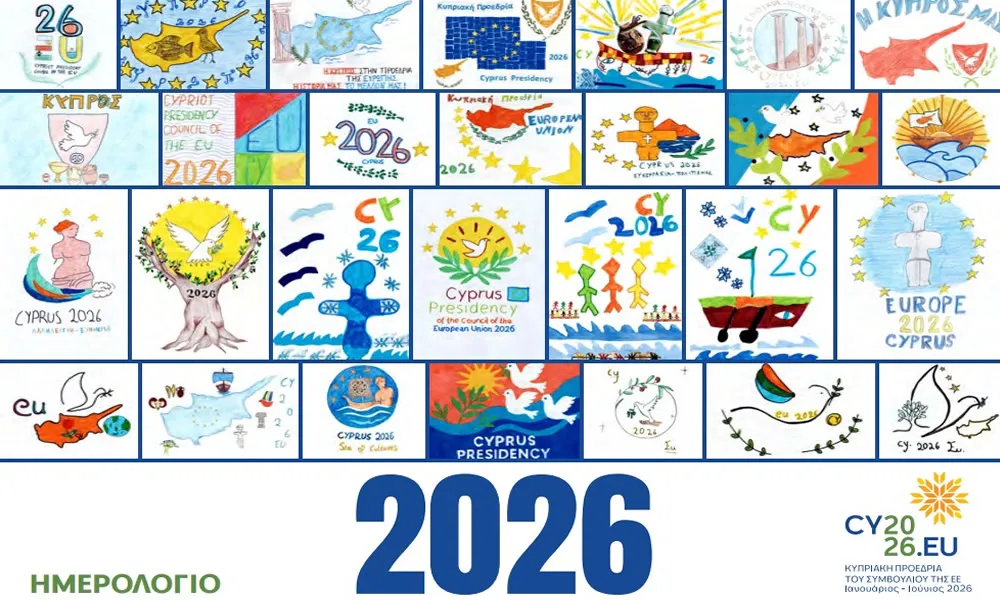
One of the flagship initiatives was a children’s logo competition for primary school pupils. Students from Grades 4 to 6 were invited to design logos reflecting the vision and values of the Cyprus Presidency of the Council of the EU 2026, drawing inspiration from European principles such as cooperation, solidarity, and unity.
The winning logo now features on the official Cyprus Presidency 2026 calendar, while other shortlisted designs appear throughout its pages, turning a formal institutional publication into a showcase of children’s creativity from across the island.
At secondary education level, students from gymnasiums, lyceums, and technical schools took part in a Fine and Applied Arts Competition, which culminated in the exhibition “Europe in Cyprus”. The exhibition is being hosted at the Conference Centre during the Informal Meeting of EU Ministers of Education on 29-30 January 2026.
The works on display draw on Cyprus’ history, mythology, and culture, while exploring ideas of unity, dialogue, and solidarity that resonate across the European Union. According to organisers, the aim was to encourage students to reflect on their role as active European citizens and to express that role through art.
Creativity extended beyond exhibitions into hands-on production. Students in technical and vocational education were tasked with designing and making commemorative gifts for EU Presidency events. These projects, developed under the guidance of teachers, combine traditional Cypriot crafts with contemporary design and European symbolism.
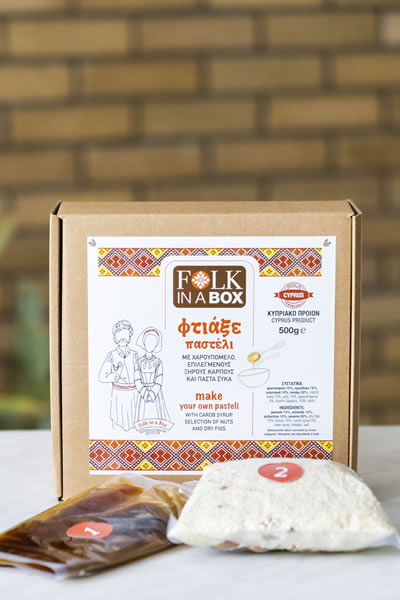
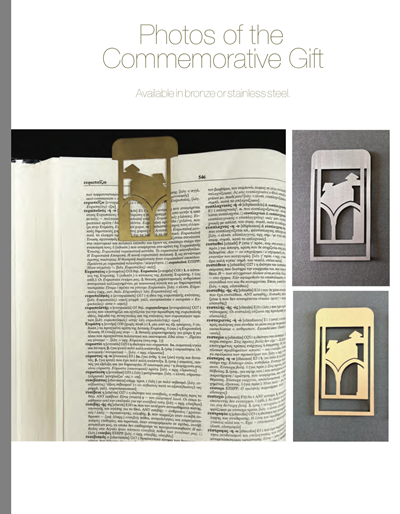
Among the selected items is a bronze bookmark, featuring architectural elements from Cyprus’ ancient and modern monuments, which has already been presented to participants at high-level education meetings. Other projects include “Make Your Own Pastelaki”, prepared by hospitality students for the Informal Meeting of Environment Ministers in February, and a wooden figure titled “I Choraïtissa”, created by design students and set to be offered at a meeting of EU vocational education directors.
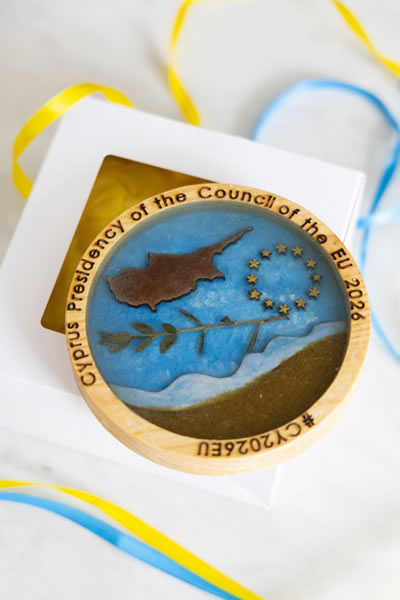
Students from special schools also took part. Pupils from the Evangelismos Special School in Nicosia created handmade coasters depicting Cyprus’ natural landscape and European identity, accompanied by a short video documenting the creative process. A similar initiative is underway at the Nicosia Special School, where students are preparing a symbolic wooden desk ornament for an upcoming EU education meeting.
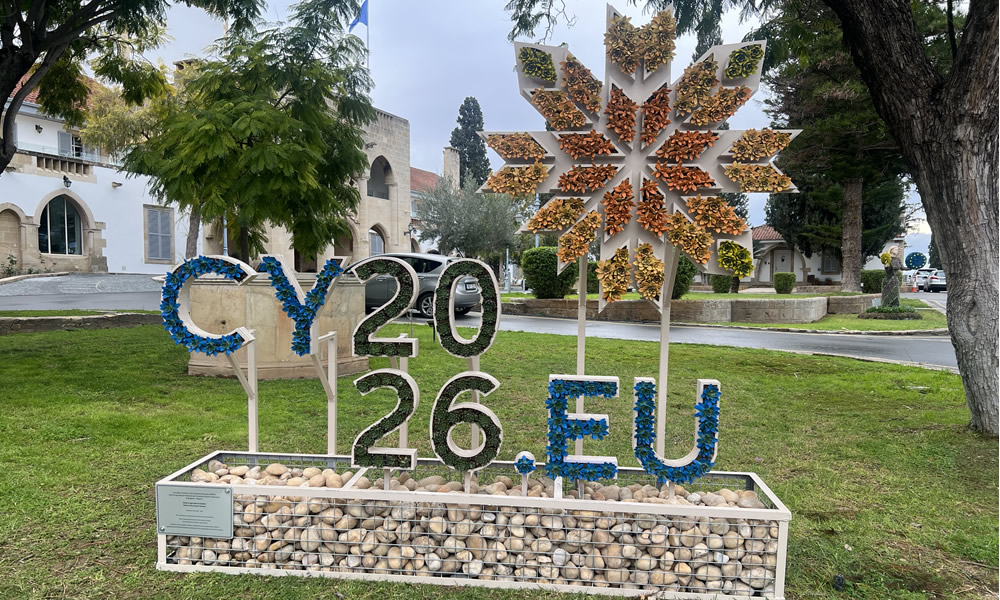
In parallel, six Green Living Sculptures were designed and built by students and teachers from agricultural and technical schools in Famagusta/Avgorou and Solea. Installed at the Presidential Palace and the Conference Centre, the sculptures stand as a visible reminder of collaboration, sustainability, and experiential learning.
Through these projects, the Cyprus EU Presidency has turned schools into active participants rather than passive observers, using culture and education to give young people a voice in Europe’s future, while grounding European identity in everyday creativity.