
Easter is the most important celebration of the Christian faith, commemorating the Resurrection of Christ and the transition from death to eternal life. In Cyprus, Holy Week is observed through a rich series of religious rituals and family traditions that combine faith, symbolism and community life.
Many of these customs have been passed down through generations and continue to shape how the days leading to Easter Sunday are experienced across the island.
Palm Sunday: the beginning of Holy Week
Holy Week begins with Palm Sunday, when churches commemorate Christ’s entry into Jerusalem. Worshippers attend the morning liturgy and receive palm or olive branches blessed by the priest.
These branches are often taken home and kept throughout the year as a symbol of protection and blessing for the household.
Holy Monday: reflection and preparation
Holy Monday marks the beginning of the more contemplative days of the week. Church services focus on themes of repentance and spiritual preparation for the Resurrection.
At home, families begin preparing for the week ahead. Houses are cleaned, ingredients are gathered for traditional Easter foods and communities begin to prepare for the customs that will follow later in the week.
Holy Thursday: red eggs and Easter baking
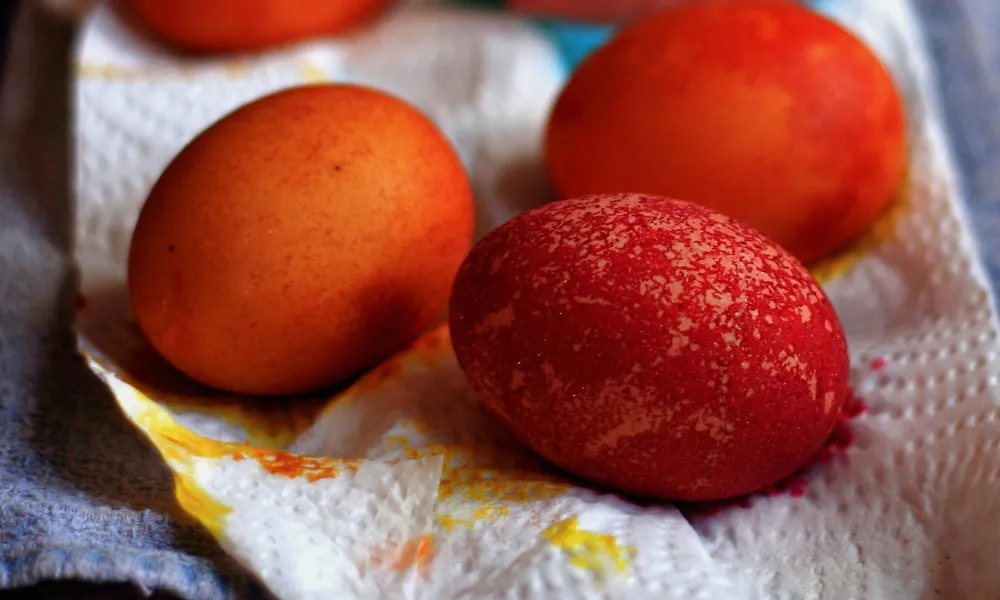
Preparations intensify on Holy Thursday. One of the most recognisable traditions is the dyeing of eggs in red, which symbolises the blood of Christ shed during the Crucifixion. The cracking of the eggs on Easter Sunday symbolises the breaking open of Christ’s tomb and the Resurrection.
In earlier times, grandmothers dyed eggs using natural ingredients such as madder root, beetroot juice and poppies. In some households this traditional method is still preserved.
Holy Thursday is also associated with baking. Families prepare traditional Easter foods such as arkatena and stavrokouloura. Arkatena are rusks made using a chickpea-based starter, while stavrokouloura are breads shaped with crosses.
Good Friday: the decoration of the Epitaphios
Good Friday is the most solemn day of Holy Week. In the morning, young women traditionally gather at churches to decorate the Epitaphios with flowers following the service commemorating the deposition of Christ from the Cross.
In the evening, the Epitaphios procession moves through the streets, accompanied by hymns and prayers. Worshippers follow the procession and sprinkle fragrant herbs along the route.
In many homes a simple meal is prepared, often lentils cooked with vinegar, recalling the vinegar offered to Christ when he said “I thirst” while on the Cross.
Holy Saturday: the first Resurrection and flaounes
On Holy Saturday morning, believers gather for the service of the First Resurrection. During the hymn “Rise, O God, judge the earth”, the atmosphere shifts from mourning to anticipation.
In many churches the faithful strike the wooden stalls loudly, symbolising the earthquake described in the Gospel accounts of the Resurrection. The dark coverings placed over icons during Holy Week are removed.
Holy Saturday is also the day when families bake flaounes, the traditional Easter pastries filled with a mixture known as foukos, made from grated cheese, eggs, leaven, aromatic herbs and sometimes raisins. Baking usually takes place in wood-fired ovens and often becomes a communal activity among families and neighbours.
Easter Sunday: celebration and family gatherings
At midnight on Holy Saturday, churches celebrate the Resurrection service, with worshippers lighting candles from the Holy Flame and greeting one another with the words “Christos Anesti” – Christ is Risen.
Easter Sunday is devoted to celebration and family gatherings. Traditional foods are prepared, and in many communities lamb is roasted on a spit outdoors. Families gather around the table, exchange greetings and crack their red eggs in a game known as tsougrisma.
Easter Monday: games and village traditions
Easter Monday continues the celebrations with community events and traditional games organised in villages and neighbourhoods.
Activities often include folk dancing, outdoor competitions and games such as sack races or tug-of-war. These gatherings bring together families, friends and neighbours, extending the festive atmosphere of Easter and reinforcing the strong communal spirit that characterises the celebration in Cyprus.