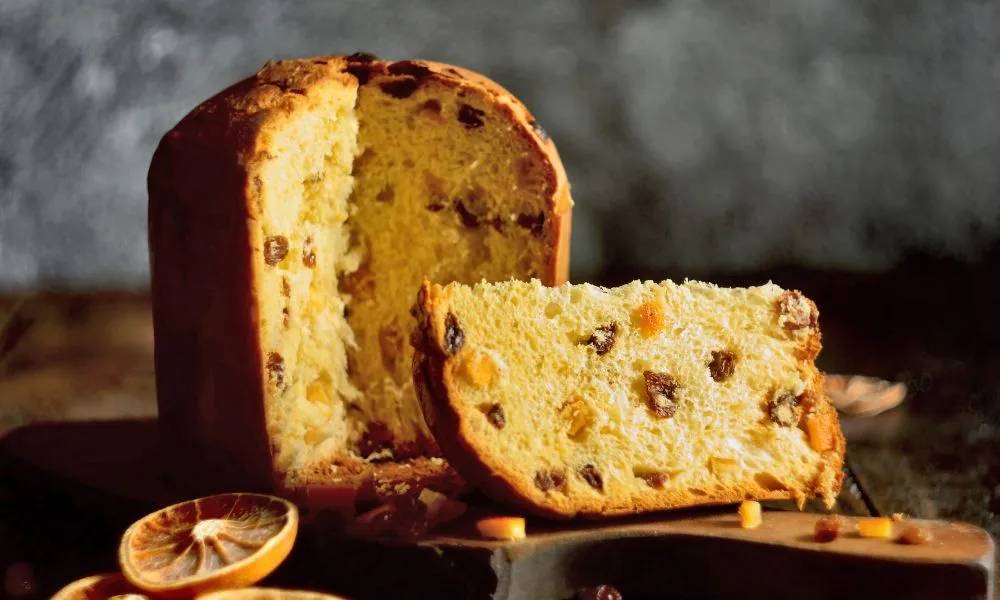
Christmas is magical. It is also mildly dangerous. There are presents to buy, people to host, tables to set, schedules to juggle and then there is the food. The food and then some more food. Every year we promise moderation and every year Christmas laughs quietly and places another plate in front of us.
Among all these festive perils, one stands out. Tall, golden, innocent-looking and wildly deceptive. Panettone.
Sweet, buttery, fluffy beyond reason and so good it should probably come with a warning label. It is sliced “just to try”, eaten “with coffee” and somehow finished before anyone notices. At this point, resistance is pointless. And honestly, why bother?
A Christmas classic with a long memory
Panettone comes from Milan and carries centuries of festive history. Wrapped in legend and culinary lore, one of the most popular stories tells of a young baker who enriched a simple bread with butter, eggs and dried fruit to impress his beloved. Romance aside, what emerged was a tall, domed loaf that felt celebratory, generous and slightly excessive.
By the early 20th century, panettone had become a Christmas staple across Italy and soon after, far beyond its borders. Today, it appears on festive tables across Europe and the world, a symbol of abundance, patience and shared indulgence.
Why panettone hits differently
Panettone is not cake. It is not bread. It exists in a glorious grey zone where restraint goes to die.
It is rich with butter and eggs, light despite its indulgence and delicately perfumed with citrus, vanilla and dried fruit. It looks soft, tastes luxurious and disappears far too quickly. Designed to be torn, shared and sliced again, panettone is a social dessert. You do not eat it alone. You experience it with others. And yes, you always go back for more.
Where we bought ours
Every Christmas comes with the unofficial panettone hunt. Some swear by Italian delicatessens, others chase artisanal bakeries experimenting with pistachio, chocolate or citrus fillings. Supermarkets, surprisingly, now stock excellent imported options too.
A few simple rules help separate the good from the forgettable:
-
Look for slow-risen panettone
-
Check the ingredients for real butter
-
Fewer ingredients usually mean better flavour
Pick it up. If it feels heavy, put it back. Panettone should feel light, almost like it might float.
For the brave: a classic panettone recipe
Making panettone at home is a commitment. It requires patience, time and a willingness to trust dough.