


President Donald Trump sent conflicting signals on Monday over how soon the US-Israeli war on Iran might end, first suggesting the conflict could be over “very soon” before later indicating that fighting would continue for at least another week.
The contradictory messages came as Washington faced growing pressure over the economic fallout from the war, particularly after a sharp rise in energy prices and mounting concern over global oil supplies.
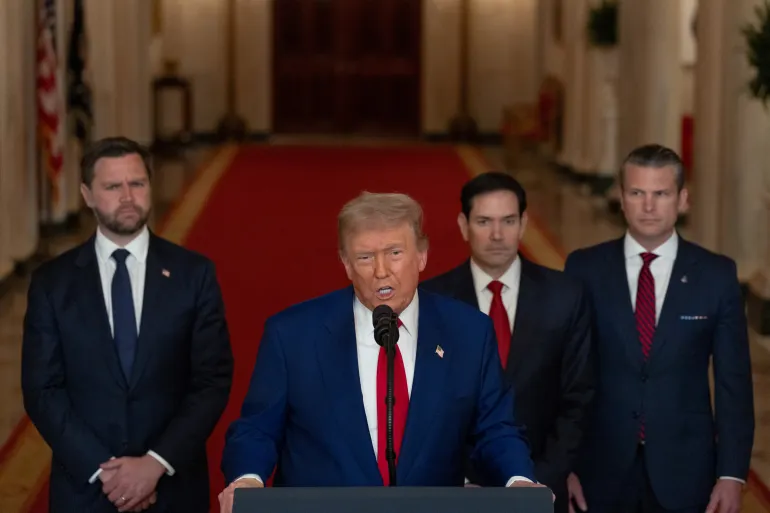
Speaking earlier in the day, Trump suggested the war was close to completion, telling CBS in a phone interview that it was “very complete, pretty much”. His remarks appeared to calm markets, with oil prices falling and stocks rising shortly afterwards.
Later, however, after US markets had closed, Trump struck a different tone while addressing Republican lawmakers in Florida. Asked whether the war would be over this week, he replied: “No”, before adding only that it would end “soon, very soon”.
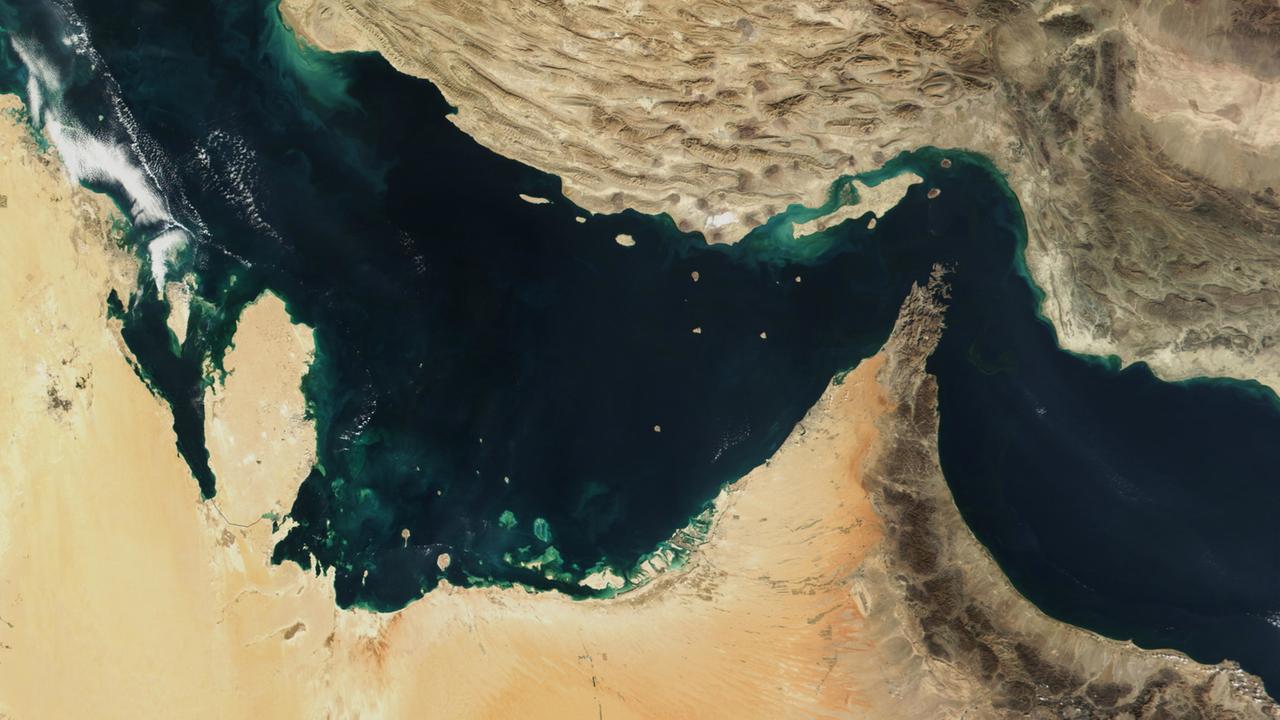
He also warned that the United States would respond with far greater force if Iran continued to disrupt oil tanker traffic through the Strait of Hormuz, a critical route for global energy flows.
“We will hit them so hard that it will not be possible for them or anybody else helping them to ever recover that section of the world,” Trump said.
Iran, for its part, showed no sign of backing down. Parliament speaker Mohammad Bagher Ghalibaf said in a social media post that the country was “absolutely” not seeking a ceasefire, while other Iranian officials insisted Tehran had no intention of ending the conflict at this stage.
Escalating rhetoric from Tehran and Jerusalem
Ali Larijani, one of Iran’s top security figures, also responded directly to Trump’s threats, warning the US president to “take care of yourself, so that you are not eliminated”, while saying Iran was not intimidated by what he described as “pointless threats”.
Meanwhile, Israeli Prime Minister Benjamin Netanyahu said he hoped the Iranian people would overthrow the Islamic Republic, but added that “ultimately, it is up to them” when the war would end. The Israeli military also announced a fresh wave of strikes on Tehran on Tuesday.
The public positions of the main actors suggested there was still no immediate diplomatic path to ending the war, which has already killed more than 1,000 people and triggered serious disruption across regional energy markets.
Shipping disruption and regional spillover
Fighting has slowed shipping through the Strait of Hormuz, the passage through which roughly one fifth of the world’s oil moves. Pakistan, which depends heavily on Gulf energy imports, has already begun escorting merchant vessels with naval ships to protect access to supplies. India is also reportedly considering similar measures.
The wider regional fallout continued to grow on Tuesday. The United Arab Emirates said it had responded to Iranian strikes, while Saudi Arabia and Kuwait reported intercepting drones. Bahrain said one person had been killed after an Iranian attack hit a residential building in Manama.
In Lebanon, Hezbollah appeared to intensify attacks on Israeli forces after heavy Israeli bombardment the previous day. Israel responded with a new wave of airstrikes in southern Lebanon and issued evacuation warnings to residents in several areas.
Energy markets under pressure
The war’s economic shock has also become more pronounced. Brent crude briefly neared 120 dollars a barrel before falling back below 90 dollars after Trump’s earlier suggestion that the conflict might soon end and after reports that G7 countries were considering measures to ease supply pressure. G7 energy ministers are expected to discuss the situation on Tuesday.
The conflict is also affecting diplomatic and military deployments across the region. The US State Department ordered the mandatory departure of diplomats and family members from its consulate in Adana, in southern Turkey, after missiles were reported to have targeted Turkish territory. Turkey also said a Patriot air defence system was being deployed in the east of the country to help protect its airspace.
Trump leaves door open to talks
At the same time, Trump appeared to leave open the possibility of direct talks with Iran. According to Fox News, he said he had heard that Iran wanted to talk and that negotiations were “possible”, depending on the terms.
The mixed messaging reflected the pressure facing the White House as it tries to balance military escalation, volatile markets and growing uncertainty over how long the war may continue.
Source: The New York Times