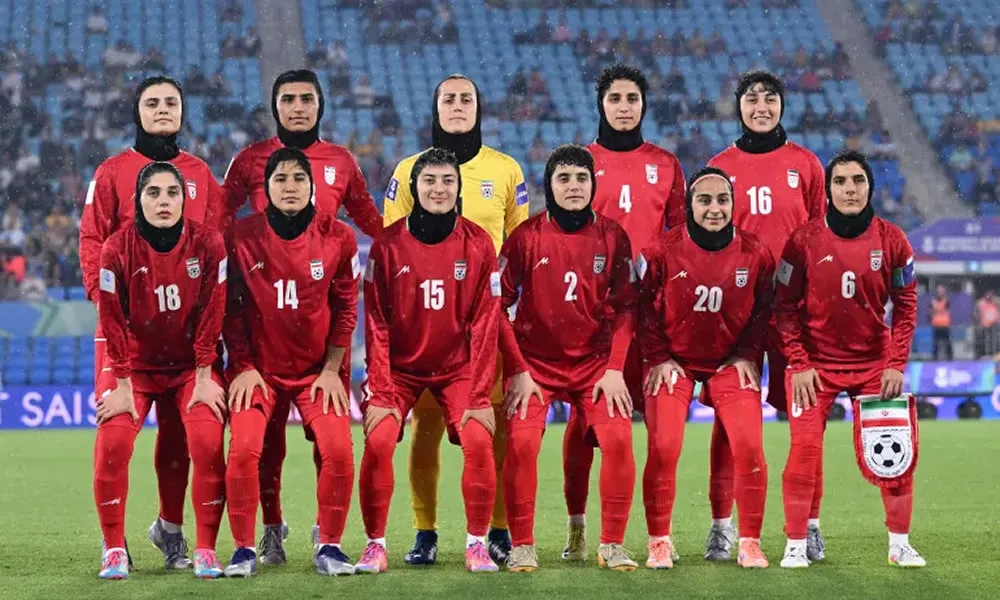

Five members of Iran’s women’s national football team have been granted humanitarian visas in Australia after refusing to sing the Iranian national anthem during a match at the AFC Women’s Asian Cup.
Australian Immigration Minister Tony Burke confirmed that the players had been moved to a safe location by police and that their visa applications were approved early on Tuesday. The women have been identified as Fatemeh Pasandideh, Zahra Ghanbari, Zahra Sarbali, Atefeh Ramazanzadeh and Mona Hamoudi.
Burke said the players wanted it to be clear that they were not political activists but athletes seeking safety. “They are athletes who want to be safe,” he said, adding that discussions with the group had taken place over several days.

Concerns after anthem protest
The players had originally been expected to return to Iran after the team’s elimination from the tournament. However, concerns grew among supporters and human rights advocates after the team declined to sing the national anthem ahead of their match against South Korea last week.
The gesture triggered criticism in Iran, where a conservative commentator labelled the players “wartime traitors” and called for punishment.
According to Australian authorities, the five players informed officials on Monday that they wished to remain in the country. They subsequently left their hotel and were taken to a secure location by police before their visa applications were processed.
Burke said the same opportunity remains open to other members of the Iranian squad if they wish to stay in Australia.
International attention
The situation had also drawn international attention. US President Donald Trump posted on his Truth Social platform urging Australia to grant asylum to the players, saying the United States would consider accepting them if Canberra did not.
During the tournament in Australia, the Iranian team had drawn attention after refusing to sing the national anthem in one match, a move widely interpreted as a silent protest.
In later matches the players did sing the anthem, leading some observers to suggest they may have been pressured by officials accompanying the team during the competition.
Support from the diaspora
Members of Australia’s Iranian diaspora showed strong support for the players during the tournament. At one match in Brisbane, hundreds of fans in the stands booed the Iranian anthem and displayed the pre-1979 Lion and Sun flag in solidarity with anti-government protesters.
Former Australian football captain Craig Foster, a prominent human rights advocate who has supported refugee athletes in the past, said the most important step was ensuring the players had the option to remain in Australia if they felt unsafe returning home.
“What matters most is that the opportunity is there,” he said.
Source: BBC