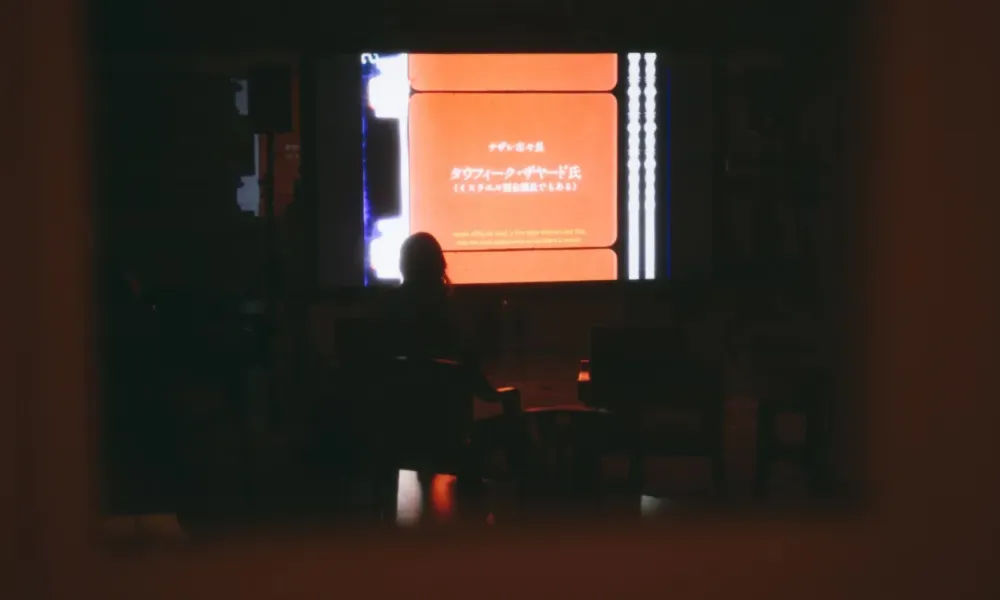
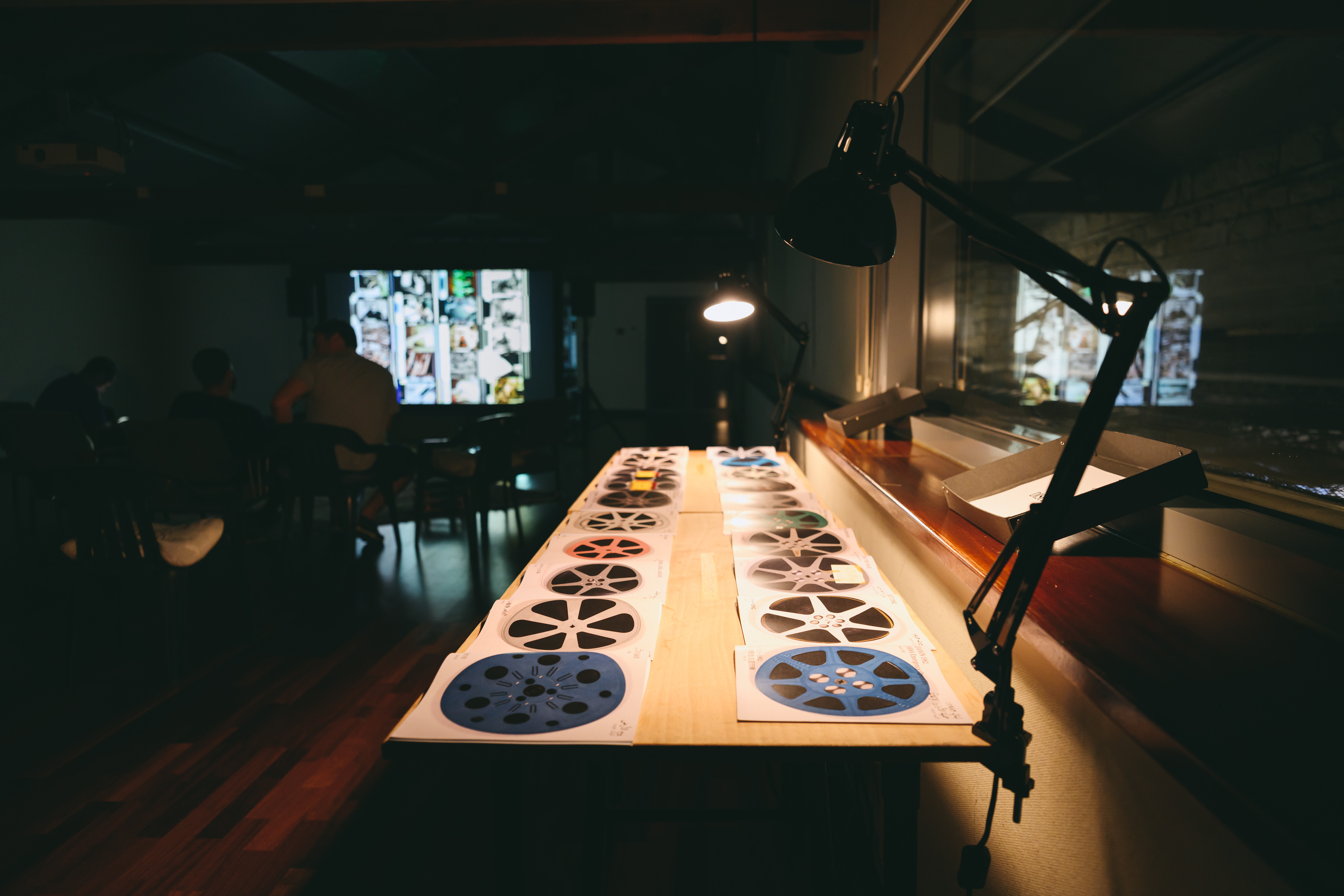
Twenty reels of Palestinian militant cinema, preserved for decades in a house in Japan, have become the starting point for a conversation with Palestinian researchers Mohanad Yaqubi and Reem Shilleh, co-founders of the Subversive Film collective. Speaking to Politis, they reflect on memory, archives and the journeys of a collection that reveals international networks of solidarity with Palestine and the right of a people to tell its own story.
On the occasion of the presentation of Tokyo Reels by the Limassol Municipal Arts Centre-Papadakis Warehouses, in collaboration with the 21st Limassol International Documentary Festival, Palestinian researchers and Subversive Film co-founders Mohanad Yaqubi and Reem Shilleh spoke to Politis about the discovery of a lost archive, the international solidarity that created it, and the right of a people to tell its own story.
The discovery of Tokyo Reels
The story of Tokyo Reels began in Tokyo, almost by accident, after a film screening.
At the time, Mohanad Yaqubi was in Japan as part of the research team behind Past Disquiet, the project by Rasha Salti and Kristine Khouri examining transnational artistic networks and solidarity movements of the 1970s.
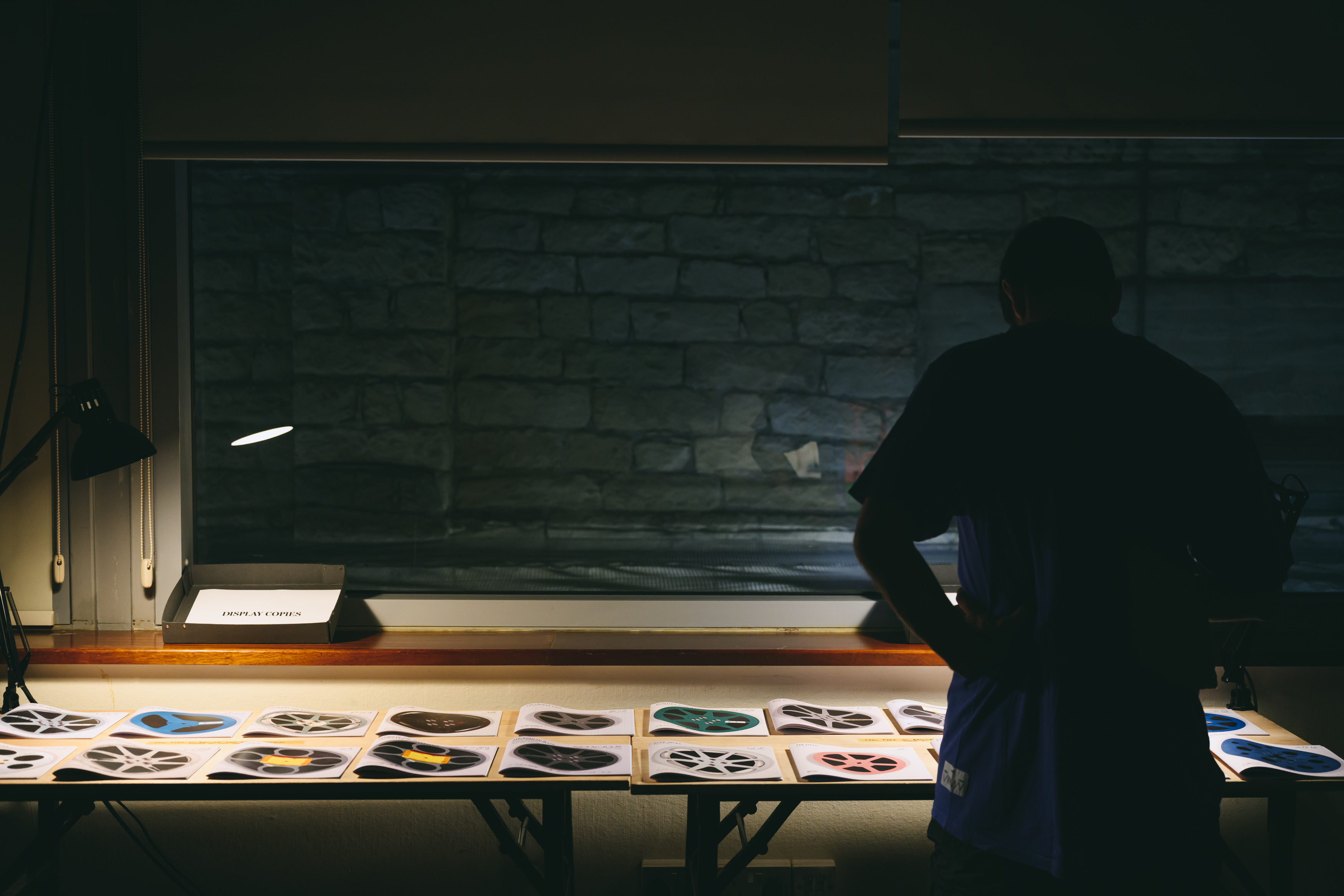
At the same time, Yaqubi's film Off Frame, itself born out of Subversive Film's research into Palestinian militant cinema, was being screened at the Image Forum Film Festival.
After the screening, a woman from the audience approached him and handed him a sheet of paper.
It was a printed Excel spreadsheet listing film titles, durations and fragments of other information.
"She was a professor, Aoe Tanami. She explained how this collection ended up in her house," Yaqubi recalls.
As a student in Tokyo during the 1980s, Tanami had participated in grassroots movements and international solidarity networks. Their activism extended beyond Palestine and was connected to a wide range of political struggles of that era.
Toward the end of the 1980s, when the Palestine Liberation Organisation's office in Tokyo closed, a practical question emerged:
What would happen to all the material collected over the years by activists?
Films that had travelled thousands of miles, been screened at political events and functioned as vehicles of international solidarity had to be stored somewhere.
Tanami, who was then moving to Hiroshima to continue her studies, proposed transferring them to her family home.
And there they remained.
Not exactly forgotten, Yaqubi clarifies.
Members of Japan's solidarity movement knew the reels existed. From time to time, someone would borrow a reel, organise a small screening at a cultural centre and then return it.
The collection had not disappeared.
It had simply remained outside any systematic process of cataloguing, identification or preservation.
When Subversive Film came into contact with Tanami and other members of the network, discussion quickly turned to how the collection might be brought back to life.
"We wanted to help identify the films, scan them, digitise them, restore them and put them back into circulation."
That is how Tokyo Reels was born.
Archives of solidarity
How did Palestinian film reels end up in Japan?
For Reem Shilleh, the answer lies in the way international political networks functioned in the decades following World War II.
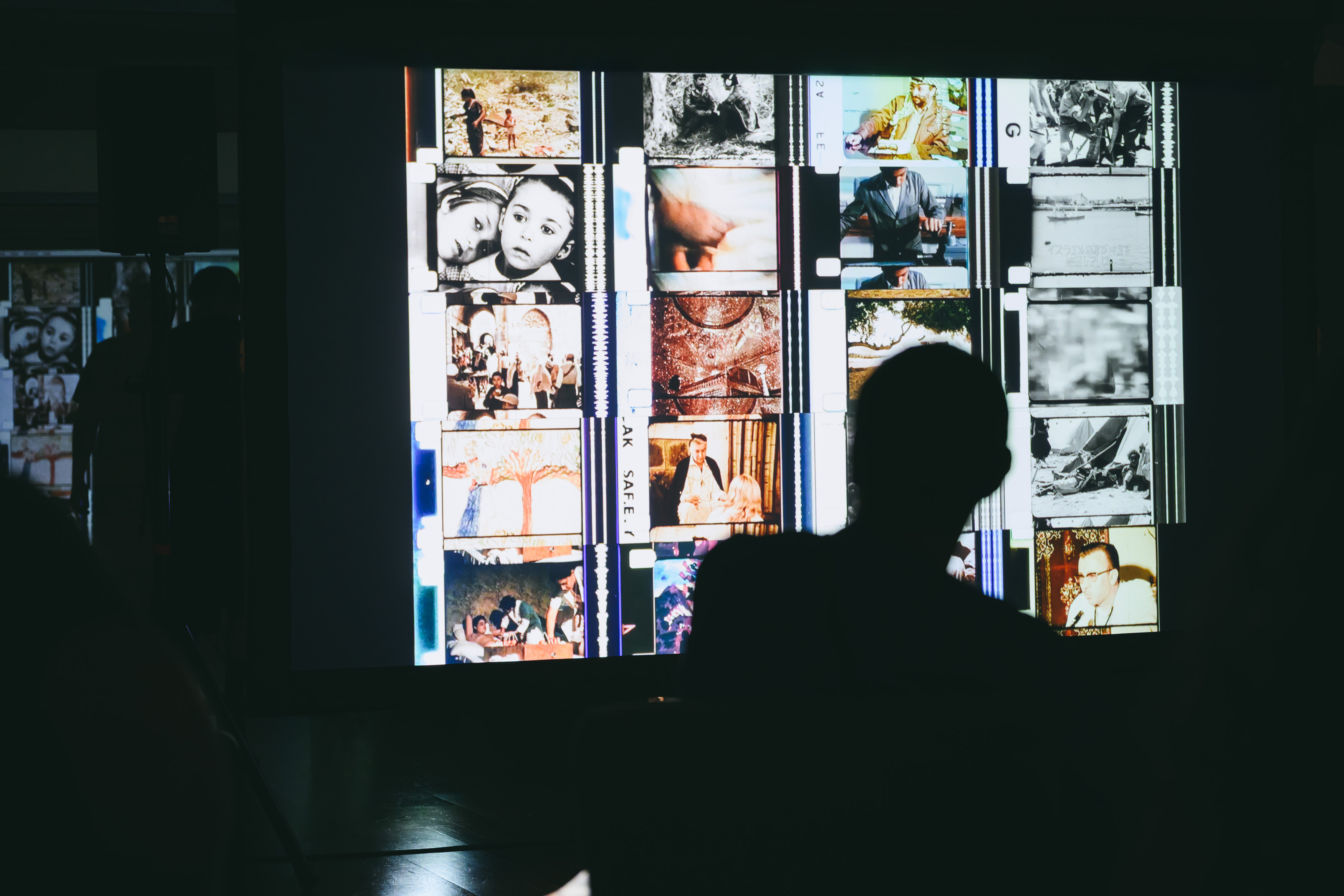
Anti-colonial movements emerging across Asia, Africa and Latin America did not develop in isolation.
They formed relationships with one another, exchanged materials and ideas, and built networks that transcended national borders.
"There was a transnational circulation network and, essentially, it was a political network," she explains. "It begins in the post-war period and the anti-colonial struggles taking place around the world."
She points to the Japan Asian African Latin American Artists Association, which formed part of the Tricontinental, an international framework linking Asia, Africa and Latin America.
This was not simply a network of states.
It involved artists, intellectuals, workers' movements, students and solidarity organisations.
Palestine became central to many of these relationships, particularly after 1968.
These connections are reflected in cinema as well.
Shilleh refers, among other examples, to the relationship between the Japanese Red Army and the Palestinian struggle, as well as filmmakers Masao Adachi and Koji Wakamatsu, who travelled to the region and produced works in direct dialogue with the Palestinian revolutionary movement.
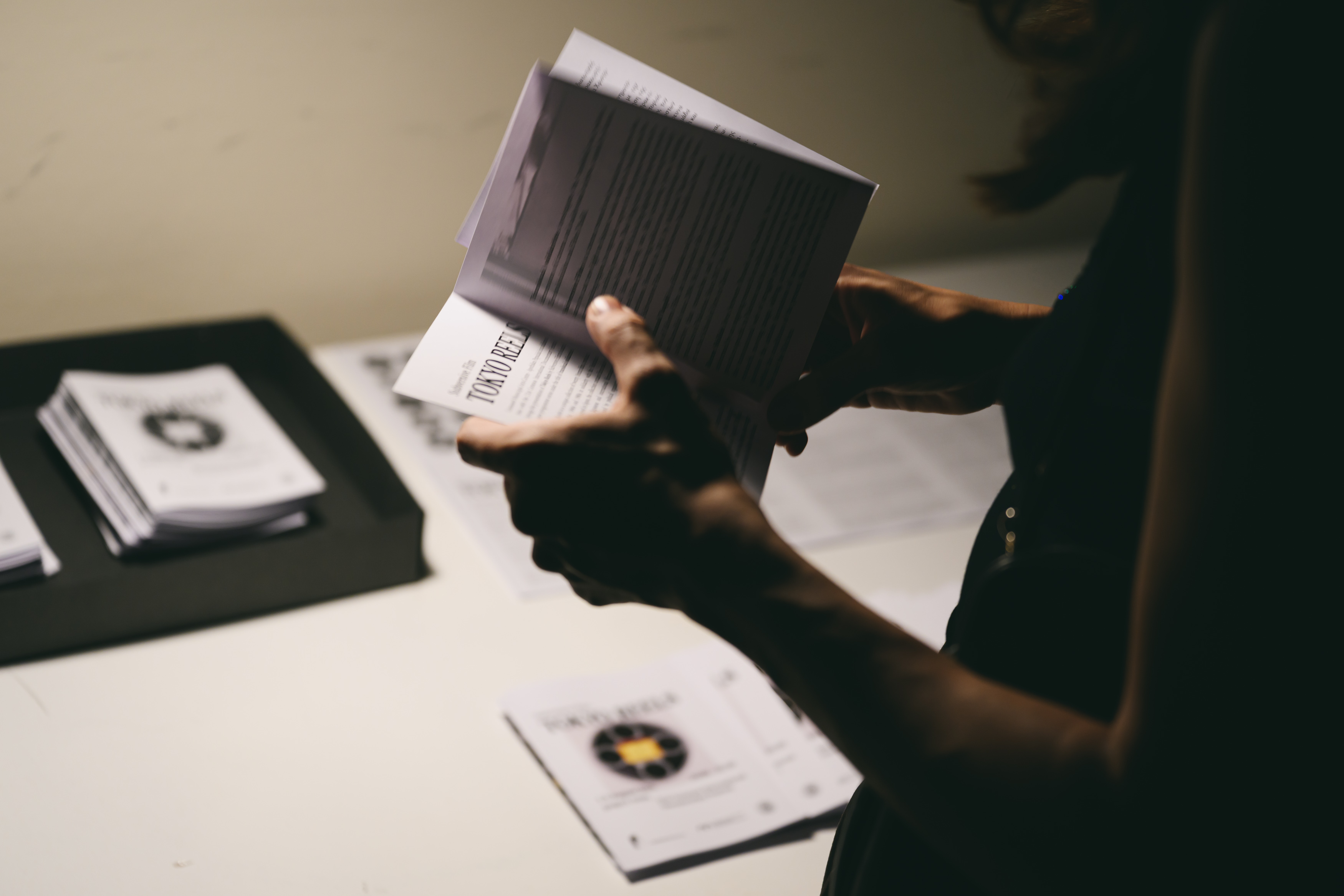
Their presence, she says, represents only one dimension of the complex relationships that developed between Japan and Palestine during that period.
People travelled to Jordan and later to Lebanon, encountered the Palestinian struggle first-hand and returned home carrying films, posters, printed material and testimonies.
"The material did not arrive somewhere simply to circulate," Shilleh says. "It was screened at events that included discussions, music, speeches and collective action. It formed part of a broader political experience."
Yaqubi argues that this distinction is crucial.
"We are not talking about the Non-Aligned Movement or relations between states. We are talking about the movements themselves. That is why, alongside Palestinian films, you find posters about Chile, Western Sahara, anti-fascist movements and dozens of other political struggles. All of these coexisted."
That also explains the diversity of material found alongside the films.
There were posters relating to Western Sahara, Chile, anti-fascist movements and political causes extending far beyond Palestine.
"Many of these struggles never acquired their own institutions of memory," Yaqubi says. "There was never a state mechanism responsible for preserving their archives. What remained were traces, archives, fragments of an era."
The collection itself also follows the historical evolution of Palestinian cinema.
The earliest films, from the mid-1960s and early 1970s, focus broadly on the region, Iraq, Jordan and the refugee question.
Later come productions by the Palestine Film Unit and the Palestine Cinema Institute, followed by works of international filmmakers who approached Palestine through acts of solidarity.
The collection's twenty films extend into the early 1980s.
The later works focus increasingly on Beirut, Sabra and Shatila, refugees and humanitarian organisations.
The medium itself also changes.
Sixteen-millimetre filmmaking gradually disappears and production shifts to other formats.
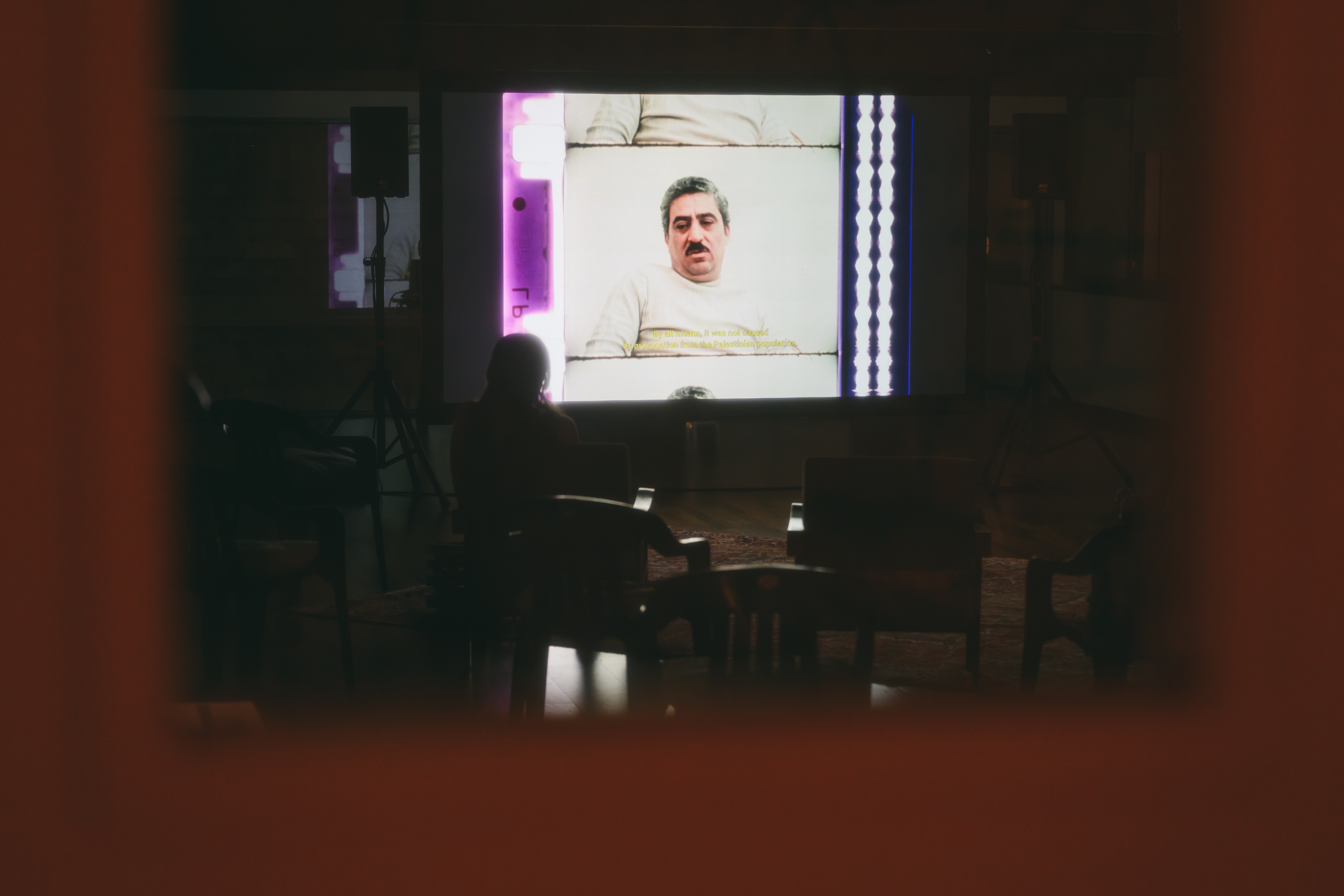
"The collection reflects its time and its history," Yaqubi says.
It cannot simply become an archive
Tokyo Reels is not only about saving a rare film collection.
As Shilleh explains:
"These films are not simply reflections of the past. There is a continuous discussion around Palestinian militant cinema of the 1970s precisely because the struggle itself continues. These images remain relevant. If you watch these films today while thinking about what is happening in Gaza, the West Bank or Lebanon, it feels as though you are watching images from the present. The reality they speak about has not ceased to exist."
For that reason, she finds it difficult even to use the term "archival images".
"An archive usually concerns something completed, something you can examine from a distance. But in Palestine's case, the story has not ended. It is still unfolding. That changes entirely how we approach these films."
The right to memory
Yaqubi describes Tokyo Reels as part of a broader struggle to preserve historical memory itself.
"It is also our right to remember. To remember without having to adapt our history to some acceptable version of it. Whether one agrees or disagrees with these images, they form part of our history."
He argues that access to that memory has become increasingly restricted over recent decades.
Certain parts of Palestinian history can more easily find their way into museums, institutions or academic programmes.
Others remain politically difficult.
"If you work on folklore or the period before 1948, you will probably find support. But when you attempt to work on the memory of the struggle itself, things change."
For him, this lies at the heart of Subversive Film's work.
"We are not interested only in reflecting on these images. We want to preserve them and return them to circulation. Circulation is a form of preservation."
The struggle over archives, he adds, extends far beyond cinema.
"Palestinians still do not have sovereignty over their own narrative. They cannot collectively protect their memory because what remains under constant attack is their collective existence, their history, their culture and their land. We are engaged in a struggle for the right to memory."
When the search itself becomes an archive
This commitment to preservation explains how Subversive Film approached the restoration of Tokyo Reels.
The process went far beyond digitisation or repairing image and sound quality.
The team describes it as an almost forensic investigation.
"Restoration involved understanding the context and a kind of forensic documentation," Yaqubi explains. "It was not only about what the films showed, who made them or under what conditions they were produced. We went all the way down to the films themselves and their boxes."
The reels, the beginnings and endings of the films, and the storage boxes all contained traces of previous lives and uses.
Handwritten notes.
Stickers.
Instructions.
Screening programmes.
In some cases, the notes even explained the sequence in which films should be presented and the political themes that should follow in discussion.
Every detail was recorded.
The information was organised into databases, translated and cross-referenced.
Later, this material became part of the catalogues accompanying the project.
Translation itself became part of the archival work.
As Shilleh explains, the team chose to translate the Japanese versions of the films rather than return to the original narrations.
The goal was not to recover an allegedly "authentic" version but to preserve how the Japanese solidarity movement itself interpreted, translated and presented the Palestinian experience to its audience.
Yet this process produced a paradox.
"In the end, we realised that we had actually created a new archive around what we already considered an archive," Yaqubi says.
He links this accumulation of details to the experience of loss.
"When you have lost your connection to land, identity or culture, any trace becomes enormously significant. Every fragment you find, you collect. In that way, the process of searching itself becomes part of the archive."
"Creating an archive is itself an act of vitality. It means there is still an effort to build something, preserve memory and carry a story into the future. That, in essence, is the struggle itself. Colonialism is about controlling space and time. The struggle is about reclaiming your space and your time. That is why time is so closely connected to archives."
Exhibiting a struggle
Once Tokyo Reels returned to the public sphere, another question emerged:
How should such material be presented today?
What responsibilities exist towards the images, the people who created them and audiences encountering them within very different historical and political contexts?
For Shilleh, responsibility exists, but it is not where the work begins.
"When we first encountered Palestinian militant cinema, our immediate reaction was: how is it possible that we know nothing about these films? Where had they been all these years? Our relationship with this material is very personal. Through these images we try to understand our own presence and our place today through our history."
At the same time, she insists that the Palestinian experience cannot be treated as an isolated case.
"We know very well that many different struggles exist. We are part of that plurality, and we try to keep the connections between them alive."
For that reason, she rejects the notion that Tokyo Reels functions as a representation of the Palestinian cause.
"We are not trying to represent a struggle. We are trying to reveal a body of material."
The research, the images, the filmmakers, their journeys and the conditions under which they travelled form the raw material of the project.
Only then, she adds, does the question become how best to present those materials publicly.
This is why the collective continues to define itself as a research group.
"We work with the material itself. We research the films, the filmmakers and their trajectories and then ask what the most appropriate public form might be."
The answer is never fixed.
Each presentation depends on the material, the place in which it is shown and the historical moment in which it appears.
Yaqubi describes the process as a continuous translation of research into different forms.
"This is not a one-way transmission of a message. It is not propaganda. The essential part lies in the reflection produced by the results of the research itself. It may become a film installation. It may become a film. It may be a photography exhibition, a publication or a poster exhibition. The form emerges each time from the material itself and from the needs of the particular moment."
Even the way an exhibition is designed, its texts written or its visual identity developed becomes part of the historical conditions within which the work is produced.
"Just as the collection reflects its own era, our practice reflects ours. The way we write, design and address people. We cannot separate these things."
Research, he explains, operates simultaneously on two levels.
The first concerns documentation, translation, historical sources, recording and interpretation.
The second concerns the material existence of the archive itself.
"For example: where are these copies today? How are they preserved? Under what conditions are they stored? What does it mean that they still exist? And what would it mean if they had been lost?"
These questions, he argues, are not supplementary to artistic practice.
They are artistic practice itself.
"The attempt to answer such questions is what ultimately produces the work. What we call an installation, a film or an artwork."
Perhaps that is why Tokyo Reels is not simply a presentation of archival material, a collection of films or a retrospective look at the past.
It does not merely tell the story of twenty film reels rescued from oblivion.
As Yaqubi puts it, it reconstructs a global network of relationships, translations and political exchanges while posing an enduring question about the present:
Who has the right to remember? And how can memory remain alive when the history that gave birth to it is still being written?