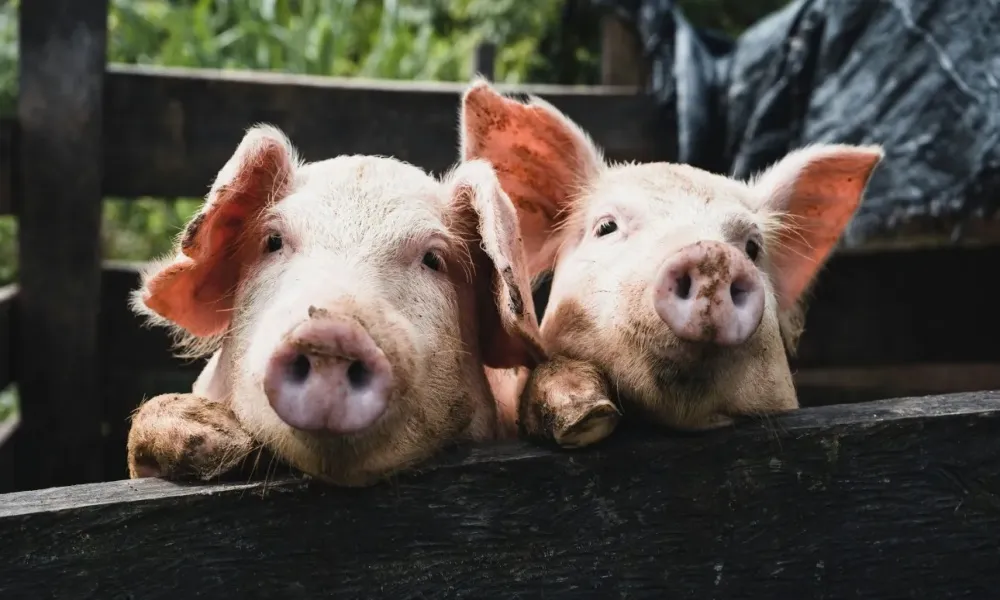
For the fourth consecutive day, no new cases of foot‑and‑mouth disease have been detected within the infected triangle of Oroklini–Livadia–Aradippou, said Veterinary Services spokesperson Sotiria Georgiadou.
The authorities have already submitted a request for vaccines for pigs – considered more vulnerable and capable of reproducing the virus at very high levels if infected.
Georgiadou said: “Vaccinations of cattle within the three‑kilometre zone have been completed, vaccinations within the ten‑kilometre zone are continuing, and steps have already been taken to order pig vaccines.”
She added that EU experts have now completed their briefing to cattle and sheep farmers so they can fully understand the vaccination programme and preventive measures.
Georgiadou said the EU experts were very satisfied with the work on the ground and are expected to leave today, Friday. The vaccination plan has been drafted and will be re‑evaluated in two weeks. A large batch of vaccines from the EU is due to arrive on Saturday.
At the same time, she noted that SMS alerts and official notices have been issued: “We must all remain calm and stop all movements. Movement of animals, feed and people is prohibited, especially within the 3km and 10km zones. Anyone who needs to move animals to slaughterhouses or collect feed or medicines from ports must obtain a special permit.”
Experts, she stressed, have repeatedly warned that the situation remains critical:
“We are still at the beginning. We are in a stand‑still situation – meaning no movement and no mixing within the infected zones. Only those who absolutely need to enter, such as farm owners and handlers, may do so. This is both a plea and a legal requirement. Grazing has also been banned.”
Regarding the ongoing culling of animals on infected farms, Georgiadou said operations are continuing. A multi‑agency team – including the Veterinary Services, Agriculture Department, Environment Department, Water Development Department and the Land Registry – is selecting suitable burial sites that meet environmental specifications to avoid contamination of groundwater and soil.
“We must identify additional locations for future culling operations, as the process is still underway,” she said.
Asked whether a timeframe has been set for completion of the culling, she replied: “It will not finish by the end of the week. We will reassess next week. The terrain is difficult, and we must proceed carefully to avoid creating further problems.”
On airborne transmission, she explained: “We cannot control the wind – it is a risk. What we can do is follow the measures strictly and consistently to contain the situation.”
Outlining the vaccination plan, she said: “We start with cattle within the 3km and 10km zones because they are more vulnerable. Once cattle are vaccinated, we move on to sheep and goats within the same radius, provided they are located at least two kilometres away from pig farms. Why? Because pigs are extremely vulnerable and can amplify the virus massively. Having sheep or goats next to pigs poses much less risk than having pigs infected.”
She emphasised the need to protect pig farms: “They are a hidden risk factor and must be safeguarded. That is why this plan was chosen. By the time we complete it, the pig vaccine will be ready.”
On whether tests were carried out on pigs, she confirmed tests were done. “Not even a mosquito should enter those facilities – that’s how protected they must be. You understand the danger if the virus reaches pigs.”
Asked about the development of antibodies, she said sampling will continue:
“If vaccinated animals become infected, they will be culled. This is what the law requires – it is clear. We do not make discretionary decisions. Monitoring is the alpha and omega.”
Regarding the possibility of extending measures to other districts, Georgiadou said authorities will complete the Larnaca operations and reassess afterward:
“From the moment the first positive case was detected, Cyprus lost its disease‑free export status for foot‑and‑mouth. Halloumi is protected, but if any other product faces restrictions, we will negotiate. The situation will be continuously assessed, and EU guidance will determine when we can exit this status.”
She concluded that the situation remains manageable at this stage.