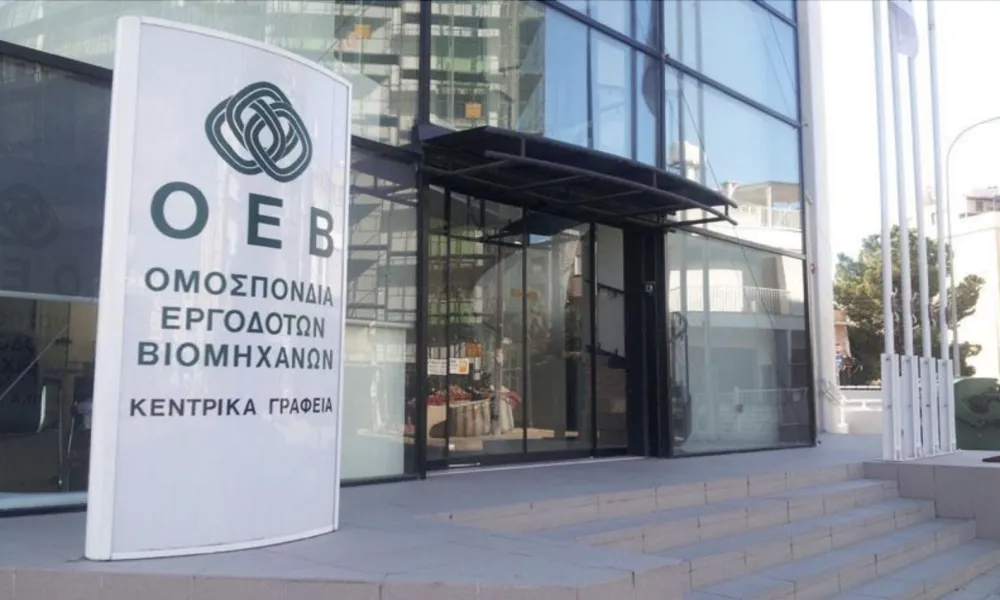

High energy costs remain a central challenge for the competitiveness of Cypriot businesses, the Cyprus Employers and Industrialists Federation (OEB) has warned.
In its annual review ahead of its General Assembly scheduled for April 28, OEB notes that 2025 was marked by significant and multi-layered developments in energy and environmental policy, as Cyprus continued its path towards national and European climate neutrality targets under conditions of rising energy costs and mounting environmental pressures.
The federation stresses that it continues to play a key role in shaping policy on energy, the environment and sustainable development, with a focus on strengthening competitiveness while ensuring a fair and realistic green transition.
Electricity market and storage
OEB highlights the full operation of the Competitive Electricity Market as a major development, creating conditions for increased competition and more efficient pricing over time.
At the same time, the promotion of electricity storage projects is identified as a critical factor for improving system flexibility, reducing curtailments and enabling further penetration of renewable energy sources.
The Great Sea Interconnector (GSI) project remains at the centre of public debate, described as a strategically important initiative but one accompanied by technical, financial and geopolitical uncertainties.
OEB notes that it has closely monitored developments, emphasising the need for transparency, evidence-based cost-benefit analysis and parallel consideration of alternative energy options that safeguard economic competitiveness.
Natural gas and transition fuel role
In the natural gas sector, developments surrounding the FSRU “Prometheus” and related infrastructure confirm the importance of gas as a transitional solution for reducing both energy costs and emissions. However, OEB underlines the need for timely completion of infrastructure to ensure its effective integration into the country’s energy mix.
The federation also places emphasis on the development of green hydrogen, which is gaining importance within European and national decarbonisation strategies. It further points to the implementation of the revised EU directive on the energy performance of buildings, which introduces stricter requirements for the construction sector. Across all developments, OEB identifies high energy costs as the key common challenge affecting business competitiveness. The federation says it has submitted targeted proposals aimed at reducing costs and improving market efficiency.
Water crisis and environmental pressures
On the environmental front, OEB describes the water crisis as one of the most serious challenges of the year, highlighting the need for structural solutions and investment in water conservation, efficient management and reuse. The update of the National Climate Adaptation Strategy is also noted as an important step in strengthening long-term resilience planning through to 2050.
Businesses are also required to adapt to new EU sustainability reporting requirements, with some simplifications introduced for small and medium-sized enterprises. OEB adds that it has actively contributed to the public consultation on the Social Climate Plan, submitting proposals aimed at ensuring a fair transition. As Cyprus balances climate targets with economic realities, the federation’s message is clear: without addressing energy costs, the competitiveness of businesses will remain under pressure.