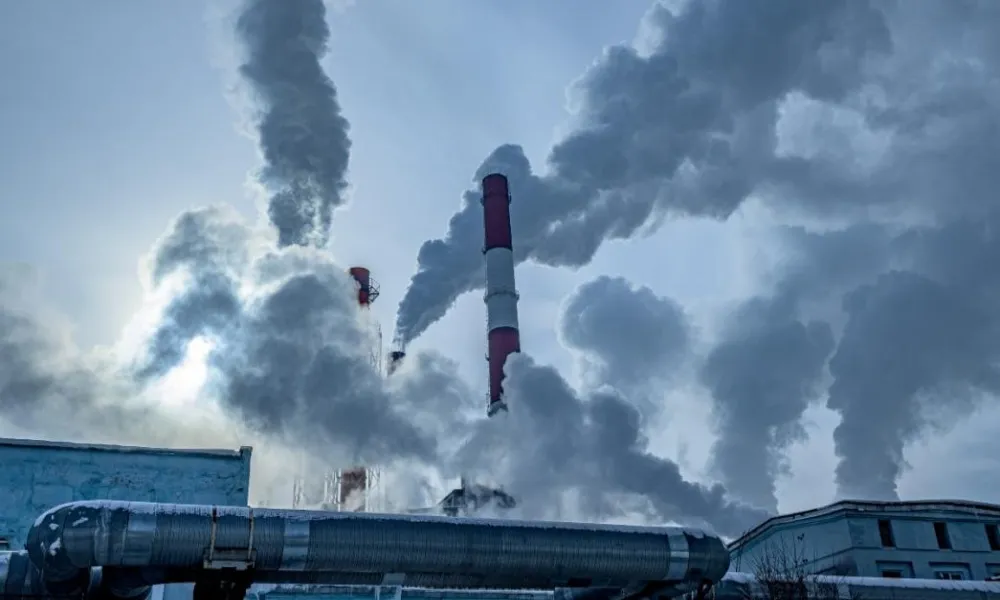

Greenhouse gas concentrations in Cyprus have reached historic highs, according to Environment Commissioner Antonia Theodosiou, who spoke during the “Earth Hour 2026” event held in Troodos on Saturday. Citing scientific findings from the Cyprus Institute’s Centre of Excellence for Climate and Atmospheric Research, published in January 2025, Theodosiou said the increase is driven primarily by electricity generation and transport, which remain the country’s main emitting sectors.
Limited progress but no room for complacency
Despite the record levels, the Commissioner pointed to signs of progress. According to a Eurostat announcement in February 2026, emissions in Cyprus have declined by 5.2 percent.
However, she stressed that this reduction should not lead to complacency.
“This progress cannot make us complacent. It shows that efforts must continue and intensify so that the transition to a sustainable energy and development model is substantial and visible,” she said.
Theodosiou underlined that environmental pressure in Cyprus is not limited to greenhouse gases. She highlighted water scarcity as an additional and growing concern, noting its broader environmental and social consequences.
Troodos geopark highlighted as natural asset
Referring to the Troodos mountain range and its geopark, she described the area as a “valuable natural and geological treasure”.
The geopark, which covers around 45 percent of the Troodos range and 15 percent of Cyprus’s total land area, joined the UNESCO Global Geoparks Network in 2015 and is recognised for its international significance.
She added that the geological formation of Cyprus is directly linked to the creation and uplift of the Troodos mountains through complex processes that make the region a reference point for the global scientific community.
Climate neutrality and renewable energy
The transition to climate neutrality remains a central objective at both European and international level, the Commissioner said, describing it as essential for addressing the climate crisis and safeguarding ecosystems and societies.
Within this framework, she identified the expansion of renewable energy sources, particularly photovoltaic systems, as a key tool for reducing emissions and advancing sustainability goals.
Source: CNA