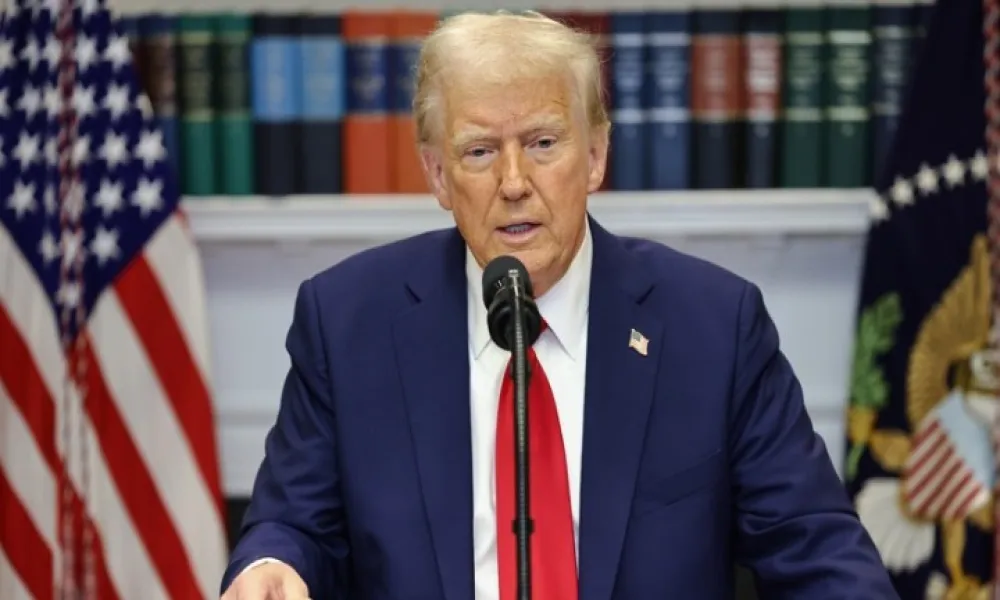
Donald Trump is facing mounting pressure over how to respond to Iran, as Washington and Tehran remain locked in a high-stakes standoff with no clear path to de-escalation.
The situation has taken on the characteristics of a prolonged geopolitical impasse, with economic sanctions, naval blockades and intermittent diplomatic signals replacing direct confrontation, but failing to produce a breakthrough.
US officials warn that the crisis risks evolving into a “frozen conflict”, where neither side advances towards war nor agreement. In such a scenario, the United States would likely maintain a sustained military presence in the Middle East, while the Strait of Hormuz remains effectively restricted and the naval blockade continues.
With midterm elections approaching, the prolonged uncertainty is seen as politically and economically damaging for Trump.
A strategic dilemma in Washington
According to advisers, Trump is divided between launching further military strikes and continuing the strategy of “maximum pressure” through sanctions aimed at forcing Tehran back to negotiations over its nuclear programme.
He has reportedly expressed frustration with the stalemate, telling a confidant that Iran “only understands bombs”, according to Axios, while still signalling reluctance to escalate into a broader conflict.
Calls for a harder line
Some within his administration argue for intensifying economic pressure and maintaining the blockade in Hormuz before considering military action. Secretary of State Marco Rubio said pressure on Iran is already significant but could be increased further.
At the same time, external allies are urging a tougher response. Senator Lindsey Graham has called on Trump to reject Iran’s latest proposal and remain firm, arguing that the issue lies with the Iranian regime’s behaviour rather than US policy.
Iran proposal met with scepticism
Tehran has proposed reopening the Strait of Hormuz in exchange for lifting the US naval blockade on Iranian ports. However, American officials remain cautious, noting that the proposal does not directly address concerns over Iran’s nuclear ambitions.
White House spokeswoman Karoline Leavitt said US “red lines” remain unchanged.
In a post on Truth Social, Trump claimed Iran had requested the immediate reopening of the strait, describing the country as being in a “state of collapse” while suggesting internal instability within its leadership.
Energy markets under strain
The crisis escalated after Iran restricted access through the Strait of Hormuz and imposed transit fees on oil tankers, prompting a US naval response that has included turning back Iranian vessels and seizing oil shipments.
Washington has made clear the blockade will remain in place unless any agreement includes firm guarantees on Iran’s nuclear programme.
The ongoing tension continues to drive volatility in global energy markets, with prices remaining elevated and the risk of further escalation unresolved. A notable development came as the OPEC faced renewed strain following the decision by the United Arab Emirates to withdraw, underscoring the broader impact of the crisis on the global oil landscape.
Source: protothema.gr