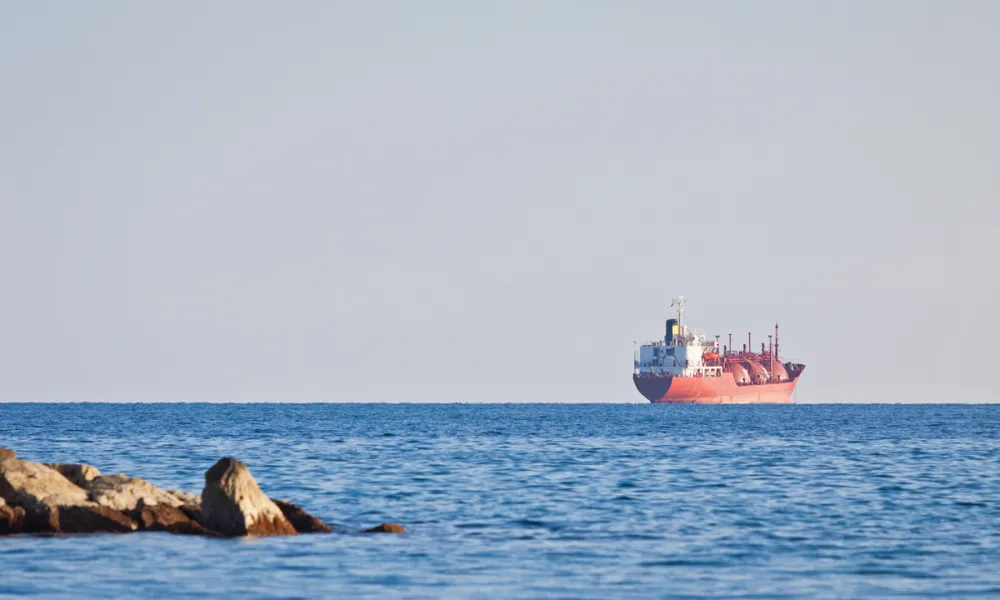
Oil tankers and liquefied natural gas carriers operating as so-called ghost fleets are being described by experts as a climate time bomb due to the heightened risk of environmental damage from potential spills.
These vessels exploit gaps in international maritime law to facilitate the transport of hydrocarbons from countries under sanctions, according to Rafael Muñoz, a maritime policy specialist, speaking to Spanish news agency EFE.
While the phenomenon is not new, it has drawn increased attention in recent months following a series of incidents, including a 40-kilometre oil spill off Russia’s Black Sea coast and the case of the LNG tanker Arctic Metagaz, currently operating off the Libyan coast.
Environmental risks intensify concerns
The environmental threat is considered the most serious aspect of the ghost fleet phenomenon, Muñoz said, describing it as “the worst form of maritime hydrocarbon transport”.
He explained that these operations function within a legal and commercial framework that appears legitimate but in practice constitutes a façade of administrative oversight, leaving little accountability or capacity to respond in the event of an environmental disaster.
Gonzalo Escribano, director of the Energy and Climate Programme at the Elcano Royal Institute, added that many of these vessels are typically very old and often fall short of European safety standards.
He also highlighted the risks associated with ship-to-ship transfers, often conducted near European coastlines, including Spain, increasing the likelihood of spills.
Francisco del Pozo, a Greenpeace representative, warned that the potential damage from such fleets could be extremely serious, even exceeding disasters such as the Prestige disaster. He also described LNG tankers, which receive less public scrutiny, as a “climate bomb”.
In February, Greenpeace published eight simulations illustrating the environmental impact of possible oil spills in the Baltic Sea, showing that pollution could reach northern and northeastern European coastlines within hours, threatening sensitive ecosystems.
Rising risks in conflict zones
The issue is further complicated by ongoing conflict dynamics. Ukraine has carried out attacks on Russian commercial vessels, particularly in the Black Sea. According to Escribano, a wide range of vessels are being targeted, regardless of whether they are under sanctions, raising the risk of spills or even explosions.
Muñoz warned that maritime conflict is entering a “new, very grey phase”, with heightened dangers. A miscalculation could result in an attack on a fully loaded tanker, potentially causing an oil spill in the waters of a NATO partner, especially in Turkish or Greek territory.
In the event of a closure of the Strait of Hormuz, Muñoz suggested that such vessels would likely not be targeted by Iran due to their strategic value. However, they could be used in false flag operations to sustain fear among global shipping operators and prolong disruptions to navigation.
Greenpeace also noted that the risk extends beyond ghost fleets. A significant number of tankers remain stranded in the Persian Gulf, collectively carrying more than 15 million tonnes of oil.
Against this backdrop, environmental groups stress that the key solution lies in reducing dependence on fossil fuels, accelerating the energy transition, and strengthening enforcement to prevent the illicit trade of sanctioned oil.
Source: CNA