Two months on from the outbreak of the war with Iran, the picture is proving far more complex and far more negative than initially anticipated in Washington.
US President Donald Trump had promised a swift and decisive victory, even claiming within days that the United States had “already won the war in many ways”.
However, two months on, the reality is very different. While hostilities have somewhat subsided, no lasting settlement is in sight, and the consequences are rippling across the globe, according to a CNN analysis.
Brookings Institution analyst Melanie Sisson told CNN that there are “no real winners from the war, but some countries are relatively better positioned to manage its consequences”.
The biggest losers: Iran’s population at the centre of the crisis
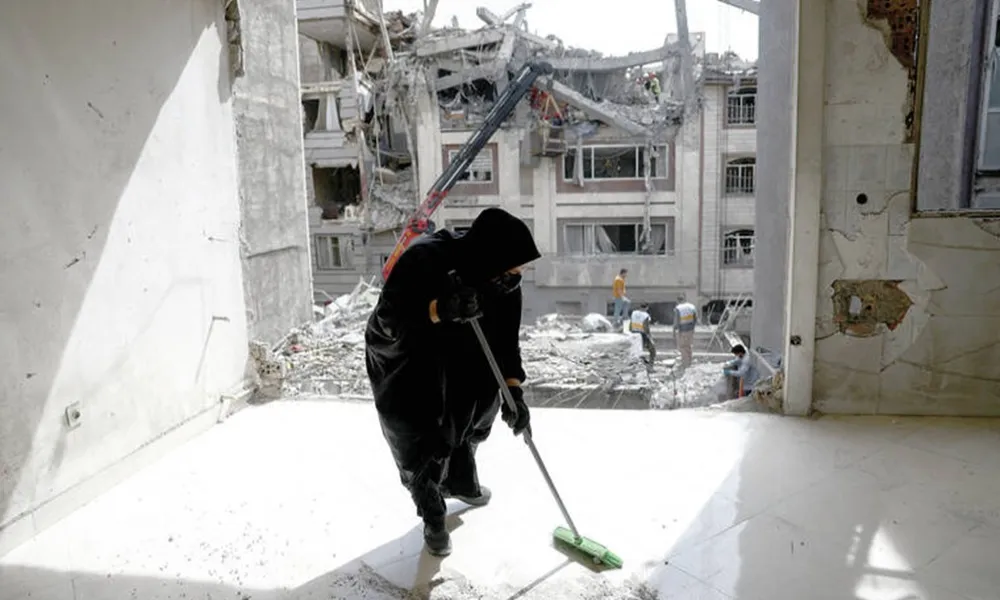
As in most conflicts, civilians are bearing the heaviest burden. In Iran, US and Israeli airstrikes have hit thousands of targets, including civilian infrastructure, resulting in thousands of deaths.
Domestically, pressure is intensifying. Under the country’s current leadership, authorities have escalated their crackdown, signalling zero tolerance for dissent. Reports point to mass executions, suppression of protests and prolonged internet shutdowns.
At the same time, the Iranian economy has been severely hit, compounded by what the analysis describes as a US naval blockade. Rising unemployment and poverty are further worsening daily life.
Lebanon drawn back into violence
Lebanon, long caught between Israel and the Iran-backed Hezbollah, is once again facing escalation. Following the collapse of a fragile ceasefire, clashes have led to widespread destruction and thousands of deaths.
Satellite analyses suggest Israel is pursuing a strategy of extensive destruction, in what analysts say is similar to operations in Gaza, with entire villages levelled. More than half a million people have been displaced, with no clear timeline for return.
Gulf states enter uncharted territory
Countries in the Gulf, despite efforts to avoid direct involvement, are now at the centre of developments. The United Arab Emirates has faced repeated attacks, threatening its role as a global business and tourism hub.
Meanwhile, Iran’s closure of the Strait of Hormuz has dealt a heavy blow to economies such as Qatar, Kuwait and Iraq, all heavily reliant on the route for exports.
Economic shockwaves from the US to the Global South
The impact is also being felt within the United States. Rising energy prices have driven up transport and service costs, directly affecting consumers.
“There is no elegant way to say it: the situation for the United States right now is not good,” Sisson said, noting the country’s heavy reliance on oil and insufficient investment in renewables.
Higher inflation and declining consumer confidence are creating additional political pressure for Donald Trump.
Global slowdown gathers pace
The effects extend far beyond the US. From Asia to Latin America and Africa, economies are being hit by rising energy and food prices.
The International Monetary Fund (IMF) has revised its global outlook, raising inflation forecasts and lowering growth expectations. Poorer countries are expected to be hardest hit, given their reliance on imports and higher spending on essential goods.
Political risks for Trump
The war has proven a major political gamble for Donald Trump. So far, the results have fallen short of key strategic goals, including curbing Iran’s nuclear programme or triggering regime change.
“Politically, fuel prices are already high and continue to rise, which does not help the administration. Diplomatically, Trump appears weak,” Sisson said. She added that the president now appears to recognise that renewed hostilities would come at a high cost without guaranteeing the desired outcomes.
Israel sees gains but faces growing pressure
For Israel, the conflict initially brought strategic gains by weakening Iran’s military capabilities. Prime Minister Benjamin Netanyahu said he aimed to “change the face of the Middle East” in full coordination with the US.
However, the picture is not straightforward. Public opinion in Israel remains cautious about the war’s outcome, while the country’s international image has deteriorated.
Iran weakened but still standing
Despite heavy losses, including among its leadership, the Iranian regime remains in power. Analysts suggest it has become more hardline and more willing to escalate.
It has also effectively demonstrated control over the Strait of Hormuz, according to analysts, a development with significant implications for global trade and energy markets.
Limited winners: China and energy players
China appears better positioned than other major economies, having invested in energy reserves and alternative sources, helping it absorb price shocks.
At the same time, Beijing is capitalising diplomatically. Analysts say the United States has suffered reputational damage, while China has projected itself as a defender of global stability and international law.
High energy prices have also boosted profits for major oil companies, while Russia has benefited from rising oil and fertiliser prices.
Renewables and defence spending rise
The crisis is accelerating interest in renewable energy, as countries seek to reduce dependence on fossil fuels.
Defence spending is also rising globally, with governments increasing investment in security. Researchers say the trend is likely to continue beyond 2026.
Source: iefimerida.gr