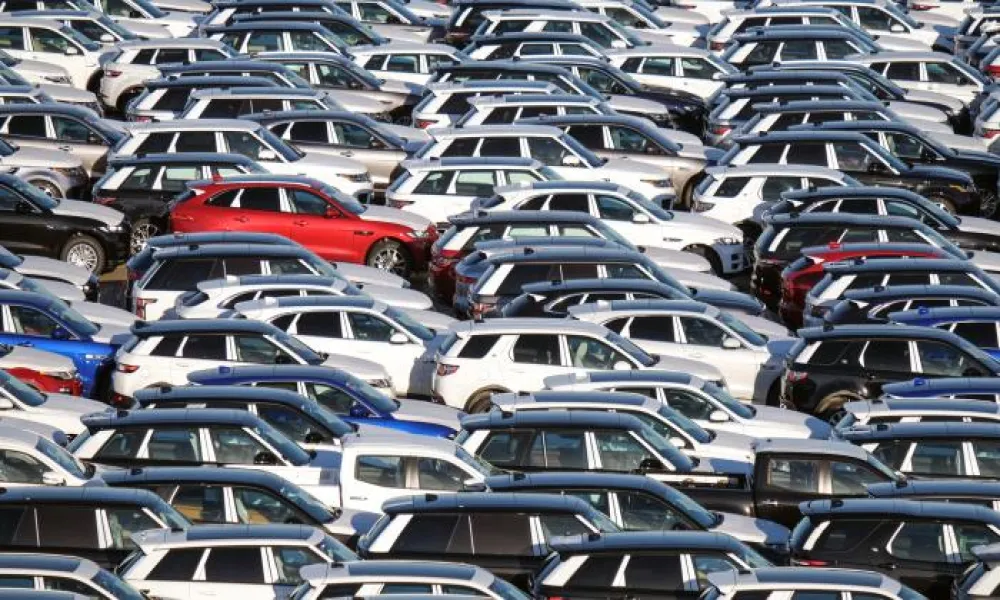

The United States is raising tariffs on European car imports to 25%, intensifying a transatlantic trade dispute and increasing pressure on EU manufacturers to relocate production.
Donald Trump announced the decision on Friday, accusing the European Union of failing to honour a previous agreement and framing the tariff hike as a tool to reshape global manufacturing in favour of the US.
The measure, set to take effect next week, raises tariffs from the previously agreed 15%. Trump argued it would generate “billions of dollars” in revenue and accelerate the relocation of European car production to American soil.
“If they build their cars and trucks in US factories, there will be no tariff,” he said in a social media post, reiterating that the increase is intended to push companies to invest in the US.
From Brussels, the European Commission rejected Washington’s claims of non-compliance, warning it would keep “all options open” to defend European interests if the agreement is breached.
Timing and political backdrop
The announcement comes amid rising tensions between the US and the EU, spanning trade, the war in Iran and disagreements over naval deployments linked to the Strait of Hormuz.
Trump has also threatened to scale back US troop presence in countries such as Germany, Italy and Spain, following remarks by German Chancellor Friedrich Merz criticising US handling of Iran.
The timing added symbolic weight, coinciding with May Day and the launch of the EU’s trade agreement with Mercosur, part of Brussels’ strategy to counterbalance US economic pressure.
Roots of the dispute
The current standoff traces back to last summer’s agreement. In 2025, the Trump administration imposed 25% tariffs on global car imports on national security grounds, before reaching a deal with the EU in August to reduce them to 15%.
In return, the EU committed to removing tariffs on US industrial goods, aligning with US standards on safety and emissions, and broadly lowering trade barriers.
However, implementation has lagged. Relevant EU legislation was only introduced in March and is not expected to be finalised before June, due to negotiations between member states and the European Parliament.
Bernd Lange described Trump’s stance as “unacceptable”, calling for a “clear and decisive” European response.
Fears of retaliation and market impact
German industry representatives warned of rising costs, while Marcel Fratzscher urged Berlin and Brussels to respond firmly, including with retaliatory tariffs and taxes on US technology firms.
A US official said the decision reflected frustration that “the EU has not complied with the car agreement after eight months”.
Former Trump trade adviser Kelly Ann Shaw said a breakdown was inevitable given delays, noting that the US implemented its commitments in August while the EU had yet to reduce tariffs.
Markets reacted immediately. Shares in Ford Motor fell up to 2.4% in New York, Stellantis dropped 3.3%, and General Motors declined 1.5%.
Industry caught in the middle
Car manufacturers have privately warned the White House they will delay major relocation decisions until there is clarity over the future of US trade agreements with Mexico and Canada.
European firms already have a strong US footprint. Mercedes-Benz recently announced a $4 billion investment in Alabama by 2030, bringing total US investment to $7 billion, including shifting production of the GLC model from Germany.
Still, the company reported a more than 50% drop in operating profits in 2025, partly due to €1 billion in tariff-related costs.
Former US Commerce Department official Ryan Majerus warned the latest move risks deepening the rift with Brussels, describing Washington’s approach as “highly confrontational” towards the EU.
Source: cnn.gr