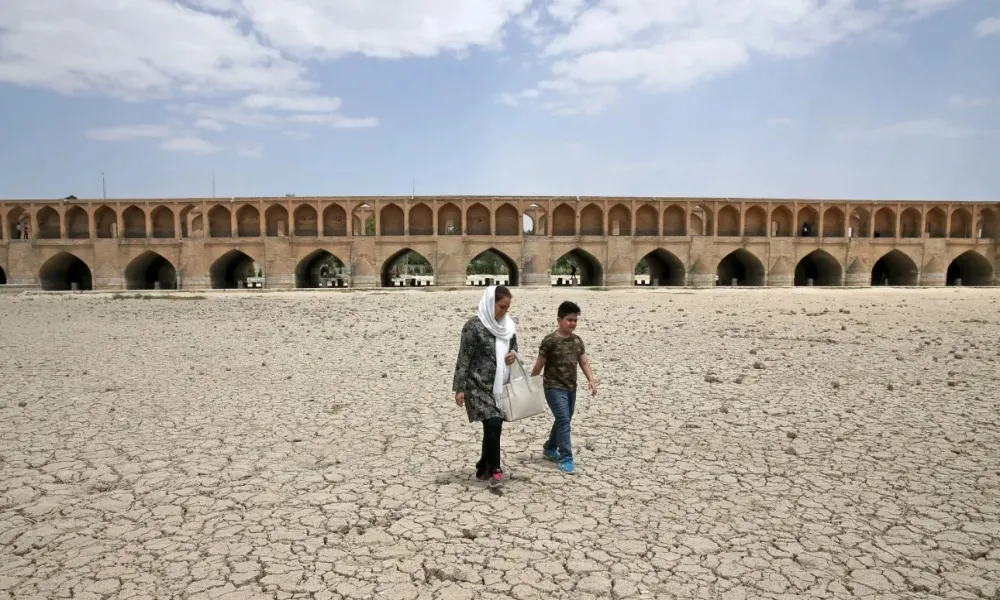
Water shortages amid the worst drought that the country has seen in decades, may force the evacuation of Tehran by the end of the year, if the heavens remain firmly shut, Iranian President Masoud Pezeshkian warned in a televised address, without the poetic license, but making clear enough that the prospect is real.
In the capital, a metropolis of more than 10 million people,, the phenomenon is "unprecedented in a century," a local official stated last month.
"If it doesn't rain, we will have to start rationing water in the capital around late November to early December," the President said in his speech, broadcast on state television.
And "even if we ration, if there is no rain by then, we will have to evacuate Tehran," he continued, without actually clarifying in any detail how such dystopian logistics could actually work in this massive sprawling complex.
The director of the capital's water company, Behzad Parsa, said last Sunday that the city could run out of drinking water within two weeks. The Amir Kabir Dam, one of the five that supply Tehran with drinking water, contains "only 14 million cubic meters of water, that is 8% of its capacity," he warned.
On Wednesday, the regional director of the national water company, Mohsen Ardakani noted that Tehran's residents have reduced water consumption by 10% over the last six months. "If we reach 20%, we will be able to keep the situation stable for one to two months, until it rains," he added.
The climate in Tehran is dry and hot in summer, with rain in autumn not a frequent occurence. Winters are tough though, with heavy snow and cold snaps.
In the midst of a financial crisis too, water supply has been a victim, recently been cut off in many Tehran neighbourhoods, as often happened in summer, local media reported.
During the July and August heatwaves, the regime declared two holidays to save up on water and energy, keeping people at home.
According to the Tasnim agency, the volume of rainfall in Iran fell this year to 152 millimeters, that is 40% of the average over the past 60 years.
In a number of provinces, rainfall volume decreased by 50-80%, noted Mohammad Reza Kavianpour, the head of the Water Research Institute, warning that the country "will need to prepare for a critical situation."