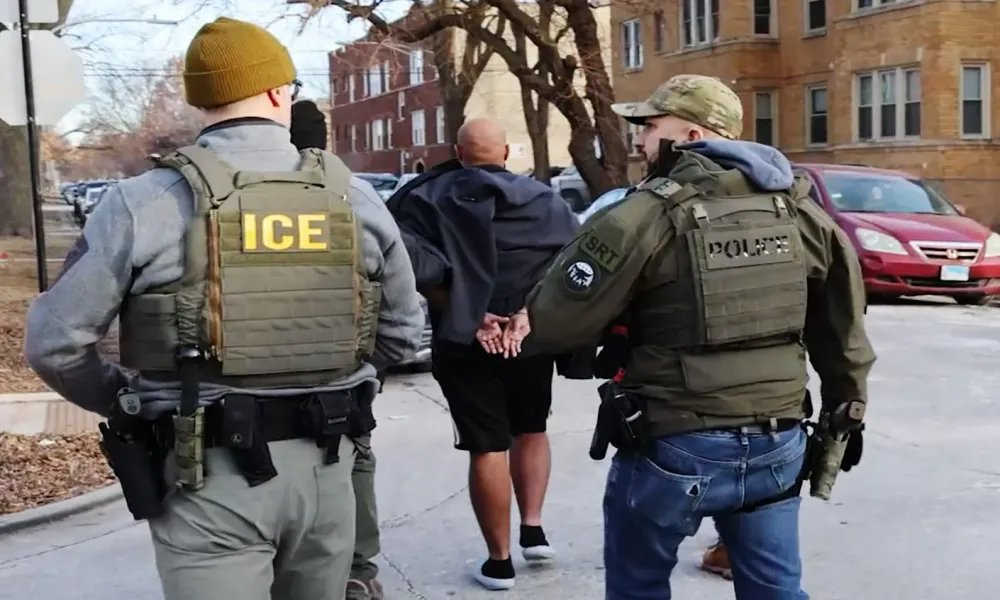
A federal judge in Minnesota has restricted how immigration agents can interact with protesters, following weeks of clashes in the state.
On Friday, Judge Kate M. Menendez issued a preliminary injunction ordering agents not to retaliate against people “engaging in peaceful and unobstructive protest activity.”
The order also bars the use of pepper spray or other “crowd dispersal tools” in response to protected speech. Agents are not allowed to stop or detain protesters in vehicles unless they are “forcibly obstructing or interfering with” federal officers.
The ruling comes from a lawsuit filed by activists who said federal agents violated their rights. The case began before an agent shot and killed Renee Good, 37, in Minneapolis on 7 January.
Good had partially blocked a roadway where agents were operating and did not exit her S.U.V. when ordered. As she began to drive, an agent near the front of her vehicle opened fire.
Tricia McLaughlin, a spokeswoman for the Department of Homeland Security (D.H.S.), said the department is taking “appropriate and constitutional measures” to protect officers and the public.
She noted agents had faced assaults, fireworks, and slashed tyres but had “followed their training and used the minimum amount of force necessary.” McLaughlin did not say whether D.H.S. plans to appeal the ruling.
Tensions in Minnesota have been high since late 2025, when the federal government launched an immigration enforcement campaign called Operation Metro Surge. Judge Menendez’s order applies only to agents involved in this campaign in Minnesota.
She clarified that the injunction does not prevent agents from enforcing immigration laws. The ruling did not include protections for recording agents or other measures requested by the plaintiffs.
This case is part of a wider pattern of legal challenges against federal agent tactics across the United States, including in California, Illinois, and Washington, D.C. In Illinois, a federal judge issued a broad injunction limiting agent use of force and interactions with protesters, but an appellate court later blocked it, saying it was too wide-ranging.
The killing of Good and the shooting of another man this week have heightened tensions. Federal officials said Good tried to ram an agent with her car, while state officials disputed this.
A New York Times video analysis suggested she was steering away when the agent fired. In the recent shooting, officials said the man, described as being in the country illegally, resisted arrest and attacked an agent with a shovel or broom.
Protesters have gathered in small and large groups in recent weeks, calling for federal agents to leave Minnesota.
In the lawsuit, filed by the American Civil Liberties Union of Minnesota and several law firms, activists claimed agents used excessive force and intimidated or arrested people who were not interfering.
Lawyers for the Trump administration disputed these claims in court. They described protesters as violent and said the injunction would involve the court in “micromanaging D.H.S. officers’ conduct.”
Federal officials have argued the agent surge is necessary to address illegal immigration and fraud in social service programmes in the state.