
The European Parliament has moved to suspend work on the proposed EU–US trade agreement known as the Turnberry deal, after members said they could not proceed while threats over Greenland’s sovereignty and related tariff warnings from US President Donald Trump continue.
The suspension was announced in Strasbourg, France, on Wednesday, as the US president addressed the World Economic Forum in Davos.
Undermined stability
In a decision taken on Wednesday by the Parliament’s International Trade Committee (INTA), MEPs agreed to freeze related legislative procedures indefinitely, delaying a planned committee vote on the European Parliament’s position. The committee chair, Bernd Lange, said the move was necessary because recent threats from Washington - including punitive tariffs unless Greenland is made available for U.S. control - have effectively undermined the stability and predictability of EU‑US trade relations.
The Turnberry agreement, first outlined in July 2025 at talks in Turnberry, Scotland, would have removed most EU import duties on U.S. industrial goods and maintained very low or zero tariffs on a range of American products. However, MEPs said it could not be ratified while the territorial integrity of an EU member state - Denmark, and by extension Greenland - is under threat.
Tough rebuke
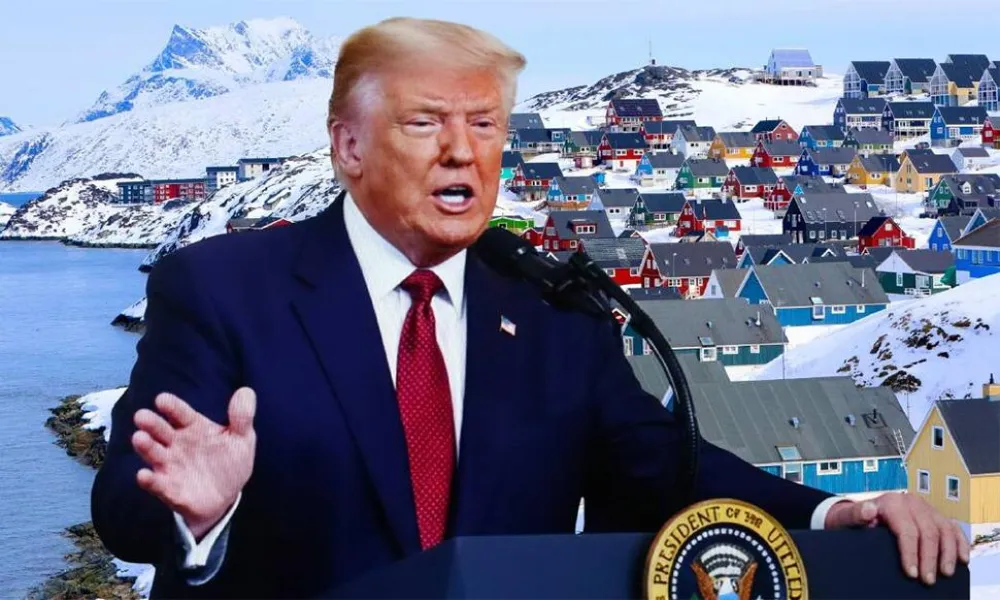
Donald Trump’s campaign to acquire Greenland and associated threats to impose 10 per cent tariffs on goods from several European nations from 1 February - rising to 25 per cent by June without an agreement have triggered EU pushback and raised fresh doubts about transatlantic trade ties.
Lange said parliamentarians reaffirmed their “unwavering commitment to the sovereignty and territorial integrity of Denmark and Greenland” and warned that no legislative progress on the trade deal would be possible until the United States returns to a cooperative track.
Some MEPs took an even tougher stance. Martin Schirdewan, co‑chair of The Left group in the Parliament, said the freeze was not enough and that the agreement should be rejected outright in response to what he described as Trump’s “coercion” of European allies. He urged the EU to consider broader countermeasures including use of the bloc’s Anti‑Coercion Instrument, a trade defence mechanism designed to protect against economic pressure from third countries.
The suspension of the Turnberry deal marks one of the most direct European legislative rebukes to date over the escalating dispute, which has also prompted emergency meetings among EU leaders and discussions of possible retaliatory tariffs on U.S. goods.