The historic trade agreement signed on Tuesday between India and the European Union is expected to bring tangible benefits to the Cypriot economy, positioning Cyprus as a gateway for Indian investment into Europe. At the same time, Cypriot businesses are also expected to gain new opportunities.
The agreement, which will reduce or abolish tariffs on 96.6 percent of EU exports to India, lowering costs for products such as cars, alcohol and machinery, has been described in Brussels as the largest deal ever concluded between the two sides.
Cyprus as a services bridge
Economist Tasos Yasemides told Politis that Cyprus stands to benefit primarily through an expansion of exports, particularly in services.
“Cyprus can benefit by strengthening its exports, both in goods and, above all, in services. The Cypriot model, based on financial, legal, accounting and business services, can act as a bridge for Indian companies seeking access to the European market,” he said.
He added that technology and innovation offer significant scope for cooperation. India, he noted, has strong human capital in information technology, while Cyprus can offer a stable institutional framework, EU access and business support.
At the same time, the agreement could strengthen tourism and educational cooperation, as increased mobility creates new flows of students, professionals and travellers.
Yasemides stressed that Cyprus can leverage its geographic position and EU membership to attract investments seeking stability, tax predictability and access to European markets. However, he cautioned that the agreement is not a panacea.
“Certain sectors remain protected, while differences in regulatory and administrative standards require time and adjustment. For small economies like Cyprus, seizing these opportunities requires strategic planning, business awareness and an active role by institutions,” he said.
According to Yasemides, the trade agreement is an important step towards a more balanced and resilient global economic system, promoting growth, cooperation and geopolitical stability at a time of major international realignments.
Eurobank expands presence in India
Panagiotis Chrysostomou, Manager of Banking Services and Representative Offices at Eurobank, who is currently in India for the Cyprus India Business and Investment Summit 2026 held on January 28 in Mumbai, described the agreement as highly significant for Europe given the size of the Indian market.
“In the current geopolitical environment, with tariffs being imposed between states, this agreement is particularly important,” he said, noting that India combines market size with high growth rates. India is already among the world’s five largest economies and is expected to become one of the top three in the near future. Its population stands at around 1.5 billion, with a further half billion Indians living abroad.
Chrysostomou underlined that Cyprus benefits as a full EU member state, with its role becoming even more important ahead of its upcoming EU presidency. He said Cyprus can serve as a bridge for Indian export oriented companies seeking to expand into Europe.
He added that Eurobank has taken a strategic decision to support the economic and business corridor linking India and Europe via the Middle East, Cyprus and Greece, known as IMEC. A key pillar of the bank’s India strategy is the India Greece Cyprus Business and Investment Council, created on Eurobank’s initiative in cooperation with the Indian Chamber of Commerce and institutional partners from all three countries.
Chrysostomou also confirmed that Eurobank will open a representative office in Mumbai in March, following approval from the Indian central bank and government. An Indian national has already been appointed as head of the office, with staffing and remaining preparations expected to be completed shortly.
According to Eurobank, Chrysostomou also took part in a panel on the Cypriot financial sector, highlighting advantages Cyprus offers to Indian companies using the country as a base for European expansion. These include stability, a clear regulatory framework, geostrategic positioning, connectivity along the IMEC corridor and the international profile of the Cypriot banking system.
Cyprus ranks among the top ten foreign investors in India, with cumulative foreign direct investment reaching $15.76 billion between 2000 and 2025.
President to visit India
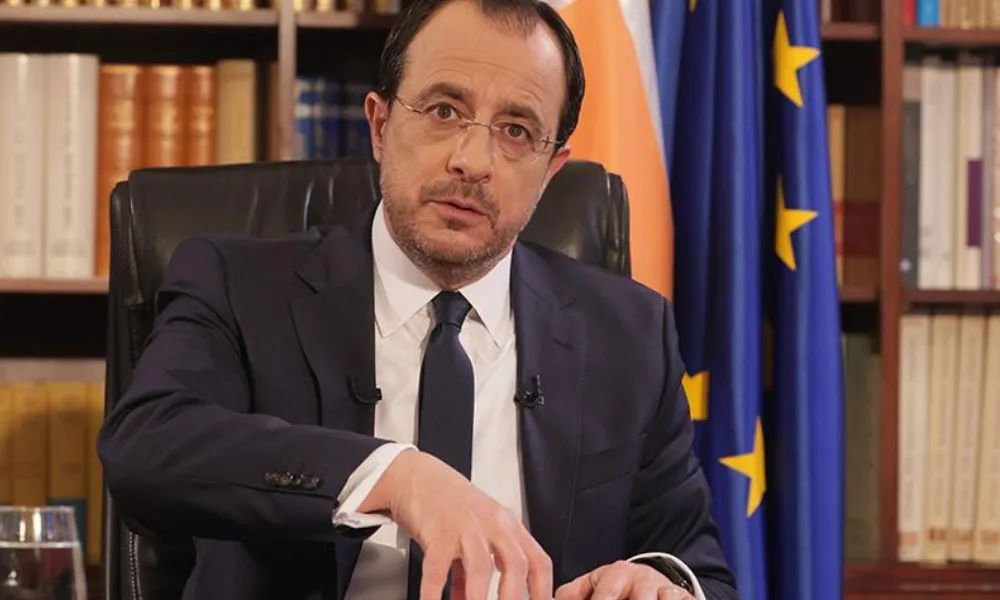
President Nikos Christodoulides is scheduled to visit India in May.
Speaking on the sidelines of the European Chambers of Commerce presidential meeting hosted in Nicosia by the Cyprus Chamber of Commerce and Industry, Christodoulides said the trip will include visits to New Delhi and Mumbai, India’s main business hub, and will be accompanied by a business delegation. A business forum will also be organised.
He noted that the agenda will include a wide range of issues, following recent announcements by the president of the European Commission and the president of the European Council, who were in India for the country’s Independence Day celebrations and announced the completion of negotiations on the trade agreement.
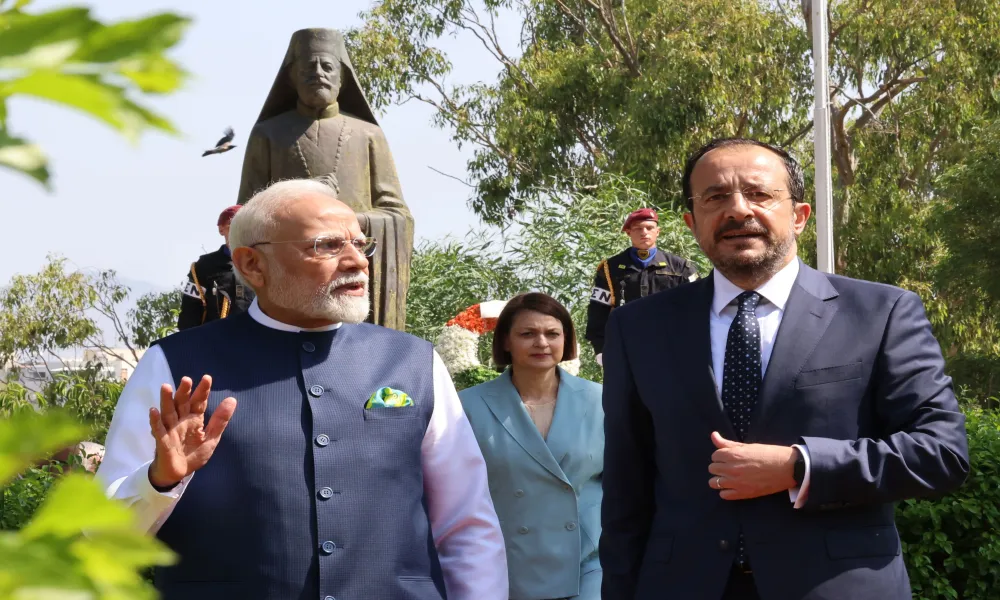
Christodoulides added that following Prime Minister Narendra Modi’s visit to Cyprus, India increasingly views Cyprus as its entry point to the EU single market of 450 million people. He said Indian investments are already present in Cyprus and described the upcoming visit as particularly significant.