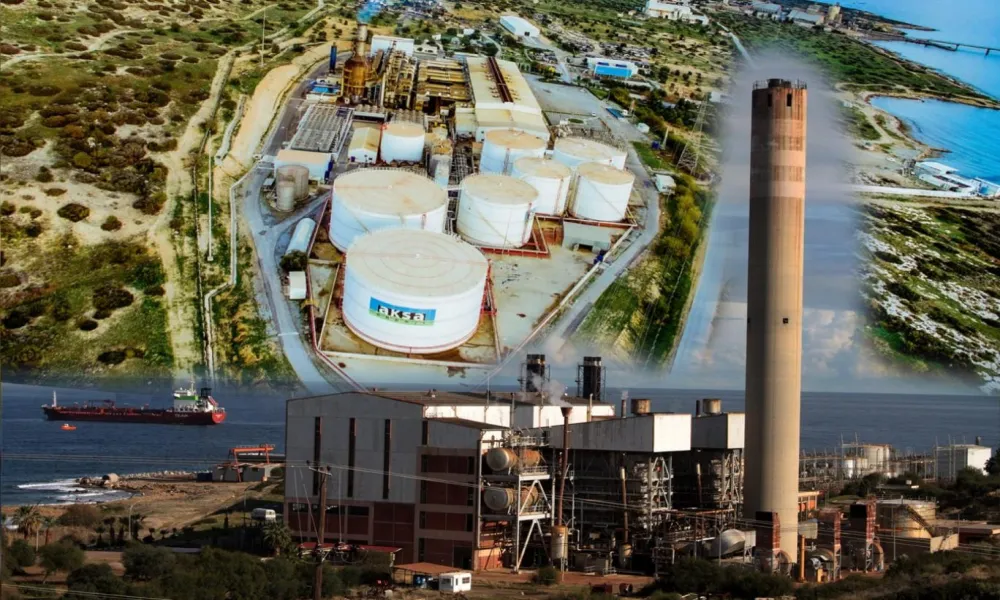

Plans for the Greece-Cyprus electricity interconnection have been put on hold for further technical and financial review. At the same time, Turkey and the north appear to be accelerating moves towards a rival electricity link of their own.
The development, regarded as particularly negative for the energy planning of Nicosia and Athens, emerged through statements by Turkish Cypriot 'prime miniser' Ünal Üstel, to Turkish journalists. His remarks were published in the Turkish Cypriot press on January 24, 2026.
The aim is to present the project to the European Union as an alternative and allegedly more suitable solution, while at the same time seeking access to European funding for its implementation.
Cable link from Turkey to the occupied north
Speaking to journalists from Turkey, Üstel referred to plans for the transfer of electricity from Turkey to the north via an undersea cable. He said that, due to the lack of rivers, energy needs in the north are currently met through mobile generators and fossil fuels, a solution he described as particularly costly.
Üstel said a protocol has already been signed with Turkey’s Vice President Cevdet Yılmaz for the transfer of electricity via cable, with Aksa Energy assigned to implement the project.
Awaiting approval from ENTSO-E
According to Üstel, all feasibility studies have been completed and the project is technically ready to start. However, for around a year and a half it has been awaiting approval from ENTSO-E (European Network of Transmission System Operators for Electricity), which is responsible for matters relating to the interconnection of electricity networks.
He said such approval is considered necessary for the system to be incorporated into the interconnected European grid.
Üstel claimed that if the project proceeds, it would pave the way for the development of solar energy in the occupied areas, reduce electricity costs and have a positive impact on the economy and tourism. At the same time, he accused what he described as “two spoiled European states, the Greek and the Greek Cypriot (states)”, of obstructing approval.
Referring to the European approval process, Üstel said it could be delayed by a further six months due to the assumption of the presidency of the Council of the European Union by the Republic of Cyprus. He added that after this period the issue would be revisited, while not ruling out alternative solutions to meet energy needs in the occupied areas if the project does not move forward.
Memorandum of understanding with Turkey
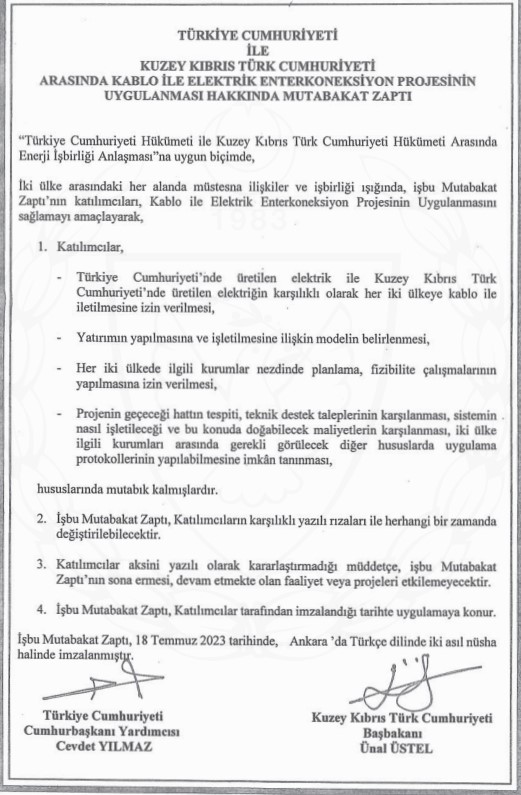
The memorandum of understanding on electricity, signed in Ankara on July 18, 2023 by Üstel and Cevdet Yılmaz, was published in the so called official gazette of the occupied areas.
According to the text of the memorandum, the two sides agree to implement an electricity interconnection project via cable within the framework of their energy cooperation and close bilateral relations.
The memorandum provides for mutual electricity transfer via cable, the determination of the investment and operating model, the conduct of planning and feasibility studies by the competent authorities, and the definition of the project route, technical support requirements, operating arrangements and cost coverage. It also allows for the signing of additional implementation protocols between the relevant bodies.
The memorandum may be amended at any time by mutual written agreement, while its expiry does not affect ongoing activities or projects unless otherwise agreed. It entered into force on the date of signature.
Estimated six year implementation timeline
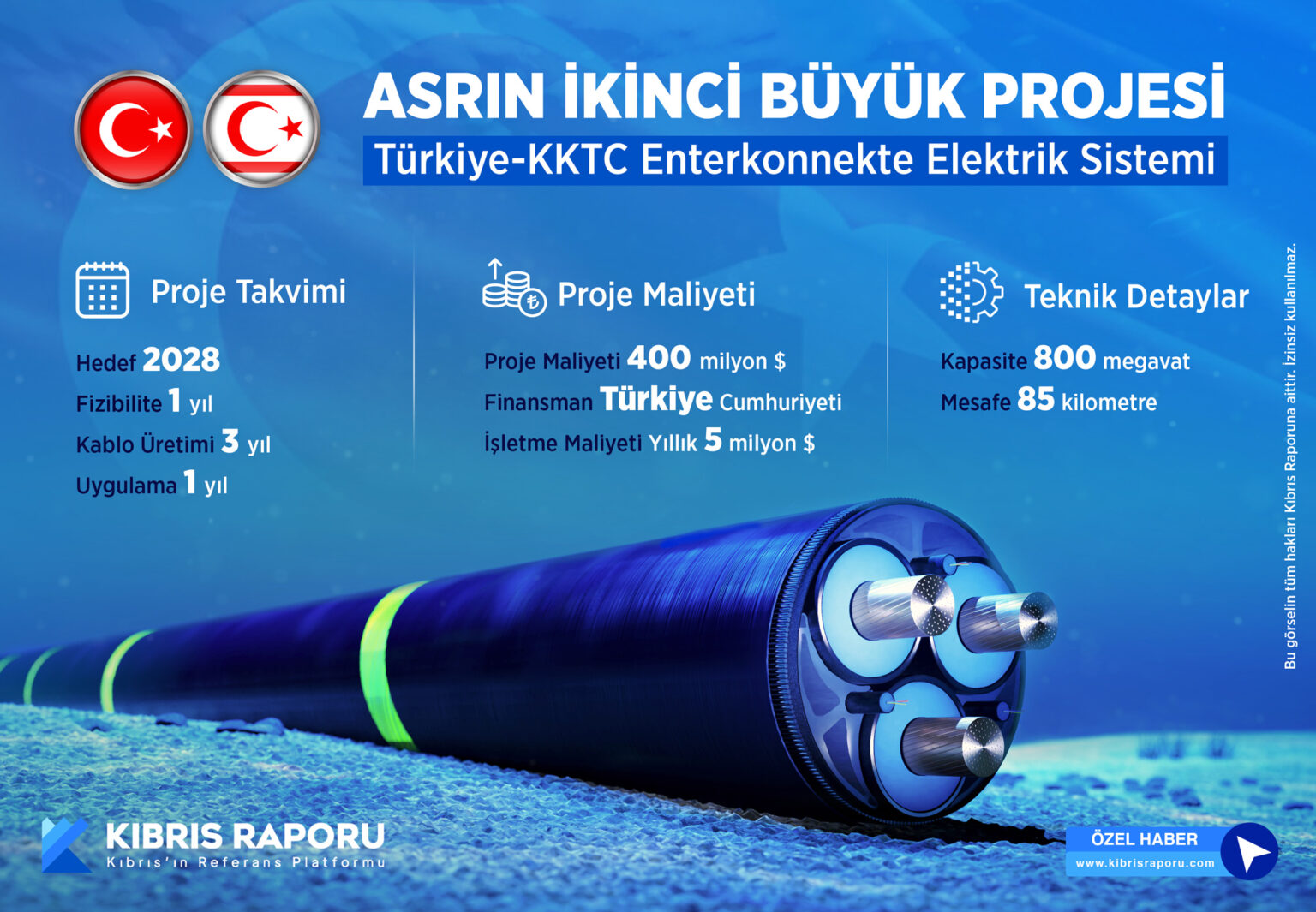
According to a report by the Turkish Cypriot website kibrisraporu.com dated June 15, 2023, construction work on the electricity “bridge” linking Turkey with the occupied north would begin following the completion of feasibility studies.
At the time, the interconnection was presented as the “second major project of the century”, following the completion in 2015 of the water transfer project from Turkey to the occupied areas, with an estimated implementation period of six years.
Beyond the technical aspects, the project has been accompanied by a series of critical questions relating to its financing, how costs would be passed on to electricity consumers, the impact on the electricity authority of the occupied areas, KIB-TEK, and on Aksa Energy, as well as the potential for intervention or obstacles from the European Union.