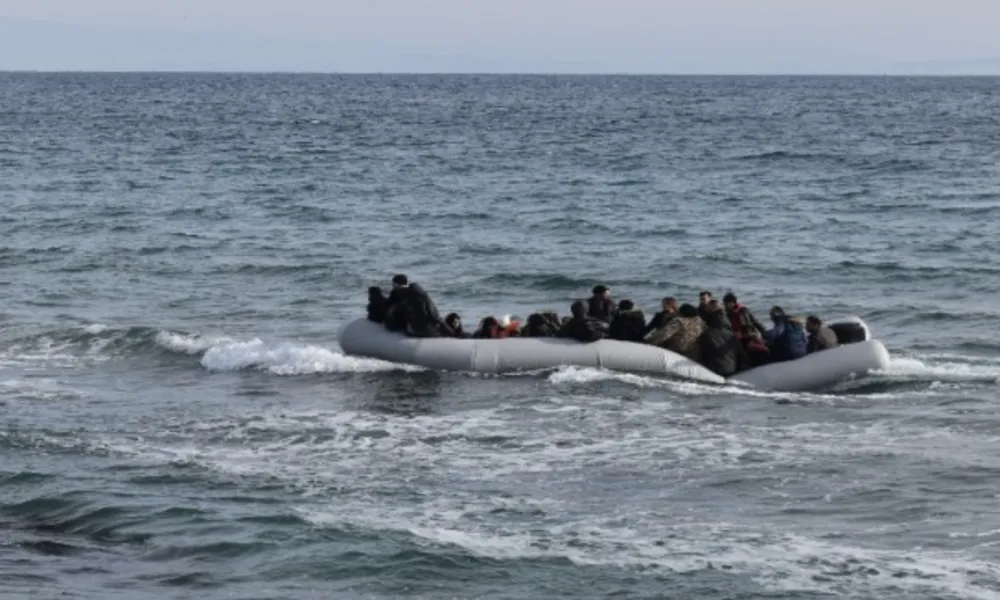



Asylum applications across the European Union fell by nearly 20 per cent last year, the EU Agency for Asylum said on Tuesday, while warning of the risk of a possible “refugee influx” from Iran in the event of destabilisation in the country.
“With a population of around 90 million, even partial destabilisation could trigger refugee movements of unprecedented scale,” the agency noted in a report drafted before the outbreak of war over the weekend.
“The displacement of even 10 per cent of Iran’s population would be enough to rival the most significant refugee flows of recent decades,” the report’s authors added.
Asked by AFP whether its assessment would be updated following the outbreak of war, the agency said that “the situation remains highly unstable and it would be irresponsible to make hypothetical statements”.
For now, the number of asylum applications lodged by Iranians in Europe remains relatively low. In 2025, some 8,000 applications were submitted, far fewer than those from Afghans (117,000) or Venezuelans (91,000).
The US and Israeli strikes on Iran have not, at this stage, triggered mass population movements.
However, the EU Agency for Asylum stressed that “the scale of the potential risk is significant”, particularly as Iran is among the countries hosting some of the largest refugee populations globally, a factor that could lead to secondary displacement.
The report describes the scenario of a large wave of Iranian refugees as, for now, “hypothetical”. Such a development would likely involve movement through Turkey before onward travel towards Europe.
“All of this is highly fluid,” said a European migration official, speaking on condition of anonymity due to the sensitivity of the issue.
The matter is already under discussion among European leaders.
European Commission President Ursula von der Leyen said on Sunday evening that she had discussed the issue with Turkish President Recep Tayyip Erdoğan.
On Monday, the Commission said it was “stepping up preparedness”, monitoring migration “trends” linked to the conflict.
The issue is expected to feature on the agenda when the 27 EU interior ministers meet in Brussels on Thursday.
In 2025, EU member states and associated countries Norway and Switzerland received around 822,000 asylum applications, marking a 19 per cent decrease compared with the previous year. This followed an 11 per cent decline in 2024.
The drop recorded in 2025 is largely attributed to a reduction in applications from Syrians following the fall of Bashar al-Assad at the end of 2024.
Asylum figures have not returned to the levels seen in 2015, when hundreds of thousands of Syrians fleeing war arrived in Europe.
Source: AMNA