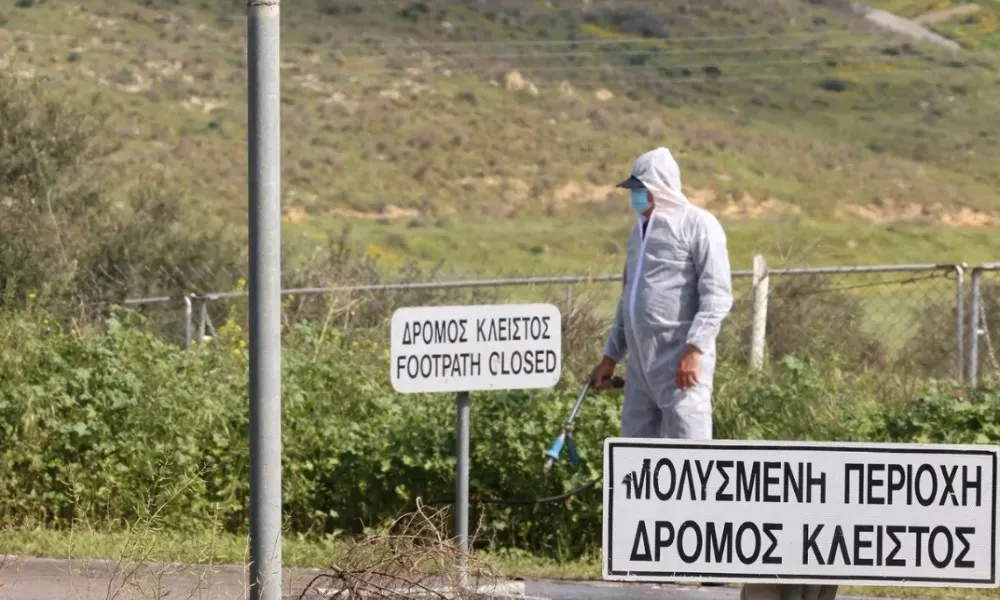

With the objective of restricting and preventing further spread of foot-and-mouth disease, which so far has wiped out 9.5% of sheep and goats, 2.8% of cattle and 7.89% of pigs in infected zones in Larnaca and Nicosia, additional measures are being put into effect through a Decree, the fourth in a series, issued yesterday by the Minister of Agriculture, Rural Development and Environment, Maria Panayiotou.
These are measures that had been announced in advance by the Veterinary Services, following findings that it was not possible to contain the virus within the two initial zones of Larnaca and Geri–Dali, that it had also spread to western Nicosia, and that pigs had been affected as well. According to the Veterinary Services, the main cause is the failure of some livestock farmers to comply with restrictive and biosecurity measures.
The Decree, which was published in the Official Gazette of the Republic, puts into effect strict restrictive measures and prohibitions in order to exclude, according to the preamble, the extremely serious negative consequences caused by the spread of the virus, both on animal health, with the potential collapse of the livestock sector, and on the economy of the Republic, taking into account the requirements for manpower, resources and materials necessary to prevent the spread of the virus.
At the same time, the necessity of the new measures also arises from the fact that foot-and-mouth disease is transmitted both through the air and mechanically.
The new Decree is issued because, from an epidemiological perspective, it is deemed imperative to take and apply additional measures beyond those already taken, with the aim of restricting and preventing further spread of foot-and-mouth disease, and because the importation from third countries and the movement from other Member States of cloven-hoofed animals into the Republic entails a risk of infection of these animals due to the prevailing epidemiological situation.
Prohibitions
Specifically, under the new Decree the following are prohibited:
(a) the movement of cloven-hoofed animals to and from holdings,
(b) the movement of all types of animal feed and veterinary medicines to and from holdings,
(c) the grazing of cloven-hoofed animals,
(d) the movement of agricultural equipment and persons to and from holdings, as well as mass public gatherings of holding owners and workers throughout the territory of the Republic,
(e) visits to holdings or places where cloven-hoofed animals are exhibited to the public, for reasons other than animal care, within zones where restrictive measures for foot-and-mouth disease apply,
(f) the movement of wool from holdings,
(g) the movement of manure outside zones where restrictive measures for foot-and-mouth disease apply, and
(h) the importation from third countries and the movement from other Member States of cloven-hoofed animals, as well as the submission of orders for the purchase of cloven-hoofed animals from other Member States or third countries.
What is permitted under conditions
Despite the above framework of prohibitions, the new Decree allows certain operations for the benefit of the market and animal welfare, provided that a special permit is issued.
Specifically, the competent authority may issue a permit allowing:
(a) the movement of cloven-hoofed animals from holdings to slaughterhouses,
(b) the movement of pigs from breeding holdings to other holdings of the same owner that do not fall within zones where restrictive measures apply,
(c) the movement of piglets from breeding holdings to fattening holdings of the same owner within zones of the same district where restrictive measures apply, provided that at least fifteen days have elapsed since their first vaccination,
(d) the movement of owners and persons responsible for holdings, as well as the movement of personnel to and from the holdings where they are employed,
(e) the movement of all types of animal feed, including feed not intended for cloven-hoofed animals, from points of entry into the Republic to approved suppliers and from approved suppliers to holdings,
(f) the movement of veterinary medicines from approved suppliers to holdings,
(g) the transport of water for the watering of cloven-hoofed animals,
(h) the movement of wool from holdings, and
(i) the importation from third countries or movement from other Member States of cloven-hoofed animals and the submission of purchase orders for such animals.
With regard to the shearing of animals, whether they are located within or outside zones where restrictive measures apply, this is permitted only by owners, persons responsible for holdings and their personnel, provided that they exclusively use their own equipment, in order to prevent transmission of the virus by third parties.