
Recent videos from Bahrain and Dubai have highlighted the growing presence of Iranian-designed Shahed drones across the region. Open-source intelligence analysts identified the aircraft as Shahed models, which Iran has deployed in multiple theatres and is now using more widely in the Middle East.
The concern among defence analysts is not only the drones’ capabilities, but their cost and the scale at which they can be launched.
Low cost, high impact
Shahed drones are relatively inexpensive systems, with an estimated cost of between €25,000 and €40,000 per unit. By contrast, interceptor missiles used to shoot them down can cost around one million dollars each.
This cost imbalance creates a strategic challenge. By launching large numbers of drones simultaneously, an attacker can attempt to overwhelm advanced air defence systems and impose significant financial strain on them.
The drones carry explosive payloads and are built with comparatively simple components. Iran supplied thousands of these systems to Russia, where they were used extensively in Ukraine. Observers note that swarm tactics tested there are now being applied in the Middle East.
Range and regional reach
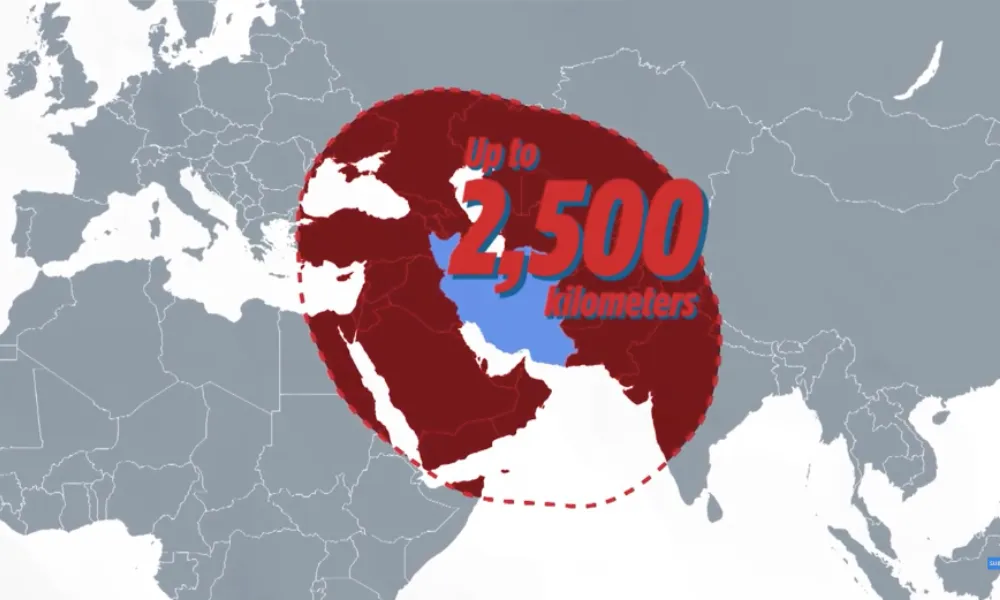
Depending on the model, Shahed drones can have a range of up to 2,500 kilometres. This allows coverage extending from the Mediterranean coast to the Arabian Peninsula.
With such reach, the drones are capable of targeting military installations, energy infrastructure and urban centres across a wide geographic area.
Ukrainian President Volodymyr Zelenskyy has stated that Russia has launched close to 60,000 Shahed-type attack drones against Ukraine. According to reports, Ukraine has relied on a multilayered air defence system, including mobile units, electronic warfare and interceptor drones, achieving an interception rate of over 80 per cent.
The question raised by defence observers is whether countries in the Middle East possess comparable systems capable of responding effectively to large-scale drone attacks.
Source: Euronews