For most of its seventy-five year history, NATO functioned according to a relatively predictable pattern. Washington defined the strategic direction, European governments debated loudly, and in the end the alliance aligned itself with the United States. This rhythm shaped NATO operations from the Cold War period through the post September 11 interventions in Afghanistan and later to the Libya campaign in 2011. The United States provided the majority of the alliance’s military capabilities, intelligence infrastructure, and strategic logistics. European governments understood that reality and structured their own security policies accordingly.
The assumption that NATO would ultimately move behind Washington became one of the alliance’s unwritten rules. Disagreements occasionally surfaced, sometimes even publicly, yet the alliance rarely allowed those differences to translate into visible fragmentation during a military crisis. The strikes connected to Iran now appear to have disrupted that habit.
Europe’s cautious reaction
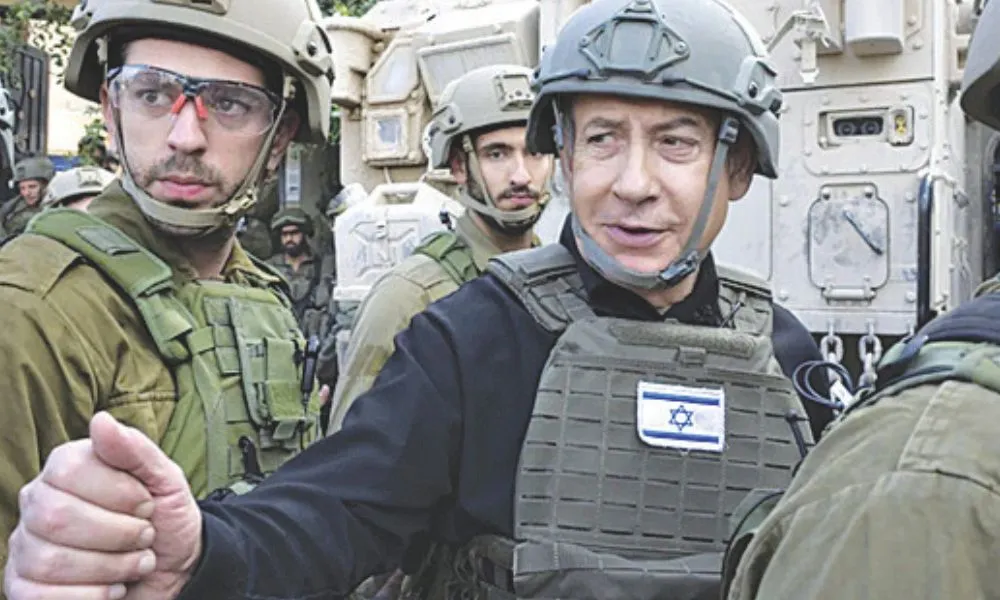
When President Donald Trump authorized military strikes linked to Iran, many analysts in Washington expected a familiar sequence of events. Europe might initially hesitate, some governments might call for restraint, but eventually NATO would rally behind the United States as it had done repeatedly in the past. Instead the reaction across Europe unfolded quite differently.
European capitals responded with caution and distance rather than solidarity. Britain, traditionally Washington’s most dependable operational partner, avoided formal participation in the strikes. Spain went further, openly warning against escalation and cautioning that Europe should not be drawn into another Middle Eastern conflict. Several other governments released statements emphasizing restraint, diplomacy, and the need to prevent regional war.
The language remained diplomatic, yet the political meaning was clear. Europe did not rush to support Washington’s decision.
NATO prepares for defence, not war
The reaction inside NATO headquarters followed a similar logic. Alliance leaders increased surveillance flights, intensified intelligence monitoring, and strengthened air defence readiness across several regions. These steps focused on protecting NATO territory against possible retaliation from Iran or its partners.
At the same time NATO leaders avoided the step that would have signaled collective military involvement. The alliance did not activate operational command structures for a coordinated campaign. NATO forces did not prepare a joint air operation. No alliance framework mobilized for collective offensive action.
In practical terms NATO prepared to defend its member states while deliberately avoiding participation in the conflict itself.
That distinction carries enormous strategic significance. It demonstrates that NATO remains committed to territorial defence but does not automatically support every military initiative launched by the United States.
The trust deficit across the Atlantic
The European hesitation reflects a deeper political issue that has gradually emerged inside the alliance during the past decade. Donald Trump’s first presidency reshaped the tone of transatlantic diplomacy in ways that many European governments still remember clearly.
Trump repeatedly criticized NATO allies for failing to meet defence spending targets and questioned whether the United States should continue defending countries that did not contribute sufficiently to their own security. At several NATO meetings he described the alliance in transactional language and argued that American protection resembled a service for which Europe had failed to pay its share.
European governments responded by increasing defence budgets, particularly after Russia’s invasion of Ukraine in 2022. A growing number of NATO members reached the alliance’s long standing goal of spending two percent of national income on defence. Yet financial adjustments alone could not fully repair the political damage.
For many European policymakers the debate shifted toward a deeper concern about the reliability and predictability of American leadership.
Europe’s quiet defence transformation
These concerns have quietly influenced European defence policies in recent years. Across the European Union governments have expanded arms production, strengthened missile defence programmes, invested in drone technologies, and deepened cooperation in joint procurement.
Initiatives such as Permanent Structured Cooperation and the European Defence Fund have gained increasing attention as European leaders explore ways to strengthen their own security capabilities. These initiatives do not seek to replace NATO, and most European governments still view the alliance as the cornerstone of continental defence.
However the underlying objective is becoming clearer. Europe wants to ensure that it does not remain completely dependent on Washington if American leadership becomes unpredictable.
The war environment surrounding Iran has intensified this debate.
NATO leadership walks a narrow line
Inside NATO headquarters, alliance leaders now face the delicate challenge of preserving unity while acknowledging political realities among member states. Secretary General Mark Rutte and senior officials have emphasized that NATO’s central mission remains collective defence under Article 5 of the North Atlantic Treaty.
This commitment obligates members to defend one another if a NATO country is attacked. Yet it does not require the alliance to support every military initiative undertaken by one of its members.
The Iran crisis has illustrated this distinction with unusual clarity. NATO leaders have chosen to strengthen defensive readiness while avoiding steps that could transform the conflict into a formal alliance war.
This strategy allows the alliance to maintain cohesion without forcing governments to support a military escalation that many European societies oppose.
Domestic politics shape Europe’s response
Public opinion across Europe continues to influence government decisions about military intervention. The experiences of Iraq, Afghanistan, and Libya remain powerful political memories that shape voter attitudes toward Middle Eastern conflicts.
European leaders therefore face domestic pressures when deciding whether to participate in new military campaigns. The Iran crisis arrived at a moment when many governments prefer diplomacy and regional stability over escalation.
This domestic political environment explains much of the cautious tone adopted by European capitals in response to the American strikes.
Türkiye’s position in a changing alliance
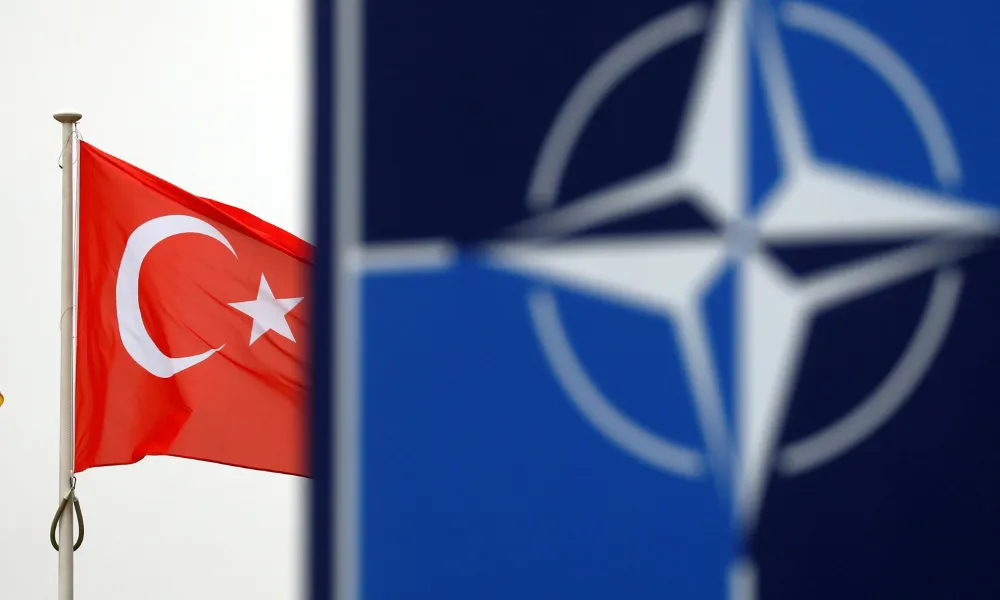
The evolving dynamics inside NATO carry particular significance for Türkiye, a country whose strategic importance to the alliance extends well beyond the traditional framework of transatlantic security. As one of NATO’s largest members with one of its most capable militaries, Türkiye occupies a geographic position that connects several of the most volatile and strategically significant regions in the world. The country sits at the crossroads of Europe, the Middle East, the Caucasus, and the Black Sea basin. Control of the Turkish Straits, proximity to Russia and Ukraine, and its access to the Eastern Mediterranean make Türkiye an indispensable component of NATO’s southern and southeastern security architecture.
For decades NATO planners have regarded Türkiye as a pillar of the alliance’s southern flank. Turkish armed forces provide operational depth, intelligence reach, and logistical infrastructure that few allies can replicate. NATO radar systems, air bases, and forward deployment facilities on Turkish territory support alliance operations that extend from the Balkans to the Middle East. At a time when the war in Ukraine continues to reshape the Black Sea balance and instability across the Middle East threatens to spill across borders, Türkiye’s geographic and military position gives it a central role in the alliance’s overall strategic posture.
At the same time, Türkiye’s foreign policy cannot be understood solely through its NATO membership. Ankara maintains a network of strategic relationships that reflect both history and regional realities. Among the most important of these is its close partnership with Azerbaijan. The relationship between the two countries is frequently described in Türkiye as “one nation, two states,” reflecting deep linguistic, cultural, and historical ties as well as expanding defence cooperation. The military and political coordination between Ankara and Baku has become a defining element of the security architecture in the South Caucasus. For many policymakers in Türkiye, the stability and sovereignty of Azerbaijan represent not merely a foreign policy priority but an extension of national strategic interests.
Türkiye’s policy calculations also remain closely connected to the situation in Cyprus. Ankara continues to maintain strong political, economic, and security ties with northern Cyprus. The presence of the Cyprus Republic in the European Union, combined with the unresolved Cyprus problem, has long shaped Türkiye’s relations with Europe. Disputes over energy exploration, maritime jurisdiction, and political recognition continue to complicate dialogue between Ankara and Brussels. As a result, Cyprus remains one of the most persistent geopolitical fault lines within the broader Türkiye-European Union relationship.
These regional realities mean that Türkiye approaches NATO strategy from a perspective that sometimes differs from that of other alliance members. Ankara must simultaneously consider developments in the Black Sea, the Eastern Mediterranean, the Caucasus, and the Middle East. Decisions taken within NATO therefore intersect with Türkiye’s broader network of regional partnerships and security commitments.
The gradual transformation of NATO may therefore create both opportunities and challenges for Türkiye. A more autonomous Europe could alter internal alliance decision making and potentially introduce new diplomatic complexities for Ankara. At the same time, Türkiye’s ability to maintain active engagement across multiple regions may become increasingly valuable to the alliance as the global security environment grows more fragmented.
In practical terms, Türkiye’s role as a strategic bridge may become more important rather than less. The country can influence developments in the Black Sea while maintaining communication channels across the Middle East and the Caucasus. It participates in NATO’s collective defence structures while also managing relationships that extend beyond the traditional transatlantic framework.
As NATO adjusts to a changing strategic landscape and as Europe explores a stronger independent defence capacity, Türkiye will likely continue navigating a careful balance between alliance commitments and regional priorities. In a world where geopolitical competition increasingly stretches across interconnected regions, that balancing act may become one of the defining features of Ankara’s role within the evolving Atlantic alliance.
Living in the same house, different rooms
NATO remains one of the most powerful and sophisticated military alliances in modern history. Its integrated command structure, shared intelligence systems, joint training programmes, and long established planning mechanisms still form the backbone of European security. The alliance links North America and Europe through a dense network of military cooperation that few other international organizations have ever achieved. NATO forces train together, plan together, and maintain operational interoperability that allows dozens of countries to function within a single military framework. For more than seven decades this structure has anchored the security order of the Euro Atlantic world.
Yet alliances do not function through military hardware alone. They depend equally on political confidence, shared strategic assumptions, and a sense that partners ultimately see threats through a similar lens. That psychological foundation now appears to be evolving. The response to the Iran crisis has illustrated that NATO governments no longer react automatically to American military decisions in the way they once did. European capitals did not reject the United States outright, but neither did they rally instinctively behind Washington’s escalation. Instead they measured their responses carefully, weighing the risks of involvement against domestic political realities and broader regional consequences.
Increasingly, governments within the alliance evaluate each crisis through a more individualized strategic calculation. Leaders consider how a conflict might affect energy supplies, migration flows, regional stability, or domestic public opinion. They assess the economic implications and the potential for long term military entanglement. These calculations do not necessarily contradict NATO commitments, but they do introduce a new layer of political caution that was less visible during earlier decades of the alliance. The result is a more complex form of solidarity, one in which cooperation remains possible but automatic alignment becomes less certain.
A senior European diplomat recently described the evolving relationship with a metaphor that captures this subtle transformation. The United States and Europe, he suggested, still live in the same house. They share the same roof, the same structural foundations, and the same long history. Yet they increasingly occupy different rooms within that house. They may pursue different conversations, sometimes even different priorities, while still recognizing that the building itself holds them together.
The metaphor reflects a broader shift in the political psychology of the alliance. Europe has begun to think more seriously about strategic autonomy, investing in its own defence capabilities and exploring ways to coordinate security policies independently when necessary. The United States, for its part, continues to maintain overwhelming military capabilities but increasingly pursues policies shaped by its own domestic political debates and global strategic priorities. These two trends do not necessarily collide, but they create a more complicated relationship than the one that characterized NATO during the Cold War.
A quiet turning point for NATO
The military confrontation unfolding across the Middle East currently dominates global headlines. Missiles, air strikes, and diplomatic tensions draw the attention of policymakers and media outlets alike. Yet the more significant development may be taking place more quietly within NATO itself. The alliance is confronting a question that for decades seemed almost theoretical.
What happens when the United States launches a war and its allies decide not to follow?
For most of NATO’s history that question rarely required a practical answer. The political momentum of the alliance, combined with the strategic weight of American leadership, usually produced eventual alignment even after initial disagreements. The Iran crisis, however, has placed this question squarely at the centre of transatlantic politics. European governments have demonstrated that they are willing to maintain political distance from an American military operation when their own calculations lead them in a different direction.
This development does not signal a dramatic rupture. NATO has not fractured and no member state has announced an intention to leave the alliance. Military cooperation continues across the Atlantic, intelligence networks remain deeply integrated, and collective defence commitments remain intact. Yet something more subtle appears to be changing. The automatic political reflex that once ensured unity during moments of crisis seems less reliable than before.
Washington still commands unmatched military power within NATO. The United States maintains capabilities in strategic airlift, intelligence gathering, missile defence, and nuclear deterrence that no European country can easily replicate. That reality continues to shape the alliance’s overall balance of power. Yet military strength alone no longer guarantees that allies will automatically support every strategic decision taken in Washington.
NATO therefore appears to be entering a new phase of its long history. Cooperation continues and the alliance remains central to European security, but strategic autonomy within the alliance is gradually expanding. European governments increasingly seek the ability to shape their own responses to global crises while maintaining the broader framework of transatlantic partnership.
In practical terms this means that NATO may evolve from a structure defined by near automatic alignment into a more flexible political coalition. Members will continue to share intelligence, train together, and defend one another when necessary. At the same time they may choose different levels of involvement in specific conflicts depending on their national interests and domestic political constraints.
Such an evolution does not necessarily weaken the alliance. In some ways it may reflect a natural adaptation to a more complex and multipolar world. NATO was created in a period when threats appeared relatively clear and when the political cohesion of the Western world seemed stronger. Today the international environment has become more fragmented, and alliances must adapt to that fragmentation.
In other words NATO is not breaking apart. The house still stands, its foundations still strong, its residents still bound together by decades of shared history and mutual interest. Yet the daily life within that house is changing. The alliance that once marched almost instinctively behind Washington may now move with a greater diversity of voices and priorities. The members still walk in the same direction, but they increasingly choose their own pace.