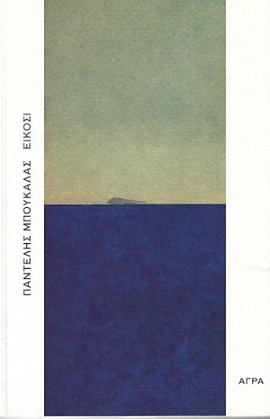
The book brings together twenty numbered and three unnumbered poems written after the sudden death of the poet’s son, Spiros, who died in a road accident in 2011. Boukalas – a poet, translator, essayist and journalist – channels personal grief into a form that resists both categorisation and straightforward interpretation.
Rather than constructing a unified narrative or lyrical arc, the poems assemble a fragmentary text in which language appears insufficient to its subject. The work situates the reader beyond the familiar boundaries of speech – even beyond the unsayable – entering what is described as the “realm of the untranslatable.” The implicit question remains unresolved: whether literature can render sudden loss and unbearable mourning in words, or whether it must first acknowledge its own inability to do so.
Fragments of a life
The twenty‑three poems, framed by a brief introductory triplet and a concluding piece, draw on fragments of a life that ended before the age of twenty. They are marked by silences, breaths and eruptions of grief, alongside what is described as a dialogue with absence and “quotations of emptiness.”
At the same time, the collection is shaped by tenderness. Echoing the cadence of Greek folk song, Boukalas addresses his son through intimate and affectionate invocations that carry the weight of both love and loss: “my poor unfading one,” “why were you in such a hurry, my branch, to be torn away?” “O my son, my dear child.”
The poems also draw on a range of literary and cultural references, including Homer, funerary poetry, Pontic lament and major Greek lexicons. These sources do not distance the work from its emotional core, but rather underscore the effort to articulate an experience that resists articulation.
A text that resists interpretation
“Death cannot be declined,” Boukalas writes, “because death exists.” In a similar way, Twenty resists analysis or explanation. It does not seek to be decoded; it asserts its presence as an act of mourning.
What remains for the reader is a sense of enduring love. “Abundant love remains undelivered,” the text notes, leaving behind a final register of emotional continuity.
Twenty stands as a work of rare precision and restraint, shaped by silence as much as by language. It offers a distinctive contribution to contemporary Greek literature, foregrounding grief while testing the expressive limits of poetry itself.